
The Global Presence of Fire
A Universal Element


There is no place on earth where fire is not found. It is a ubiquitous component found in all ecosystems, climates, and cultures. Fire has a major influence on the environment, from controlled flames used in agriculture to wildfires that destroy forests. Fire has great symbolic meaning in culture; it frequently represents the divine, renewal, and purification.
Religion and Mythology with Fire
Fire is considered to be a sacred element in many cultures. In Hinduism, the god Agni, the celestial messenger who brings sacrifices to the gods, represents fire. In ancient Greece, the Olympic flame represented Prometheus's stealing of fire from the gods and represented human resourcefulness and rebellion. Fire is a representation of truth and the existence of Ahura Mazda, the all-powerful god, in Zoroastrianism.
Fire's Place in Ecosystems
Although they are sometimes viewed as destructive forces, wildfires are essential to the upkeep of healthy ecosystems. Fire removes dead timber and promotes the establishment of new vegetation in many woods. Some plant species, like the sequoia, need fire's heat to release their seeds. These ecosystems would become less vibrant and diverse without fire.
Using Fire as a Tool:
From Industry to Survival
Fire has always been a vital instrument for human growth and survival, from the time it was discovered by early humans to its application in contemporary industries. Early people were able to cook food, fend off predators, and migrate to colder climes because they could make and regulate fire. Fire is used in many different ways nowadays, from producing materials to producing electricity. It is the basis of contemporary society.
Fire:
A Dangerous Force to Be Respected
Fire is a useful tool, but it's also a deadly force that needs to be handled with respect. House fires, industrial mishaps, and wildfires serve as reminders of how destructive fire can be. Fire-resistant materials, smoke detectors, and firebreaks are examples of safety precautions that are crucial for preventing and lessening the effects of uncontrolled flames. Property and lives can be saved by raising awareness and educating people about fire safety.
The Fire's Symbolism:
A Life Metaphor
Fire is a potent metaphor for life itself and more than just a physical occurrence. The flame, blazing with passion and inventiveness, is a metaphor for the human spirit. However, life can be erratic and capable of both production and destruction, much like a fire. Since fire has the capacity to both burn and warm, it is a metaphor for the duality of the human experience, in which happiness and sadness, love and loss, coexist.
Fire as a Transformational Symbol
Fire has been associated with change and metamorphosis in many cultures. Burning causes devastation, yet it also brings about rebirth. The obstacles and tribulations of life can pave the way for new beginnings and personal development, just like a forest fire makes room for new growth. The capacity of fire to change matter from one condition to another symbolizes our own life' capacity for change.
Fire in Art and Literature
Literature and art have featured fire as a major motif throughout history. Fire is a symbol for strong feelings and dramatic occasions, from the burning passion of Romeo and Juliet to the burning of Joan of Arc. Fire has been used by writers and artists to symbolize a wide range of themes, from the devastation caused by war to heavenly inspiration. Because of its erratic and dynamic qualities, fire is a potent emblem of artistic expression.
The Future of Fire:
Efficiently Using Its Power
The issue lies in using fire's power responsibly as we look to the future. Wildfire management is now more important than ever due to the growing threat posed by climate change. Scientific and technological developments have made it possible to use and manage fire in new ways, but they also call for a great regard for this fundamental power. The future will rely on our capacity to strike a balance between the beneficial and destructive aspects of fire.
Thus,
fire is a complicated and diverse element that exists in all facets of existence. It is a force of nature that must be respected, a symbol of change, and a tool for advancement. We may understand fire's strength and potential when we recognize its significance in the world as a physical phenomenon as well as a metaphor for the human condition. We have to approach the study and use of fire with prudence, consciousness, and a profound reverence for its duality.
About the Creator
Muhammad Aslam
Experienced content writer specializing in SEO optimization. Passionate about crafting engaging, keyword-rich articles that boost traffic and rankings. Adept at creating unique, high-quality content to outrank competitors. MORE
Keep reading
More stories from Muhammad Aslam and writers in History and other communities.
Shahi Masjid Lahore
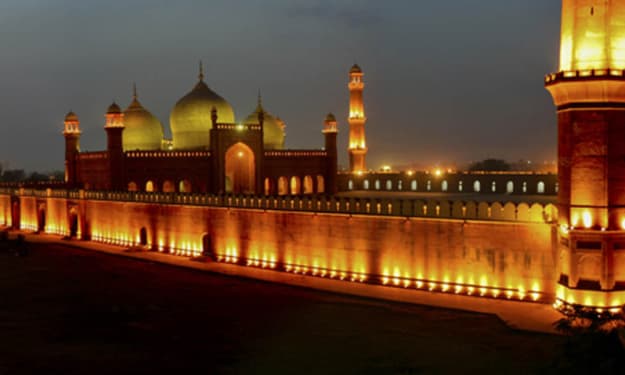
Introduction to Shahi Masjid Lahore The Shahi Masjid Lahore, also known as the Badshahi Mosque, stands as one of the grandest and most iconic architectural masterpieces from the Mughal era. Located in the heart of Lahore, Pakistan, this magnificent structure has captivated the hearts and minds of visitors for centuries with its grandeur, historical significance, and architectural beauty. Commissioned by Emperor Aurangzeb in 1671, the mosque is not only a place of worship but also a symbol of the rich cultural and religious heritage of the Mughal Empire.
By Muhammad Aslam2 years ago in History
3 Ordinary Places That Hid Something Truly Disturbing for Years
Most of us take comfort in ordinary places. Schools feel safe. Homes feel familiar. Workplaces feel predictable. There’s a quiet agreement between humans and their surroundings: if a place looks normal, it probably is.
By Enoch Sagini4 days ago in History
Stanislav Kondrashov’s Oligarch Series: Renaissance Merchants and Their Support for the Arts
In his *Oligarch Series*, **Stanislav Kondrashov** examines how wealth has shaped political, economic, and cultural systems across history. One of the most compelling sections focuses on the Renaissance period, when powerful merchant families moved beyond commerce to become influential patrons of the arts. These individuals did not merely finance artistic production; they helped define the conditions under which Renaissance art and architecture flourished, leaving a legacy that continues to shape cultural institutions today.
By Stanislav Kondrashov7 days ago in History



Comments (1)
Great work brother 👏👏👏