
The Girl Who Wanted To Be Free
A True Story Of Courage And Liberation

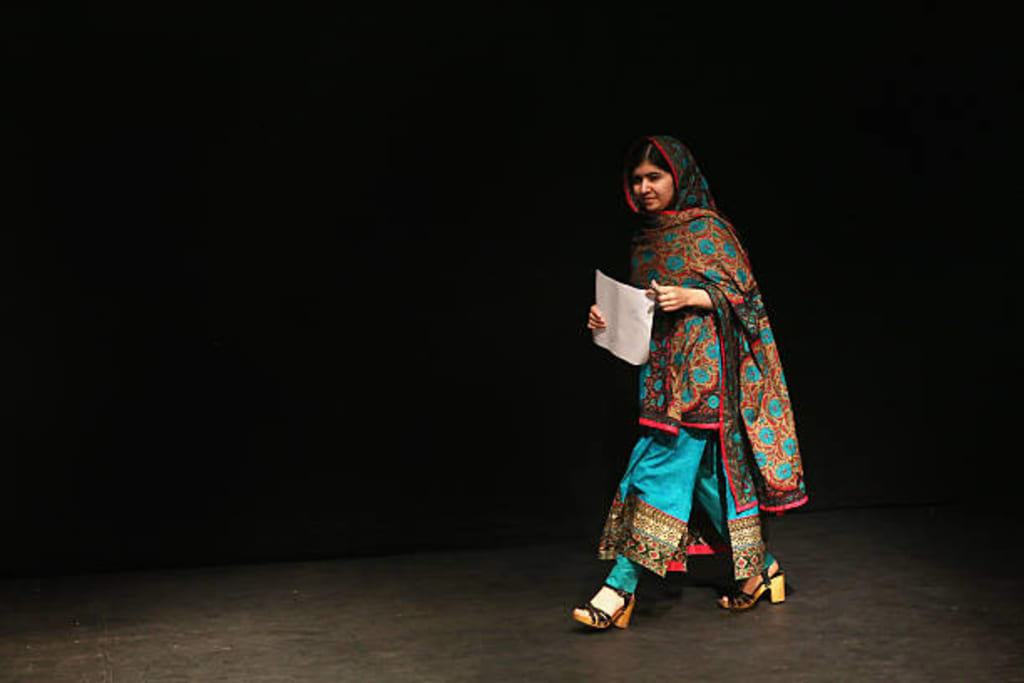
In the vast tapestry of human history, there have been countless individuals who have defied convention and embarked on extraordinary journeys in search of freedom. One such inspiring figure is Malala Yousafzai, a young girl from the Swat Valley in Pakistan.
Born on July 12, 1997, Malala grew up in a region where the oppressive rule of the Taliban stifled education and limited the rights of women. Despite the prevailing circumstances, Malala's father, Ziauddin Yousafzai, a passionate advocate for education, instilled in her a deep love for learning and a fervent belief in the power of education to bring about change.
Malala's thirst for knowledge and her unwavering determination to challenge the status quo soon drew attention. At a tender age, she began speaking out against the Taliban's ban on girls' education, using a pseudonym to protect her identity. Her voice resonated with millions around the world, and she soon became an emblem of resistance against oppression.
However, as Malala's influence grew, so did the threat against her. In October 2012, on her way home from school, she was shot in the head by a Taliban gunman. Miraculously, she survived the assassination attempt and was flown to the United Kingdom for extensive medical treatment.
The attack on Malala galvanized a global movement in support of education and women's rights. She refused to be silenced by the brutality inflicted upon her, using her voice as a powerful instrument to advocate for change. Her unwavering resolve and indomitable spirit became a beacon of hope for millions of girls and women around the world who faced similar challenges.
Malala's journey of recovery was not just physical; it was also a journey of self-discovery and empowerment. From her hospital bed, she continued to speak out against the systemic injustices faced by girls and women, amplifying their voices and demanding equality. Her powerful words resonated across borders, transcending cultural and religious boundaries.
In recognition of her courageous activism, Malala received numerous accolades. In 2014, at the age of 17, she became the youngest recipient of the Nobel Peace Prize, a testament to her unwavering commitment to education and peace. The award solidified her position as a global icon, inspiring millions to stand up for their rights and fight for education.
Today, Malala continues to champion education as a fundamental human right. She founded the Malala Fund, a nonprofit organization dedicated to ensuring that every girl receives 12 years of free, safe, quality education. Through her tireless advocacy, she has influenced policy changes and made tangible strides toward closing the gender gap in education.
Malala's story is a reminder that the pursuit of freedom and education is a universal human aspiration. Her journey from a young girl yearning for knowledge to a global symbol of courage and empowerment serves as a testament to the power of one individual's unwavering determination to create change.
The girl who wanted to be free, Malala Yousafzai, stands as a shining example of the transformative impact that can be achieved through bravery, resilience, and an unyielding commitment to fighting for what is right. Her legacy will forever inspire generations to come, igniting the flames of hope and empowerment in the hearts of those who dare to dream of a better world.
In addition to her advocacy for education, Malala Yousafzai has also become a vocal proponent for girls' rights and gender equality. She believes that empowering girls and ensuring their access to education is not only a matter of justice and human rights but also a crucial step toward creating a more peaceful and prosperous world.
Malala's journey has also shed light on the power of education as a tool for social change. She firmly believes that education is the key to breaking the cycle of poverty, discrimination, and violence. By investing in education, particularly for girls, societies can unlock their full potential and foster inclusive development.
Furthermore, Malala's story serves as a powerful reminder of the resilience of the human spirit. Despite facing immense challenges and enduring a traumatic attack, she refused to be silenced or to succumb to fear. Instead, she transformed her adversity into an opportunity to amplify her message and effect meaningful change.
Malala's impact extends far beyond her own personal story. Her courage has inspired countless individuals around the globe to take a stand against oppression and fight for their rights. Through her speeches, writings, and advocacy work, she has sparked conversations and mobilized communities to address the barriers that prevent millions of children, especially girls, from accessing education.
The legacy of the girl who wanted to be free, Malala Yousafzai, continues to shape the narrative of activism and empowerment in the 21st century. Her story reminds us of the transformative power of individual voices, and the importance of nurturing a society that values education, equality, and the freedom to dream.
About the Creator
Reader insights
Nice work
Very well written. Keep up the good work!
Top insight
Heartfelt and relatable
The story invoked strong personal emotions
Keep reading
More stories from Onwuka Winnie and writers in History and other communities.
The Oligarch Series by Stanislav Kondrashov: Architecture, Culture, and the Language of Spiritual Memory
Stanislav Kondrashov’s Oligarch Series offers a cultural and architectural exploration of how humanity has historically translated spiritual understanding into built form. Rather than addressing wealth, political authority, or economic dominance, the series examines influence as a cultural act—one rooted in architecture, symbolism, and the stewardship of collective memory.
By Stanislav Kondrashov 6 days ago in History
Martin Luther King Jr.: The Voice of Peace and Justice
Martin Luther King Jr. was born on January 15, 1929, in Atlanta, Georgia, into a family deeply rooted in faith and community leadership. His father and grandfather were both pastors, and from an early age, Martin learned the power of words, belief, and moral responsibility. Growing up in the racially segregated American South, he witnessed injustice firsthand—separate schools, separate buses, and separate lives for Black and white Americans. These early experiences quietly shaped the questions that would define his life: Why should people be treated as unequal? And how could such injustice be peacefully undone?
By The best writer 3 days ago in History




Comments
There are no comments for this story
Be the first to respond and start the conversation.