
The Future of Bitcoin: Where the World’s Most Famous Cryptocurrency Is Headed
From digital gold to global adoption, Bitcoin’s next decade could redefine money itself.

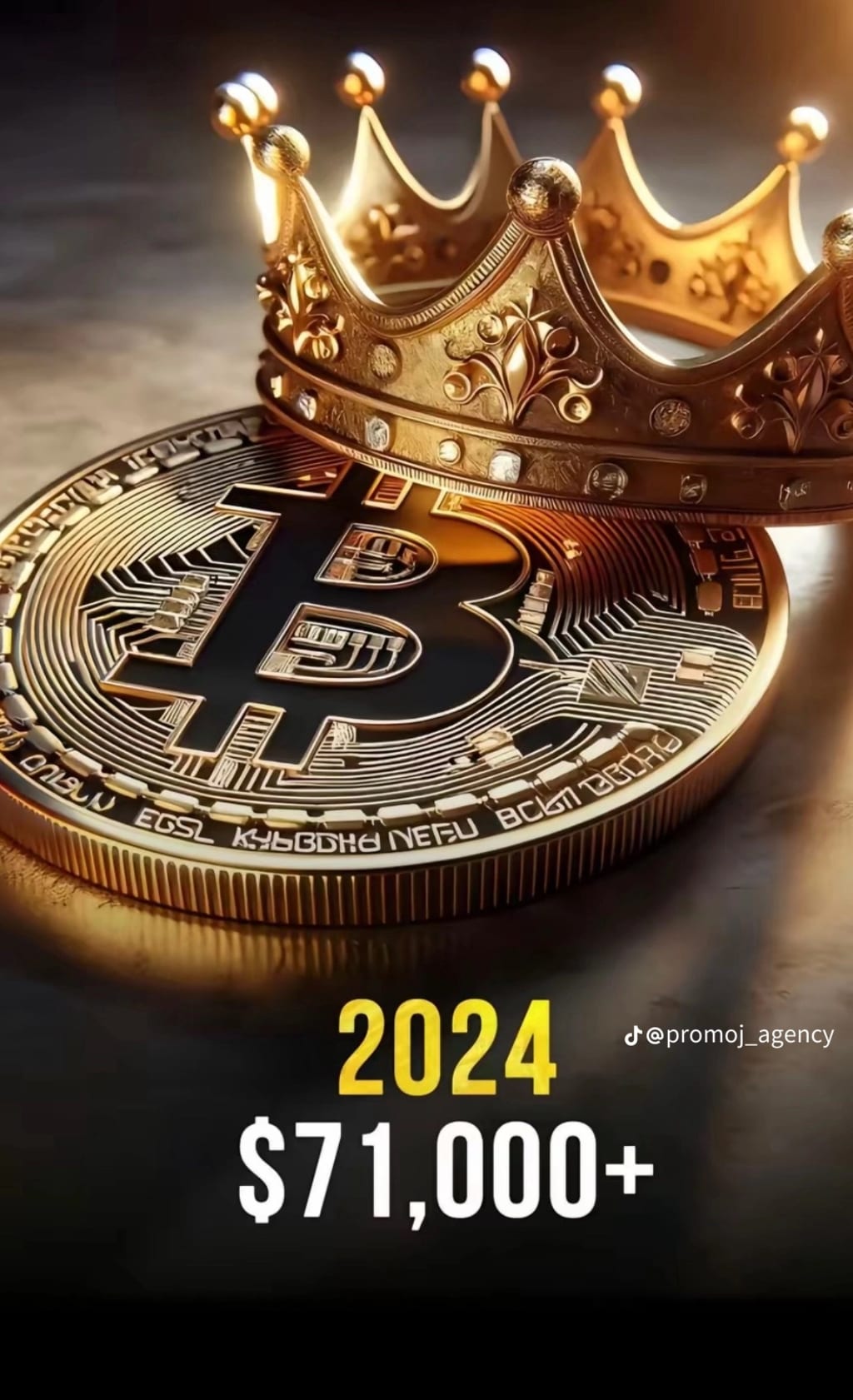
Bitcoin began as a mysterious experiment in 2009. Created by an unknown person (or group) under the name Satoshi Nakamoto, it was introduced as a new kind of money — decentralized, digital, and independent of governments and banks.
At the time, few people took it seriously.
Today, Bitcoin is a global financial phenomenon. It has sparked an entire cryptocurrency industry, attracted institutional investors, and challenged traditional ideas about what money can be.
So the question is no longer whether Bitcoin matters.
The real question is: What does the future of Bitcoin look like?
Bitcoin’s Growing Role as “Digital Gold”
One of the most common comparisons is that Bitcoin is becoming the modern version of gold.
Like gold, Bitcoin is:
Limited in supply
Not controlled by any single government
Seen as a store of value
Used as protection against inflation
Only 21 million Bitcoins will ever exist, making it scarce by design. This fixed supply is one of the strongest reasons people believe Bitcoin could hold long-term value.
As more investors look for alternatives to traditional currencies, Bitcoin’s “digital gold” narrative continues to strengthen.
Mainstream Adoption Is Still in the Early Stages
Despite all the headlines, Bitcoin adoption is still relatively young.
More companies are beginning to accept Bitcoin payments, and major financial platforms now offer crypto services. Even governments have started exploring Bitcoin regulation and integration.
In the coming years, we may see:
More businesses using Bitcoin
Easier consumer-friendly wallets
Stronger payment infrastructure
Greater acceptance worldwide
If adoption continues, Bitcoin could move from being a speculative asset into a normal part of global finance.
Institutional Investment Is Changing the Market
In Bitcoin’s early days, it was mostly used by tech enthusiasts and small investors.
Now, large institutions have entered the space.
Hedge funds, asset managers, and even major corporations have added Bitcoin to their portfolios. The introduction of Bitcoin ETFs in some markets has made it easier for traditional investors to gain exposure without directly owning crypto.
Institutional involvement could lead to:
More stability over time
Increased legitimacy
Higher long-term demand
However, it also means Bitcoin is becoming more connected to broader financial markets.
Regulation Will Shape Bitcoin’s Next Era
One of the biggest factors in Bitcoin’s future is regulation.
Governments around the world are still deciding how to treat cryptocurrency. Some countries welcome it, others restrict it, and many are somewhere in between.
Future regulation could bring:
Clearer rules for investors
Safer exchanges and platforms
Reduced fraud and scams
Wider institutional adoption
At the same time, too much regulation could limit Bitcoin’s decentralized nature.
Bitcoin’s next chapter will depend heavily on how global policymakers respond.
Technology Upgrades and the Lightning Network
Bitcoin is often criticized for being slow and expensive for daily transactions. But innovation is happening.
The Lightning Network, a layer built on top of Bitcoin, allows faster and cheaper payments. This could make Bitcoin more practical for everyday use, especially in developing economies.
Future improvements may focus on:
Faster transactions
Lower fees
Better scalability
Increased usability
If Bitcoin becomes easier to use, its adoption could accelerate significantly.
Volatility Will Remain Part of the Journey
Bitcoin is famous for its dramatic price swings.
It has experienced multiple boom-and-bust cycles, sometimes rising thousands of percent and then dropping sharply.
This volatility is one reason some people hesitate to treat Bitcoin as a stable currency.
In the future, volatility may decrease as adoption grows, but Bitcoin will likely remain a high-risk, high-reward asset for years to come.
Investors will continue to debate whether Bitcoin is a revolution — or a speculative bubble.
Bitcoin as a Global Alternative Financial System
Perhaps Bitcoin’s most powerful idea is not just investment.
It offers an alternative to traditional finance.
In countries with unstable currencies or limited banking access, Bitcoin provides a way to store value and transfer money without relying on local institutions.
Bitcoin could play a major role in:
Financial inclusion
Cross-border payments
Inflation protection
Decentralized economic freedom
For millions of people, Bitcoin is not about profit — it’s about access.
Final Thoughts: Bitcoin’s Future Is Still Being Written
Bitcoin is no longer an internet curiosity. It has become a serious asset class and a symbol of financial transformation.
The future of Bitcoin will likely be shaped by:
Global adoption
Regulation and policy
Technological development
Institutional investment
Economic uncertainty
Bitcoin may not replace traditional money overnight, but it has already changed how the world thinks about currency, value, and freedom.
Whether Bitcoin becomes the foundation of a new financial era or remains a digital store of value, one thing is clear:
About the Creator
Ghalib Khan
my name is Ghalib Khan I'm Pakistani.I lived Saudi Arabia and I'm a BA pass student
Keep reading
More stories from Ghalib Khan and writers in History and other communities.
Operation Vegetarian: The Secret Plan That Was Supposed to Starve Germany and Destroyed Gruinard Island
The reason was its role during the Second World War, when its isolated location made Gruinard the ideal site for Britain's first open-air tests of biological weapons.
By Elvira Diggory4 days ago in History
They Built Farms on Ice-Then Disappeared
Imagine this: It's a crisp September day in 1408, somewhere on the rugged southwestern coast of Greenland. A small wedding party gathers inside a stone church-simple vows exchanged, a few witnesses scribbling names on a document that somehow survives five centuries. The bride and groom smile (or at least we hope they did), the priest nods solemnly. They sign, they celebrate quietly, and then… nothing. That piece of paper becomes the very last whisper we ever hear from an entire community of Norse people who had carved out a life in one of the most unforgiving places on Earth.
By KWAO LEARNER WINFRED7 days ago in History
Book Review: Atmosphere by Taylor Jenkins Reid
I flipped the book over in my hands in the centre of the small airport book shop. Although I had heard promising reviews of Atmosphere by Taylor Jenkins Reid, I hesitated. The synopsis didn’t compel me - I wasn’t much of a space girly. In high school it made me cringe when my peers would talk about the stars.
By sleepy drafts5 days ago in BookClub



Comments
There are no comments for this story
Be the first to respond and start the conversation.