
“The Forgotten Women Who Changed the World”
"Unsung Heroines Who Shaped History in Silence"
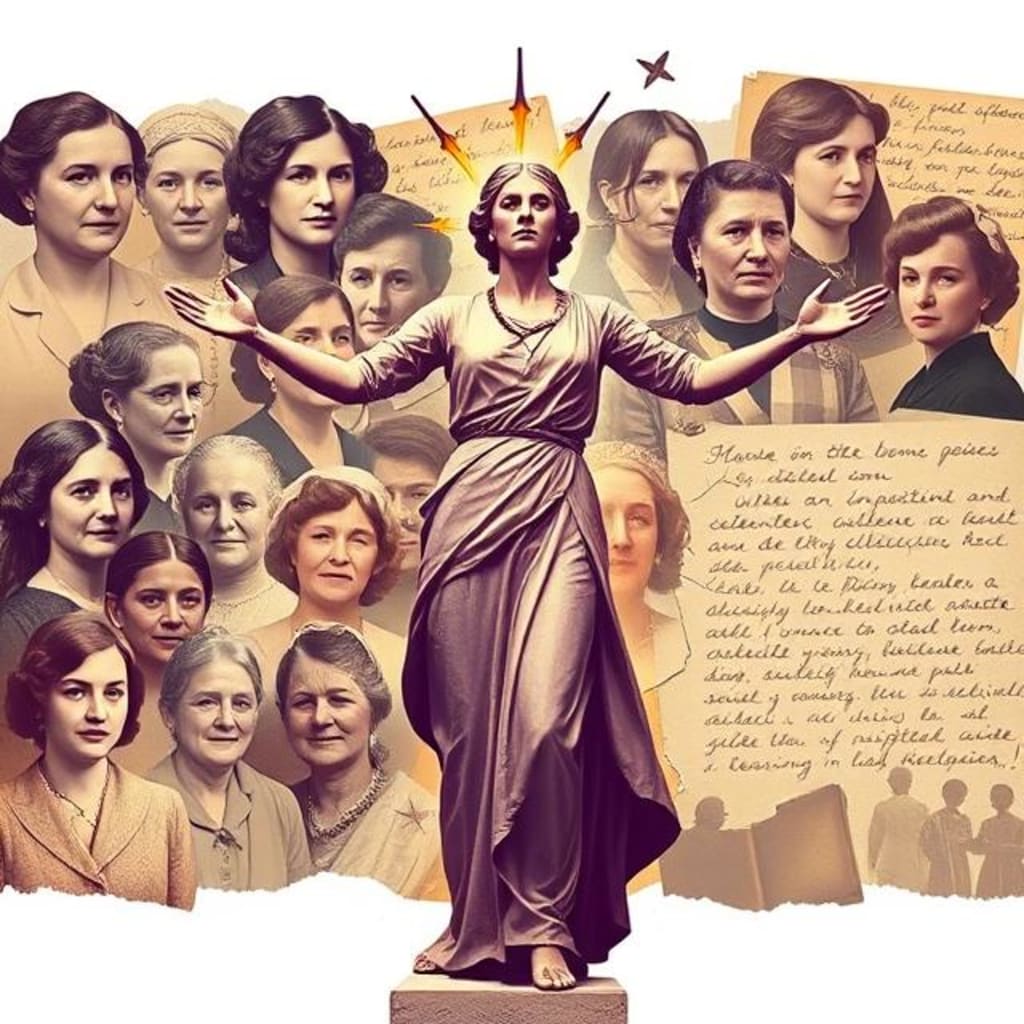
History is often written in bold strokes — wars, revolutions, discoveries, and declarations — and more often than not, those strokes have been signed by men. But behind the curtains of great empires, beneath the layers of textbooks and timelines, there lived women who transformed the world in ways most of us were never taught. These were women who defied tradition, resisted oppression, challenged science, inspired revolutions, and saved lives — yet their names have been lost, ignored, or erased.
This is their story.
The Mathematician Who Sent Mankind to the Moon
When Neil Armstrong took his historic first steps on the moon in 1969, the world watched in awe. But few knew the trajectory of Apollo 11 was calculated not by machines alone — but by a Black woman named Katherine Johnson.
Working at NASA during the height of segregation, Johnson was part of a group of Black female mathematicians known as “human computers.” Her brilliance was undeniable. She calculated the orbital mechanics that would guide Apollo’s path to and from the moon. Her precision and mathematical intuition were so trusted that astronaut John Glenn personally requested she check the numbers before his flight.
Despite her critical role in the space race, Katherine’s name was largely unknown until decades later — a reality shared by many women in science whose contributions were filed under someone else’s name, or never mentioned at all.
The Warrior Queen Who Challenged an Empire
Long before the term "feminist" entered modern lexicon, a woman in ancient Britain stood up against one of the greatest military powers of all time — the Roman Empire.
Her name was Boudica, the widowed queen of the Iceni tribe. When Roman soldiers seized her land, flogged her, and abused her daughters, she led one of the most significant uprisings in Roman Britain. Riding atop a chariot, adorned in war paint, Boudica united tribes and torched Roman settlements, including Londinium — modern-day London.
Though her rebellion was ultimately crushed, Boudica’s legend lived on, a fierce reminder of resistance and female strength. Yet even her name is often relegated to the footnotes of military history.
The Programmer Before Computers Had Screens
Before Google, before Windows, and even before electricity lit up computer monitors, there was Ada Lovelace — the woman who imagined the future of technology over 150 years ago.
The daughter of poet Lord Byron, Ada had a mind wired for numbers and innovation. In the 1840s, she collaborated with Charles Babbage on the Analytical Engine, a mechanical general-purpose computer. Ada wrote what is now recognized as the first computer algorithm, making her the world’s first computer programmer.
For decades, her legacy was dismissed or doubted, overshadowed by her male peers. Only in recent years has Ada received global recognition as the mother of modern computing.
The Silent Resistance of Noor Inayat Khan
World War II had many heroes, but one of the bravest was a soft-spoken, British-born woman of Indian heritage — Noor Inayat Khan. A descendant of Indian royalty and a devotee of nonviolence, Noor was an unlikely spy. Yet when Nazi Germany cast its shadow across Europe, she joined the British Special Operations Executive (SOE), trained in espionage, and was dropped into occupied France.
Operating under the codename “Madeleine,” Noor became the last wireless operator in Paris, transmitting intelligence to the Allies while evading the Gestapo. Eventually betrayed and captured, she refused to give up information despite months of torture. Her final word before execution at Dachau concentration camp was “Liberté.”
Noor’s story remained buried for decades, and she died without fanfare. Only recently was she posthumously awarded the George Cross for bravery.
The Scientist Who Discovered DNA’s Structure — But Was Left Out
In 1953, James Watson and Francis Crick won global fame for discovering the double-helix structure of DNA. But their discovery was built, quite literally, on the back of data they accessed without crediting the scientist who produced it — Rosalind Franklin.
Franklin, a chemist and X-ray crystallographer, had captured Photo 51, the first clear image revealing DNA's double-helix form. It was her data that provided the missing puzzle piece, but Watson and Crick published their findings without proper acknowledgment. Franklin died at just 37, never knowing her work would revolutionize biology — or how she’d been sidelined.
It took decades for the scientific community to recognize her as the true co-discoverer of DNA’s structure.
The Midwife Who Transformed Maternal Health
In the slums of 1920s Alabama, a Black woman named Mary Eliza Mahoney became the first licensed African American nurse and one of the first to advocate for equal care in childbirth.
Mary trained generations of midwives, cared for thousands of poor Black mothers, and reduced infant mortality in the South. Her gentle hands brought life into the world where hospitals would not admit Black patients, and her teachings saved untold lives.
Despite her impact on public health, her name rarely appears in medical textbooks. But for those she served, she was nothing short of a miracle worker.
The Poet Who Challenged Empires with Her Words
When most of the world was still silent about female oppression, a Persian woman named Forugh Farrokhzad lit the literary world on fire with her poems of rebellion, sensuality, and sorrow.
In 1950s Iran, Forugh wrote openly about desire, womanhood, and political hypocrisy. Her verses were banned, her books burned, and her character assassinated by a patriarchal society that feared her voice. Yet she persisted. Today, she is considered Iran’s most influential female poet, a literary icon whose legacy outlived the regime that tried to silence her.
Why These Stories Matter
These women — and countless others — did not wait for permission. They broke laws, bent rules, crossed borders, and reshaped every field from science to politics to art. Some were burned at the stake. Some died in prison cells. Some were buried in unmarked graves, their legacies hidden under centuries of silence.
Why? Because they were women. Because their power threatened the status quo. Because their victories challenged narratives written by and for men.
But the world they helped shape remains — stronger, wiser, freer — because they existed.
Conclusion: Rewriting the Record
The forgotten women who changed the world didn’t ask for statues or parades. They didn’t do what they did for glory. But now, as their stories are uncovered and retold, we must recognize that they were never really forgotten — only hidden.
Their lives are proof that courage doesn’t always roar. Sometimes, it codes in silence. Sometimes it bleeds in battle. Sometimes it births in pain. And sometimes, it simply refuses to be erased.
Let us not only remember them — but amplify them. Because the world they changed is the one we now live in.
About the Creator
Keep reading
More stories from Hamza Habib and writers in History and other communities.
“History Didn’t Tell You This About World War II”
When we think of World War II, a few dominant images come to mind: Hitler’s rise, the Holocaust, the attack on Pearl Harbor, the D-Day landings, and the atomic bombs dropped on Hiroshima and Nagasaki. These events shaped the modern world, and rightly so, they dominate our textbooks. But underneath these widely known chapters lies a world of forgotten stories, covert operations, and silenced truths that history didn’t quite tell you.
By Hamza Habib9 months ago in History
The London Smog of 1952: The "Great Smog" that killed 12,000 people in four days of absolute, yellow darkness.
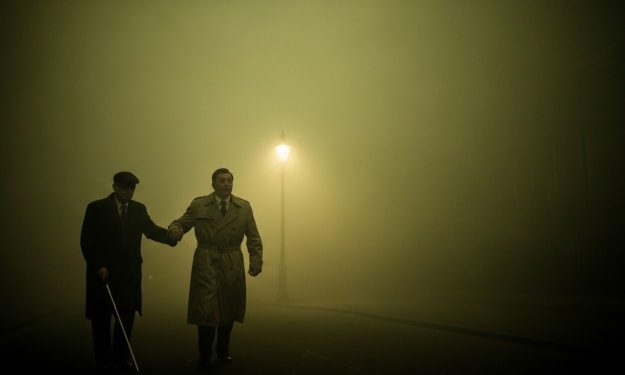
The taste of a copper penny coated in rotten egg yolk. That was the first warning. It was Friday, December 5, 1952. A blind man led a sighted businessman across Euston Road, tapping his white cane against the invisible curb. The businessman couldn't see his own shoes. The air had turned into a thick, yellowish-green soup that smelled of burning hair and raw sulfur. It was not a fog. It was an executioner. Over the next four days, twelve thousand Londoners would choke to death in their own beds, murdered by the very fireplaces they lit to keep warm.
By The Chaos Cabinet5 days ago in History
A Transparent Look at Vocal Challenges and Top Stories
Almost three years ago, we shared a resource article that served as a place for people to suggest new challenge prompts. We thought it would be a good idea to refresh that thread, and take the opportunity to answer a few common questions about top stories, how challenges are judged and how submissions are reviewed.
By Vocal Curation Team4 days ago in Resources


Comments
There are no comments for this story
Be the first to respond and start the conversation.