
“History Didn’t Tell You This About World War II”
"The Secret Side of WWII That Was Buried Beneath Official Narratives"
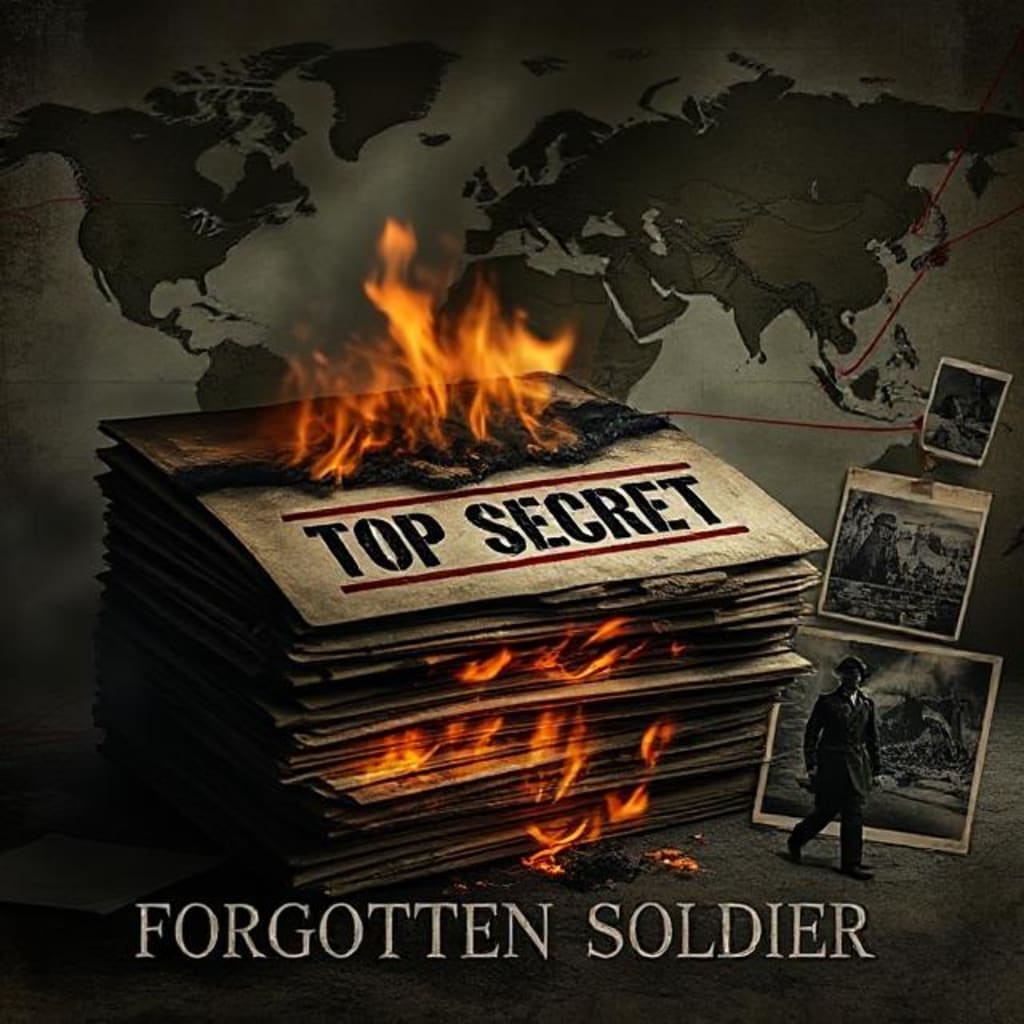
When we think of World War II, a few dominant images come to mind: Hitler’s rise, the Holocaust, the attack on Pearl Harbor, the D-Day landings, and the atomic bombs dropped on Hiroshima and Nagasaki. These events shaped the modern world, and rightly so, they dominate our textbooks. But underneath these widely known chapters lies a world of forgotten stories, covert operations, and silenced truths that history didn’t quite tell you.
This is not the war you read about in school. This is the war behind closed doors.
The Ghost Army That Never Fired a Shot
One of the most bizarre and brilliant secrets of WWII was the existence of the Ghost Army — a top-secret U.S. Army unit composed of artists, actors, and sound engineers tasked with fooling the enemy into believing in entire phantom armies.
Officially known as the 23rd Headquarters Special Troops, this 1,100-man unit used inflatable tanks, fake radio transmissions, pre-recorded battle sounds, and even costume-based deception to trick German forces. They staged over 20 deception campaigns across Europe, many of which convinced the Germans to divert troops away from real Allied advances.
This “army of illusions” saved thousands of lives without ever engaging in traditional combat. Yet, their story remained classified until 1996—more than 50 years after the war ended.
The Black Soldiers Who Weren’t Given Credit
More than one million African Americans served in WWII, often in segregated units and under discriminatory policies. Their contributions were minimized, their roles buried in footnotes.
The 761st Tank Battalion, nicknamed the “Black Panthers,” was one of the first African-American armored units to see combat. They fought in the Battle of the Bulge and were critical in pushing back German forces. Despite their heroism, they returned home to Jim Crow laws and systemic racism, their stories often omitted from military glory.
It wasn’t until decades later that members of the 761st were formally recognized with honors like the Presidential Unit Citation.
Unit 731: The Atrocities You Were Never Meant to Hear
While Nazi war crimes were widely documented, Imperial Japan’s Unit 731 remains one of the most horrifying and underreported aspects of the war.
Located in occupied China, this secret biological warfare unit conducted gruesome experiments on prisoners of war and civilians. These included vivisections without anesthesia, deliberate infection with plague and cholera, and the testing of chemical weapons.
Even more shocking? Many of the scientists behind these atrocities were granted immunity by the U.S. government in exchange for their research data after the war. These deals, similar to Operation Paperclip with Nazi scientists, were quietly swept under the rug during the early Cold War.
The Women Who Ran the War Behind the Scenes
History books often celebrate Rosie the Riveter, but few go further to tell the real stories of female operatives, resistance fighters, and codebreakers who played vital roles in the Allied victory.
In Britain, Bletchley Park was home to some of the war’s greatest codebreaking work. Women made up over 75% of the staff, working tirelessly in deciphering German Enigma codes. Figures like Joan Clarke, a brilliant cryptanalyst and colleague of Alan Turing, contributed immensely but remained unrecognized for decades due to gender bias and state secrecy.
Then there were the SOE (Special Operations Executive) women — undercover agents parachuted into Nazi-occupied France to sabotage railways, organize resistance cells, and relay intelligence. Many were captured, tortured, and executed. Their bravery was seldom celebrated in the immediate post-war years.
The "Accidental" Bombing of Switzerland
While WWII raged, Switzerland famously remained neutral. Yet, what most don’t know is that Switzerland was bombed multiple times—by accident—by the U.S. Air Force.
In 1944 and 1945, American bombers mistakenly dropped bombs on cities like Schaffhausen and Basel, killing dozens of civilians. The U.S. paid reparations, and the events were largely hushed in mainstream narratives. Why? Because they complicated the cleaner version of Allied infallibility.
The Secret Soviet Betrayal at the End of the War
As the war neared its end in Europe, the Allies met at Yalta to discuss the future of post-war Europe. While this conference is often presented as a peaceful summit among victors, many Eastern European nations were quietly sacrificed to Soviet control.
Despite the rhetoric of liberation, Poland, Czechoslovakia, Hungary, and others were essentially handed to Stalin’s sphere of influence. Roosevelt and Churchill, exhausted by years of war, allowed the Iron Curtain to begin descending before the war had even officially ended.
What followed were decades of oppression under communist regimes — a direct consequence of Allied compromise and Soviet strategic pressure.
The “Lost” Holocaust Survivors of the Middle East and Asia
Much focus has rightly been placed on European Jewish survivors of the Holocaust, but tens of thousands of Jews across the Middle East, North Africa, and even Asia suffered during WWII under Axis-aligned regimes.
In Iraq, the pro-Nazi Rashid Ali regime orchestrated the Farhud, a violent pogrom in Baghdad in 1941 that left hundreds of Jews dead. In French-controlled North Africa, Jews were subjected to Vichy laws, internment, and forced labor camps.
Their stories are rarely featured in Western Holocaust curricula, yet they represent a vital, overlooked piece of the war’s human toll.
The Real Reason the Atomic Bomb Was Dropped
The common explanation for dropping the atomic bombs on Hiroshima and Nagasaki is that it was necessary to end the war and save lives. But many historians now argue that the decision was as much political as it was military.
Japan was already on the brink of surrender, with key cities firebombed and resources depleted. Some scholars believe the bomb was dropped to send a message to the Soviet Union—a demonstration of power meant to influence post-war negotiations.
This interpretation doesn’t erase the horror of the bombings, but it adds a layer of cold, geopolitical calculation often absent from the mainstream telling.
Conclusion: The War We Were Never Taught
World War II was more than just generals, battles, and famous speeches. It was a vast and complex human experience—one that involved deception, discrimination, sacrifice, and uncomfortable truths.
What history didn’t tell you isn’t just an oversight—it’s a reflection of who gets to write history, and what gets prioritized. But these forgotten stories matter. They give voice to the silenced, shine light on the hidden, and remind us that war is never as clean or noble as the textbooks would have us believe.
So next time you read about World War II, look between the lines. Because the real war wasn’t just fought with guns and bombs—it was fought with secrets.
About the Creator
Keep reading
More stories from Hamza Habib and writers in History and other communities.
One hundred years of solitude
It begins, as many things do, with a dream. José Arcadio Buendía imagined a city of mirrors that reflected the world in such clarity that no one could ever lie, nor forget. He named it Macondo. And with that vision—and a furious will to reshape the world—he built it on the edge of a jungle, surrounded by silence and hope.
By Hamza Habib8 months ago in History


Comments
There are no comments for this story
Be the first to respond and start the conversation.