
🗡️ The Forgotten Warrior of 1857: The Saint Who Challenged the Empire
Before Gandhi and Nehru, there was a teacher-turned-rebel who led a revolt—and vanished from history.

✒ The Forgotten Warrior of 1857: The Saint Who Challenged the Empre
When we talk about India's freedom struggle, names like Mahatma Gandhi, Bhagat Singh, and Rani Lakshmibai often take the spotlight. But long before them, in the blood-soaked fields of 1857, one man stood against the British Empire not with politics, but with prayer, strategy, and a sword.
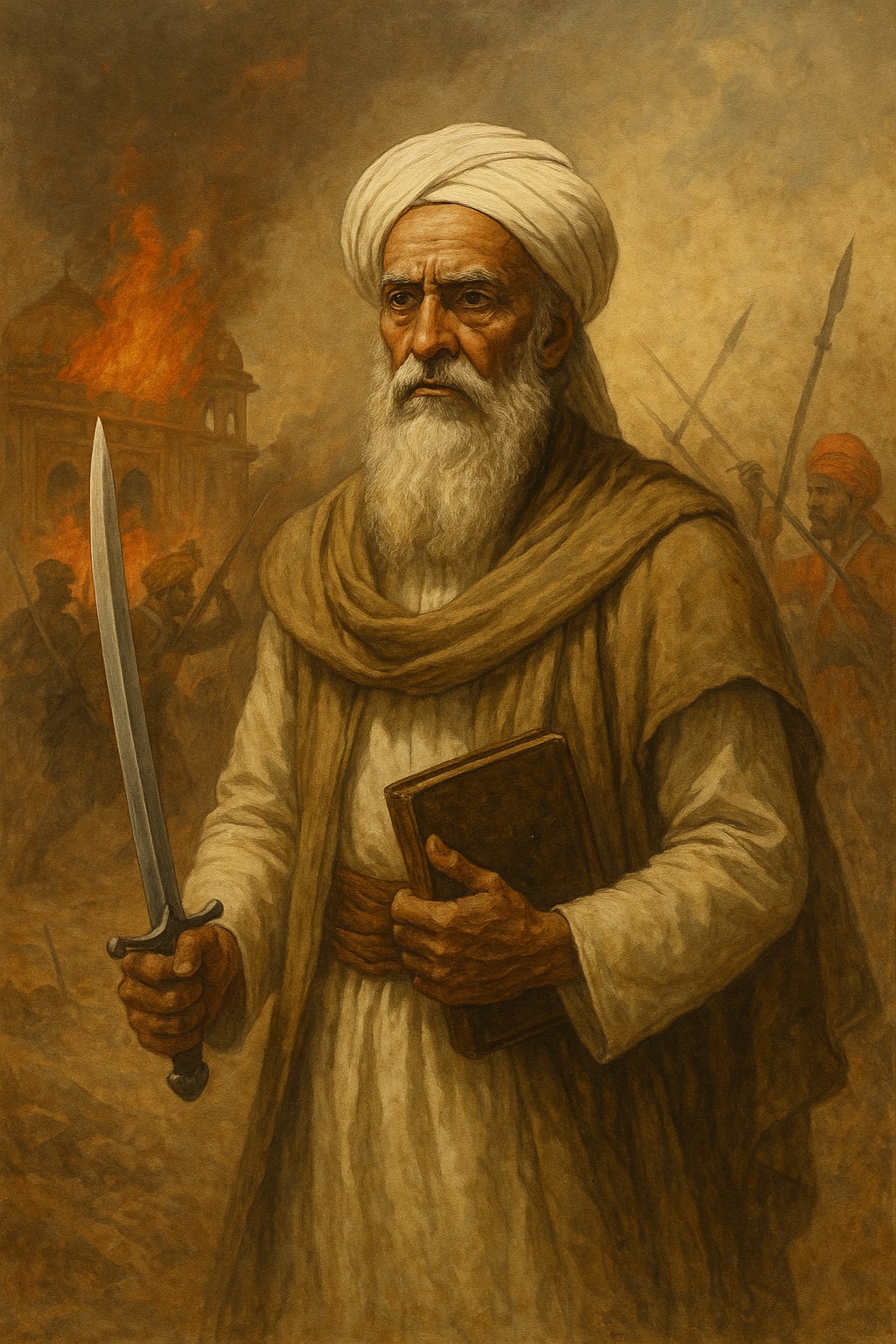
His name? Maulvi Ahmadullah Shah of Faizabad — a school teacher, a spiritual leader, and one of the most fearless architects of the first war of Indian independence. And yet, most Indians have never even heard of him.
This is the true story of a forgotten hero — erased by time, remembered by courage.
---
🕯 A Scholar with a Sword
Born in 1787 in Faizabad (Awadh), Ahmadullah Shah was not raised in a palace but in a home of books and discipline. He was known for his scholarship in Arabic, Persian, and Islamic theology. For years, he lived as a peaceful teacher and spiritual guide.
But British rule had begun to choke the cultural and economic life of Awadh. When Nawab Wajid Ali Shah was exiled and farmers taxed into poverty, Ahmadullah’s sermons started turning from spiritual to revolutionary.
He began to preach resistance as a moral duty — and Awadh listened.
---
🔥 The Fire of Rebellion
When the 1857 revolt began in Meerut, Ahmadullah Shah swiftly emerged as the torchbearer of rebellion in Awadh. He gathered a vast army of soldiers, villagers, and local nobles. He became known not only for his bravery but also for his ability to unite Hindus and Muslims under one banner.
In Lucknow, Shahjahanpur, and Faizabad, his forces clashed with British troops in fierce, disciplined assaults. Even British reports grudgingly admitted that he was "the most formidable leader in the region."
He issued orders in Persian and Urdu. He spared civilians, protected religious sites, and demanded ethical warfare — centuries ahead of his time.
---
⚔ Betrayal in the Shadows
By 1858, British forces had begun reclaiming lost territories. But Ahmadullah Shah remained uncaptured — until betrayal sealed his fate.
The Raja of Powayan, under pressure from the British, invited Ahmadullah Shah for a truce—and assassinated him in cold blood. His severed head was sent to the British Commissioner as a symbol of loyalty.
There were no state funerals. No headlines. No songs of mourning.
Only silence.
---
🏴☠ Why Was He Forgotten?
While figures like Mangal Pandey became icons, Ahmadullah Shah's combination of spiritual leadership and military rebellion didn’t sit well with colonial historians — or even post-independence political narratives.
But locals remembered. And they still do.
Old men in Faizabad still speak of “Maulvi Saab” who rode into battle with a sword in one hand and a holy book in the other.
---
🧭 His Legacy Today
Ahmadullah Shah’s grave still exists — unmarked and unguarded. In 2009, activists petitioned the Indian government to declare it a national heritage site. But like the man himself, the demand was lost in paperwork.
Yet in the hearts of those who still whisper his name, he never died.
---
💬 Final Thoughts
History doesn’t forget heroes. We do.
Maulvi Ahmadullah Shah was not just a rebel. He was a symbol — of unity, courage, and conscience. A teacher who led a war. A saint who became a soldier. A patriot who died in silence so that others might one day speak freely.
It’s time we said his name again.
---
📌 If this story moved you, share it — and bring justice to the forgotten warrior of India’s first revolution.
THE END
PLEASE LIKE MY STORY
About the Creator
Reform or Replace? The Future of Global Governance
Reform or Replace? The Future of Global Governance Global governance stands at a critical crossroads. Institutions created after World War II—especially the United Nations—were designed to prevent another global catastrophe. For decades, they provided platforms for dialogue, coordination, and conflict management. But today, many people question whether these institutions still work as intended. The growing debate is no longer just about reform. It is about whether global governance should be repaired or replaced entirely.
By Wings of Time about 17 hours ago in History
Who Replaces the United Nations If It Fails?
Who Replaces the United Nations If It Fails? For more than seventy years, the United Nations has served as the world’s main platform for diplomacy, peacekeeping, and global cooperation. Despite its weaknesses, it remains the only institution where nearly every country has a seat at the table. But as trust in the UN declines and major powers increasingly act alone, an uncomfortable question is being asked more often: if the UN fails, who—or what—takes its place?
By Wings of Time a day ago in History



Comments
There are no comments for this story
Be the first to respond and start the conversation.