
The First Lawmakers: How the Ancient Near East Built the Blueprint for Civilization
From Ur-Nammu to Hammurabi, exploring the legal minds that shaped justice before the West was born
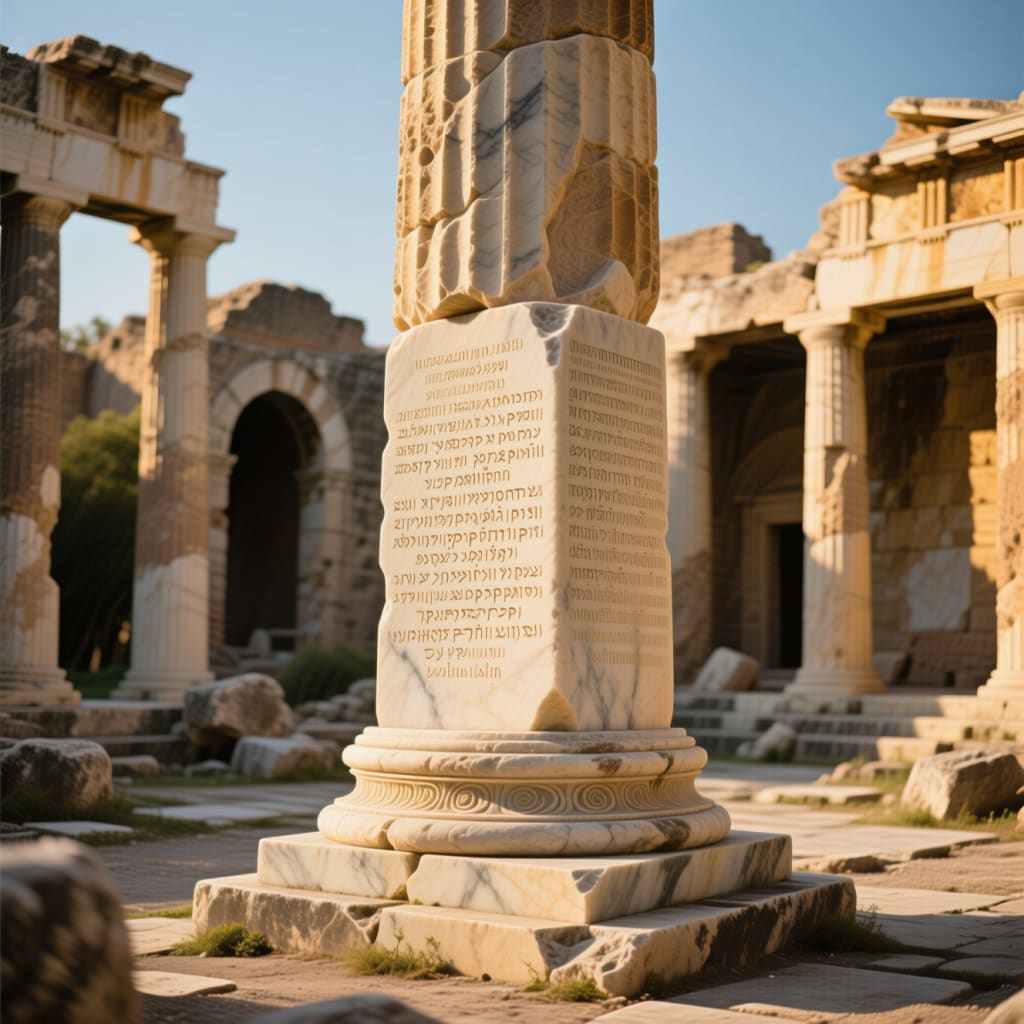
When we speak of law and order today, we often look westward—to Athens, Rome, or London. But before those cities dreamed in marble, dusty tablets in Sumer, Akkad, and Babylon were already echoing the weight of legal codes.
The Ancient Near East—a region that cradled some of humanity’s earliest cities—isn’t just a stage for biblical drama or epic poetry. It’s where the very idea of codified law was born. And understanding how Mesopotamian kings used law not only to rule, but to legitimize, can tell us more than we might expect about today’s systems of power.
The World's First Law Code?
Most readers know the Code of Hammurabi—famous for its “eye for an eye” justice and the iconic basalt stele that now sits in the Louvre. But Hammurabi was late to the game. Over three centuries earlier, King Ur-Nammu of Ur inscribed what is, as far as we know, the oldest surviving law code in history, dating back to around 2100 BCE.
Ur-Nammu’s laws weren’t just punitive; they were also administrative. They set wages, delineated the rights of slaves and women, and sought to organize a society already burdened by growing bureaucracy and temple economies. Written in Sumerian, the laws reflect a world deeply rooted in religious authority, where kings were shepherds chosen by the gods—not despots by right.
Law as Propaganda: The King's Justice
Laws in the Ancient Near East did more than settle disputes—they spoke. Each preface to a Mesopotamian law code reads like a royal sermon. Hammurabi, for instance, claimed that the god Marduk chose him "to cause justice to prevail in the land, to destroy the wicked and the evil."
By carving his laws into stone, Hammurabi wasn’t just laying down the rules—he was branding himself as the divine bringer of justice. This wasn’t merely law. It was politics, theology, and theatre, wrapped into one monolithic message: the gods support this ruler—disobedience is blasphemy.
Class, Gender, and Inequality Written in Stone
Ancient Near Eastern law wasn’t blind—it saw status, wealth, and gender all too clearly. Hammurabi’s Code made distinctions between the awilu (free men), mushkenu (dependent commoners), and slaves. Punishments for crimes varied depending on the perpetrator’s rank and the victim’s class. If a nobleman broke the bone of another nobleman, he would suffer the same. But if he broke a commoner’s bone? A fine would suffice.
Women’s legal standing was complex. While often under the guardianship of men, women could own property, run businesses, and act as priestesses. Yet, adultery laws were punishingly unequal: a woman caught cheating could be drowned, while her husband could simply pardon her—if he wished.
Beyond Babylon: Legal Echoes in the Hebrew Bible
Scholars have long noted parallels between Mesopotamian law and the legal sections of the Hebrew Bible. The Laws of Eshnunna and Hammurabi’s Code both contain strikingly similar passages to those in Exodus and Deuteronomy. For example:
- Hammurabi: "If a builder builds a house... and the house collapses and kills the owner, the builder shall be put to death."
- Exodus 21: "If a man digs a pit and does not cover it, and an ox or donkey falls into it, he must pay restitution."
These are not direct copies but reflections of a shared legal consciousness—a Mesopotamian legal grammar that passed, reshaped, into the biblical world. It suggests that ancient law was never static. It traveled, adapted, and survived.
What the Tablets Still Tell Us
Today, thousands of clay tablets lie in museum basements and archaeological storerooms, inscribed in cuneiform and waiting to be deciphered. These dusty artifacts remain legal records, contracts, and codes—some for sheep theft, some for marriage disputes, some for temple offerings. But all of them whisper the same thing: that long before the modern world crowned its judges and elected its lawmakers, civilization was already drawing lines in clay.
Conclusion:
The legal systems of the Ancient Near East were not perfect. They were hierarchical, theocratic, and often brutal. But they were civilizational. They marked the first attempts to create a public record of justice, to control power with principles—even when those principles served power itself.
To study them is not to romanticize their rulers or praise their punishments. It is to trace a line—through stone, through empire, through scripture—that leads from the banks of the Tigris and Euphrates to the courtrooms of today.
Author's Note: If you enjoyed this dive into the legal legacy of the Ancient Near East, follow me for more explorations into the earliest echoes of civilization—from the ziggurats of Ur to the prophecies of Mari.
About the Creator
Keep reading
More stories from Yand Bullosy and writers in History and other communities.
The Cradle of Civilization
The Cradle of Civilization: Unearthing the Enduring Legacy of the Ancient Near East Forget dusty textbooks and dry lectures. Step back in time – way back – to a world where the first cities rose from the mudflats, writing scratched its way onto clay, and laws were carved in stone for all to see. Welcome to the Ancient Near East, the vibrant, complex, and utterly foundational crucible where the very blueprint of Western civilization was forged. This isn't just history; it's the origin story of us.
By Yand Bullosy6 months ago in History
The Accidents That Quietly Improved Aviation Forever
I used to think aviation history was a story of bold successes, record-breaking flights, sleek aircraft, and triumphant landings. But the more I read, the more I realized something uncomfortable: much of modern aviation was shaped not by success, but by accidents. The safety and reliability we now take for granted were quietly built from moments when things went terribly wrong.
By Beckett Dowhan2 days ago in History
"Game of Thrones: A Tale of Power, Betrayal, and Destiny"
In the vast and divided land of Westeros, power was everything. Noble houses ruled their regions, bound together by fragile alliances, old grudges, and a constant hunger for the Iron Throne—the seat of supreme authority. Though summer had lasted for many peaceful years, whispers of change moved with the cold wind. Winter, long feared, was coming.
By The best writer 4 days ago in History
Rachel Reviews: The Spiral Archive by Pieter Hendrik
It's difficult for me to know where to start with a review of this book as it was, for me, an entirely unique experience and one that I'll probably never have again. I don't want that to be interpreted as unenjoyable but it has left me scratching my head a little and ruminating on its content, its themes and its characters.
By Rachel Deemingabout 7 hours ago in BookClub


Comments
There are no comments for this story
Be the first to respond and start the conversation.