
The Filles du Roi: France's Bold Plan to Build New France
Population growth

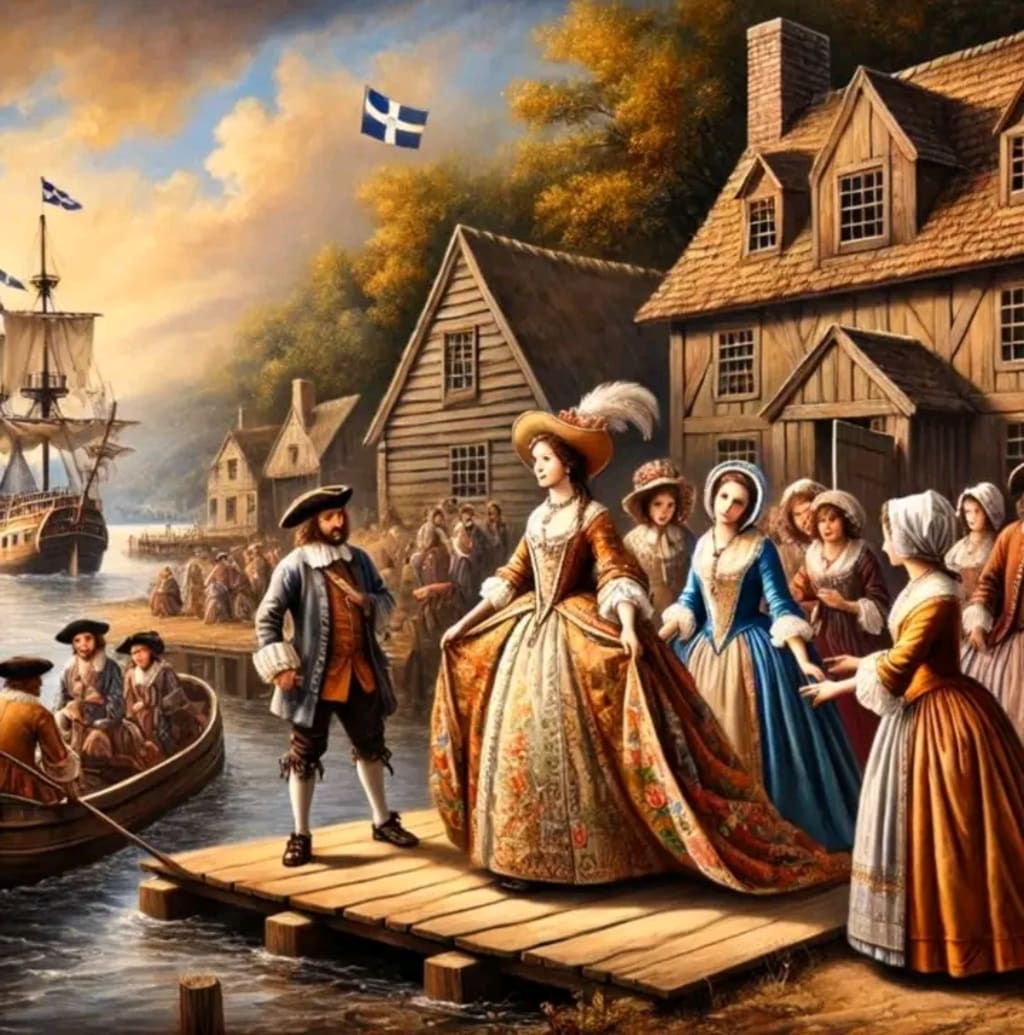
In the mid-17th century, New France (now Quebec) was a fledgling colony struggling to thrive. Its sparse population and the overwhelming imbalance of men to women made it difficult to establish stable communities. To address this issue, King Louis XIV of France launched a groundbreaking initiative: he sent nearly 800 women, known as the Filles du Roi (“Daughters of the King”), to Quebec between 1663 and 1673. This bold social experiment not only transformed the colony but also laid the foundation for modern French-Canadian society.
---
The Need for the Filles du Roi
By 1663, New France faced a demographic crisis. With only a few thousand settlers and a male-to-female ratio of approximately six to one, the colony struggled to sustain its population. Most men were fur traders or soldiers living isolated lives in a rugged and often dangerous environment.
Without women to form families, the colony's growth was stagnant. Governor Jean Talon, New France’s intendant, recognized this challenge and persuaded King Louis XIV to intervene. The solution was simple but ambitious: recruit young women from France, sponsor their journey to the New World, and encourage them to marry settlers, thereby fostering family life and population growth.
---
Who Were the Filles du Roi?
The Filles du Roi were not of royal blood, but their journeys were financed by the crown—hence the name “Daughters of the King.” These women were typically aged between 15 and 25 and came from a variety of backgrounds. Many were orphans raised in convents, while others were daughters of poor families seeking better opportunities.
Contrary to some misconceptions, the Filles du Roi were not forced into this arrangement. They volunteered, motivated by the promise of a better life, a dowry provided by the king, and the chance to escape poverty. The French government carefully vetted candidates, ensuring they were of good moral character and physically fit to endure the challenges of frontier life.
Each woman received a dowry that included money, household goods, and farming supplies. These resources were meant to help them establish a new life in New France. Upon arrival, they would meet potential husbands, often within days or weeks, and were married shortly after.
---
The Journey Across the Atlantic
The voyage from France to Quebec was arduous and perilous, lasting about two to three months. The women traveled in cramped ships, enduring seasickness, unsanitary conditions, and the constant threat of storms. Some did not survive the journey.
Once they arrived, the Filles du Roi were housed temporarily in shelters, often run by nuns, where they could recover and prepare for their new lives. Here, they were introduced to local bachelors, including farmers, artisans, and soldiers. Marriage negotiations were swift, as there was immense pressure to settle quickly and contribute to the colony’s growth.
---
Impact on New France
The Filles du Roi initiative was an extraordinary success. Over the ten years of the program, nearly all of the 800 women married and began families. Their efforts doubled the population of New France within a decade.
These women played a vital role in shaping the colony’s social and cultural fabric. They raised large families, often bearing 10 or more children, and worked alongside their husbands to build farms, businesses, and communities. Despite the hardships of colonial life—harsh winters, threats from Indigenous warfare, and isolation—they contributed to the colony’s resilience and expansion.
---
Legacy of the Filles du Roi
The influence of the Filles du Roi extends far beyond their lifetimes. Today, two-thirds of the French-Canadian population can trace their ancestry back to these remarkable women. Their descendants include politicians, artists, and other notable figures who have shaped Canadian history and culture.
The initiative also stands out as one of the earliest examples of state-sponsored immigration aimed at demographic growth. It demonstrated the power of policy to address population imbalances and foster community development in frontier regions.
In Quebec, the Filles du Roi are celebrated as pioneers and cultural icons. Their story is taught in schools, and genealogical organizations help French Canadians trace their roots back to these women. Monuments and plaques commemorate their courage and contributions, ensuring their legacy endures.
---
Challenges and Controversies
While the Filles du Roi program is often praised, it was not without challenges and criticisms. Some historians argue that it placed immense pressure on women to marry quickly, leaving little room for choice. Others point out that the program’s focus on population growth overshadowed the personal agency of the women involved.
Despite these concerns, the Filles du Roi initiative was undeniably effective in achieving its primary goal. It not only saved New France from demographic collapse but also provided opportunities for hundreds of women to escape poverty and build new lives.
---
Conclusion
The story of the Filles du Roi is one of resilience, bravery, and transformation. These young women ventured into the unknown, braving perilous journeys and the hardships of colonial life, to lay the foundation for a thriving society. Their impact continues to resonate, a testament to the power of determination and the enduring legacy of immigration in shaping the world we know today.
For French Canadians, the Filles du Roi are more than historical figures—they are symbols of strength and heritage, a reminder of the challenges their ancestors overcame to create a vibrant and enduring culture in the heart of North America.
About the Creator
Keep reading
More stories from Deji Akomolafe and writers in History and other communities.
Unveiling the Ancient Greek Gold Diadem: A 2,300-Year-Old Masterpiece Hidden in Plain Sight
A rare and exquisite piece of Ancient Greek history recently surfaced under the most unexpected circumstances. For decades, a 2,300-year-old gold diadem lay forgotten in a tattered box of old newspapers beneath a bed, its owner entirely unaware of its extraordinary significance. Worth an estimated £100,000, this Macedonian treasure, thought to have been looted by tomb raiders, has now found its way to the British Museum in London, where experts are studying its origins, craftsmanship, and cultural significance.
By Deji Akomolafeabout a year ago in History



Comments
There are no comments for this story
Be the first to respond and start the conversation.