
The Father of LSD
The Life and Legacy of the Scientist Who Discovered the Mysteries of LSD


The Father of LSD
___
Albert Hofmann, a Swiss chemist and visionary scientist, is best known for his groundbreaking discovery of lysergic acid diethylamide (LSD), a powerful psychedelic compound that revolutionized neuroscience, psychology, and counterculture movements worldwide. His life and work spanned almost a century, bridging traditional scientific research with profound explorations of human consciousness.
__
Early Life and Education
Albert Hofmann was born on January 11, 1906, in Baden, Switzerland. Raised in a modest family, Hofmann showed an early fascination with the natural world, particularly plants and chemistry. This passion guided his academic path, leading him to study chemistry at the University of Zurich. There, Hofmann earned his doctorate in 1929, focusing on organic chemistry.
His strong foundation in chemical sciences set the stage for a career dedicated to exploring natural substances. Early in his professional life, Hofmann joined Sandoz Laboratories, a pharmaceutical company in Basel, Switzerland. It was at Sandoz that Hofmann’s journey into the world of psychedelic compounds began.
__
The Discovery of LSD
In 1938, while researching ergot alkaloids—compounds derived from a fungus that infects rye—Hofmann synthesized LSD-25, intending to develop a respiratory and circulatory stimulant. Initially, the compound was set aside due to a lack of apparent pharmacological effects. However, Hofmann’s curiosity led him to revisit LSD five years later.
On April 16, 1943, during a routine lab work, Hofmann accidentally absorbed a small amount of LSD through his skin and experienced unexpected sensory changes. Intrigued by these effects, he intentionally ingested 250 micrograms of LSD on April 19, 1943, a day now celebrated as “Bicycle Day.” He experienced intense visual distortions and an altered state of consciousness while riding his bicycle home. This experiment marked the first deliberate LSD trip in history and opened the door to decades of research on psychedelic experiences.
__
Scientific Contributions and LSD’s Early Uses
Following his discovery, Hofmann published several papers detailing LSD’s effects on human perception and cognition. He believed LSD had potential therapeutic applications, especially in psychiatry. Early clinical research explored LSD’s ability to aid psychotherapy, treating anxiety, depression, addiction, and other mental illnesses.
Beyond LSD, Hofmann also investigated other natural psychedelics, including psilocybin (the active compound in “magic mushrooms”) and mescaline. His work was pivotal in bridging ethnobotany and modern pharmacology, highlighting how ancient cultures used natural substances for spiritual and healing purposes.
Challenges and Controversies
Despite Hofmann’s scientific intentions, LSD became a symbol of the 1960s counterculture, associated with anti-establishment movements, psychedelic art, and experimentation. This widespread recreational use, coupled with concerns about safety and social impact, led governments worldwide to ban LSD by the late 1960s.
Hofmann lamented the stigma and legal restrictions placed on LSD, believing the compound’s potential was overshadowed by fear and misunderstanding. He spent much of his later career advocating for responsible research and education about psychedelics, emphasizing their profound ability to expand human consciousness and aid mental health when used appropriately.
Later Life and Legacy
Albert Hofmann continued his research and writings well into his nineties. He published his autobiography, LSD: My Problem Child, in 1979, providing personal insights into the discovery and cultural impact of LSD. Hofmann also collaborated with researchers exploring psychedelics’ therapeutic benefits, helping renew scientific interest after decades of prohibition.
He passed away on April 29, 2008, at the age of 102, leaving behind a complex legacy intertwined with science, spirituality, and culture.
Impact on Science, Culture, and Mental Health
Hofmann’s discovery reshaped scientific understanding of the brain and consciousness. LSD and other psychedelics have since inspired advances in neuroscience, revealing the brain’s plasticity and the nature of perception. Modern clinical trials have rekindled hope for psychedelic-assisted therapies addressing depression, PTSD, and addiction.
Culturally, LSD influenced music, art, literature, and philosophy, fostering movements that questioned mainstream values and explored alternative ways of knowing. Despite controversies, Hofmann remained committed to the idea that psychedelics could deepen humanity’s appreciation for life and interconnectedness.
Conclusion
Albert Hofmann’s life was marked by curiosity, courage, and a willingness to explore the unknown. His discovery of LSD not only revolutionized chemistry and psychiatry but also challenged humanity to reconsider the boundaries of consciousness and experience. Though the path was fraught with challenges, Hofmann’s vision continues to inspire scientists, therapists, and seekers worldwide.
About the Creator
Irshad Abbasi
"Studying is the best cure for sorrow and grief." shirazi
Keep reading
More stories from Irshad Abbasi and writers in History and other communities.
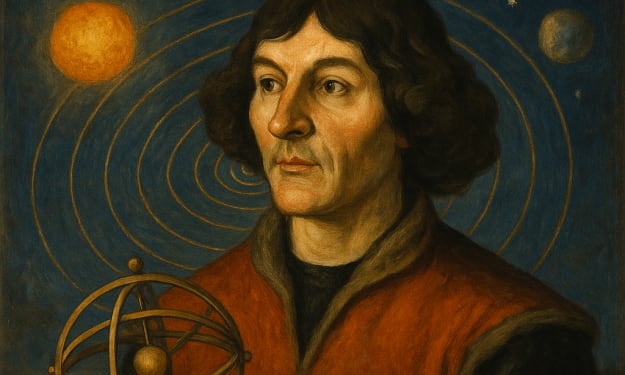
The Astronomer Who Moved the Earth
Nicolaus Copernicus, born on February 19, 1473, in the city of Toruń, in the Kingdom of Poland, is celebrated as one of the most influential figures in the history of science. His revolutionary theory—that the Earth and planets revolve around the Sun—completely overturned centuries of astronomical thought and laid the foundation for modern astronomy. The idea that the Earth was not the center of the universe was more than a scientific breakthrough; it was a cultural and philosophical shift that forever changed humanity’s understanding of its place in the cosmos.
By Irshad Abbasi 7 months ago in History
A Dart at Dusk
Seconds ago, the sullen sun set on the two of us… my exuberant furry companion and me. A fresh breeze embraces us, delivering welcome relief from the day’s oppressive heat. His typical stumbling and staggering along — apace with a sloth — has turned into trip-trapping, high-stepping, almost skipping along.
By Angie the Archivist 📚🪶2 days ago in Petlife


Comments
There are no comments for this story
Be the first to respond and start the conversation.