
The Failure of Merrick Garland to Investigate and Indict Trump
A Critical Retrospective
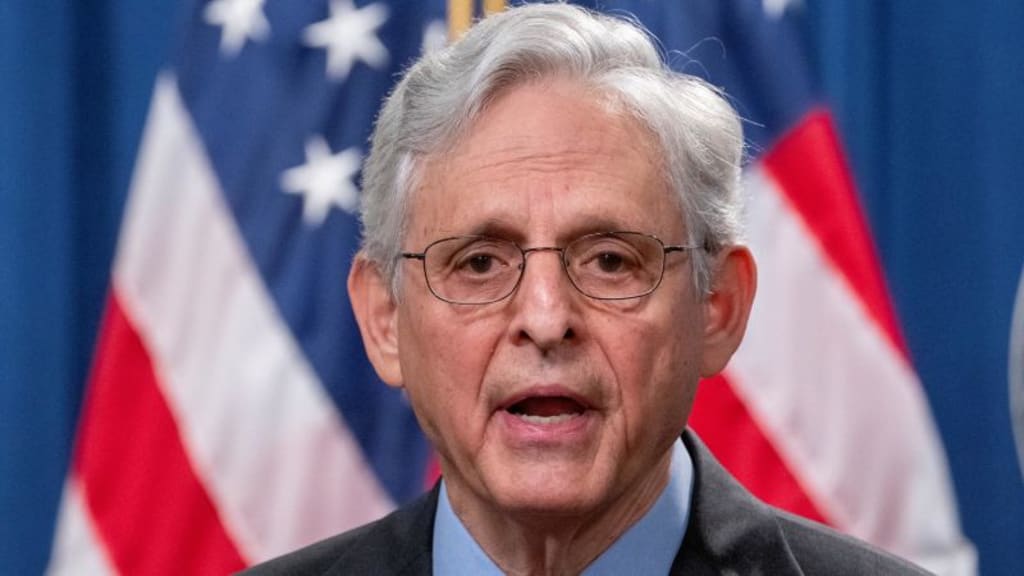
As Donald Trump prepares to be sworn in as the 47th President of the United States on January 20, 2025, the actions—or lack thereof—of Attorney General Merrick Garland have come under intense scrutiny. While it is important to recognize that approximately 277 rioters have been sentenced to prison for their roles in the January 6, 2021, Capitol attack, many argue that Garland’s failure to investigate and indict Trump represents a significant lapse in accountability. This retrospective examines what Garland should have done early in his tenure to uphold the rule of law and restore public trust in the justice system.
Missed Opportunities for Legal Action
Garland had several key opportunities to pursue legal action against Trump during his early tenure. The findings of the House Select Committee investigating January 6 provided substantial evidence of Trump's involvement in inciting the insurrection. Garland could have initiated investigations based on these findings, signaling a commitment to holding all individuals accountable, regardless of their political status.
Despite the successful prosecutions of lower-level participants in the riot, the decision not to target Trump and his inner circle has raised questions about the DOJ's commitment to accountability. By failing to act on these legal avenues, Garland allowed Trump to maintain his narrative of victimhood, crucial for galvanizing his base and shaping his political comeback.
Setting a Dangerous Precedent
The lack of action against Trump sets a troubling precedent for future administrations. When political leaders are not held accountable for actions that undermine democracy, it erodes public trust in the justice system. Garland’s inaction may embolden other political figures to engage in similar behavior without fear of consequences, further destabilizing the political landscape.
The perception that the DOJ is unwilling or unable to hold powerful individuals accountable can diminish faith in democratic institutions. Citizens may begin to question whether justice is served impartially, undermining the foundational principle that no one is above the law.
Implications for the Future of Justice
Garland’s failure to investigate and indict Trump not only impacts the current political landscape but also has lasting implications for the future of justice in America. As Trump prepares to assume office again, the absence of accountability may embolden him and his supporters to challenge democratic norms further.
The DOJ's credibility hangs in the balance. Without a clear commitment to upholding the rule of law, the agency risks losing public confidence in its ability to serve as a check on political power. This erosion of trust could have repercussions for future administrations, making it increasingly difficult to ensure accountability for actions that threaten democracy.
Conclusion
Merrick Garland’s failure to investigate and indict Donald Trump represents a critical missed opportunity for accountability at a pivotal moment in American history. While the DOJ has successfully prosecuted many rioters, the lack of action against the key figure behind the insurrection raises serious concerns about the agency's integrity.
Garland’s legacy will be defined not only by what he did during his tenure but also by what he failed to do when the opportunity for justice was at its peak. The need for accountability remains urgent, and the consequences of inaction will reverberate through the political landscape for years to come.
About the Creator
John Harker
Former HR exec | Advocate for liberal democracies & equality | 🐾 Animal lover, proud husband & dad | 🇪🇺 Pro-EU & rejoiner | Anti-MAGA & Trump | Believer in a brighter, united future.
Keep reading
More stories from John Harker and writers in History and other communities.
How Trump's Tariff Actions Could Boost China's Global Reputation
The Tariff Landscape: From Protectionism to Global Fallout In 2018, the Trump administration imposed sweeping tariffs on Chinese goods, citing concerns over intellectual property theft, state subsidies, and trade imbalances. The move affected over $350 billion worth of goods and sparked a tit-for-tat trade war that escalated tensions between the world’s two largest economies.
By John Harker9 months ago in History
Nanchang: A Modern Symbol of China’s Naval Power
In recent years, the world has closely watched the rapid modernization of the Chinese People’s Liberation Army Navy (PLA Navy). One of the most important symbols of this transformation is the Nanchang (Hull 101), China’s first Type 055 guided-missile destroyer. Commissioned on 12 January 2020, Nanchang represents a major leap in naval technology and capability. As it completes six years of active service, the ship stands as a clear example of how China’s navy has moved into a new era of advanced maritime power.
By sehzeen fatima6 days ago in History
Where the Pulse Ends
© 2026 Sai Marie Johnson The humidity in the city didn’t just hang; it leaned. It was a thick, stagnant soup of diesel exhaust, ozone, and the metallic tang of blood that drifted from the "Compliance Zones." Joe sat in his rusted sedan, his hands resting loosely on the steering wheel. He wasn't gripping it. He wasn't angry. Anger was a chemical spike, a biological inefficiency. Joe was simply... focused.
By Sai Marie Johnson3 days ago in History




Comments
There are no comments for this story
Be the first to respond and start the conversation.