
The Extraordinary Life of Ada Lovelace: The World’s First Computer Programmer
Discover how Ada Lovelace's visionary work laid the groundwork for modern computing and inspired generations of innovators.
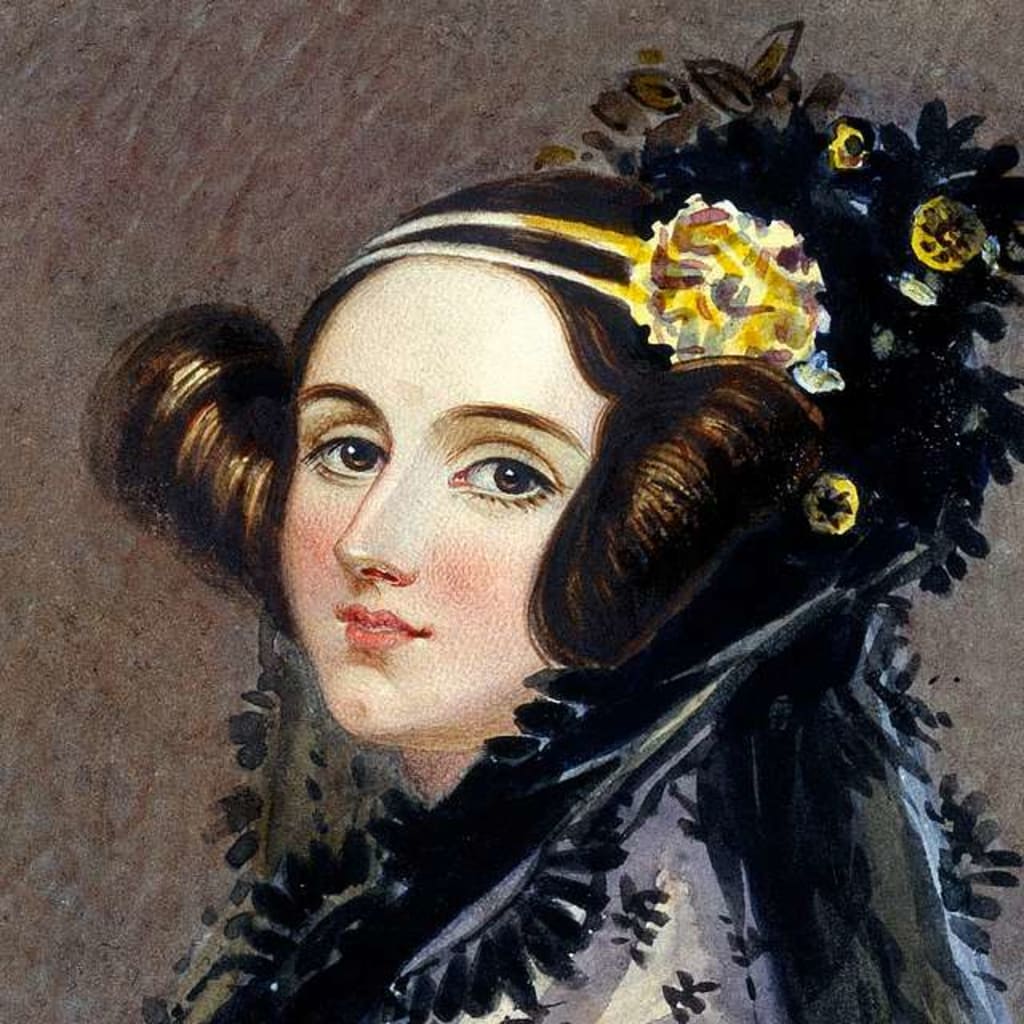
Ada Lovelace, born Augusta Ada Byron in 1815, was a visionary mathematician whose work laid the groundwork for the modern computer age. Often celebrated as the first computer programmer, her contributions to the world of technology were not just groundbreaking for her time but also ahead of it.
A Glimpse into Ada’s Early Life
Ada was the only legitimate child of the poet Lord Byron and his wife, Annabella Milbanke. Although she never knew her father, who left the family shortly after her birth and died when she was just eight years old, Ada’s mother, known for her intellectual pursuits, made sure Ada had a rigorous education in mathematics and logic.
Her mother’s emphasis on science was a direct response to Ada’s poetic father, and she believed that Ada should be far removed from the romanticism that Lord Byron was known for. Ada's early exposure to subjects like algebra and calculus would form the foundation of her future achievements.
Meeting Charles Babbage: The Spark of Genius
In 1833, at the age of 17, Ada Lovelace met Charles Babbage, an English mathematician and inventor who is considered the father of the computer. Babbage had created plans for a mechanical calculating machine, which he called the "Analytical Engine." This machine was designed to perform complex calculations and would later be recognized as the first concept of a general-purpose computer.
Ada was captivated by Babbage's ideas and soon became his collaborator. She translated an article written by the Italian mathematician Luigi Federico Menabrea about Babbage’s engine, and while doing so, she added her own extensive notes—three times the length of the original article. These notes would eventually be recognized as a significant contribution to the development of computing.
Ada Lovelace’s Key Contribution: The First Algorithm
It is in these notes that Ada Lovelace introduced what is considered the world’s first algorithm—a set of instructions for the Analytical Engine to compute Bernoulli numbers. While the machine was never completed during their lifetimes, Ada’s understanding of its potential far exceeded the contemporary technological limitations.
What set Ada apart from other thinkers of her time was her ability to see beyond the simple mechanical function of the machine. She envisioned the possibility of using the Analytical Engine not just to perform arithmetic calculations but to handle symbols, essentially laying the theoretical foundation for what would become modern computing.
The Legacy of Ada Lovelace
Ada Lovelace’s contributions were not recognized during her lifetime, but her vision paved the way for future generations of programmers and computer scientists. Her work would not be fully appreciated until the 20th century when computer science began to evolve and gain widespread recognition.
In 1980, the U.S. Department of Defense named a new computer programming language "Ada" in her honor. Today, Ada Lovelace is remembered as a pioneer, and her story continues to inspire women in STEM (Science, Technology, Engineering, and Mathematics) fields.
Ada’s Enduring Influence on Technology
Ada’s legacy is not just confined to her groundbreaking algorithm. Her insight into the potential of computers, her foresight in seeing them as more than mere calculating machines, and her ability to conceptualize the digital world make her a true visionary. In the context of today’s digital age, where algorithms govern everything from social media feeds to artificial intelligence, Ada Lovelace’s contributions remain foundational.
Her work challenges us to think about technology not only in terms of functionality but in its potential for creativity, complexity, and advancement. Ada’s belief that computers could one day be used to perform operations on any kind of symbol—mathematical, musical, or even textual—is echoed in the technology that drives the world today.
Conclusion
Ada Lovelace’s life was short, but her impact on the world has been immeasurable. As a woman in the 19th century, she broke societal norms to become a trailblazer in the field of mathematics and technology. Her pioneering work continues to shape the way we view and interact with technology, making her a timeless figure whose legacy will undoubtedly continue to inspire future generations.
Ada’s story is a reminder that innovation often comes from the most unexpected places and that the seeds of future breakthroughs can be planted long before the world is ready to receive them.
About the Creator
Alvis Njoroge
Hi, I’m Alvis Njoroge—a storyteller passionate about uncovering extraordinary lives and groundbreaking ideas. Join me as I explore history’s hidden gems and modern-day innovators, sharing stories that inspire and spark curiosity!
Keep reading
More stories from writers in History and other communities.
The Volunteer from Auschwitz No. 4859 – The Story of Witold Pilecki
Witold Pilecki (1901–1948) is rightly regarded as one of the greatest Polish heroes of World War II. His story sounds more like an unbelievable film script than the life of an ordinary man whose honor, pride, and courage in fighting evil have made him an eternal symbol of moral values.
By Elvira Diggory7 days ago in History
The Muslim Math a Christian Emperor Refused to Reject
1225, Southern Italy. A Christian emperor sits across from a mathematician trained in the Islamic world. He asks a question about numbers. What happens in the next hour will quietly reshape Europe—though no one in that room realizes it yet.
By Olga Angelucci4 days ago in History
Stories Before a Wedding, or The Happily Ever After of Cinderella
Cinderella had always dreamt of marrying a prince. She had dreamt of nothing else since she was a small girl. Now, however, as the Prince’s wife of three days, she had to admit that the reality was not as she had dreamt it to be.
By Dionearia Red3 days ago in Fiction
Public Announcement Challenge Winners
For the Public Announcement Challenge, writers were asked to work inside voices built for control. These were notices, warnings, and updates meant to inform rather than confess. The strongest entries committed to that form and didn't break from it. Corporate memos, formal government alerts, and internal policy language were held consistently, allowing emotion, fear, grief, or humor to surface indirectly through pressure rather than declaration. The following poems recognize the voice of authority, and let human feeling slip through despite all its rules and restraint.
By Vocal Curation Teamabout 18 hours ago in Resources




Comments (1)
Amazing insight Thanks for taking the time to share.