
The Evolution of Earth:
From Single-Celled Organisms to Complex Ecosystems"

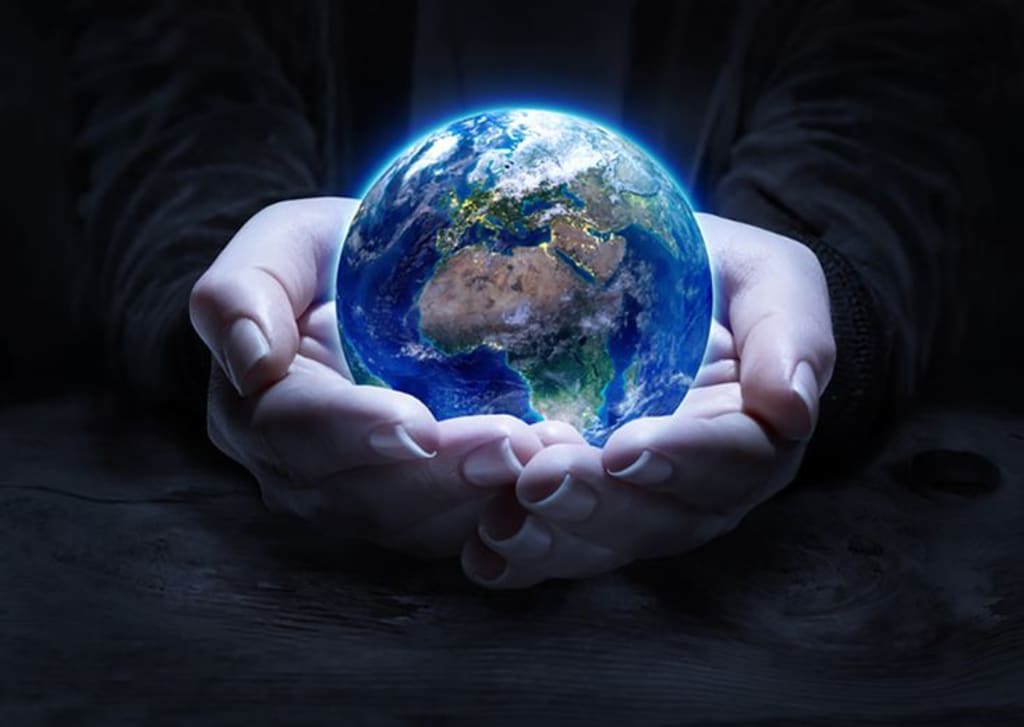
Formation and Early History
Around 4.6 billion years ago, Earth was born from a cloud of gas and dust surrounding our young Sun. This cloud, known as the solar nebula, gradually condensed due to gravity, forming the Sun at its center and the planets, including Earth, in the outer regions. Earth began as a molten ball of rock, constantly bombarded by asteroids and other celestial debris. The heat from these impacts, as well as from radioactive decay and gravitational compression, kept the planet in a liquid state for millions of years.
Over time, heavier elements like iron and nickel sank to the center, forming Earth's core, while lighter materials rose to form the mantle and crust. This process of differentiation created the basic layered structure of our planet. As Earth cooled, a thin crust formed on the surface, and volcanic activity released gases that began to form a primitive atmosphere—mostly carbon dioxide, water vapor, methane, and ammonia, but no oxygen.
Shaping of Continents and Oceans
As the planet's surface cooled, water vapor in the atmosphere condensed and fell as rain, forming the first oceans. The presence of water was crucial for the development of life, but it also played a major role in shaping Earth’s surface. Water, combined with tectonic activity, began to break down rocks and move sediments, sculpting the early landscape.
Plate tectonics began to shape Earth's surface further. The movement of the plates created mountain ranges, deep ocean trenches, and volcanic islands. Continents began to drift over time, merging and breaking apart in a process that continues today. The first supercontinent, Rodinia, formed around 1.1 billion years ago and later broke apart. Eventually, other supercontinents like Pangaea would also rise and fall, demonstrating the dynamic nature of Earth's crust.
Life Emerges: From Single-Celled Organisms to Complex Ecosystems
Life on Earth began in the oceans over 3.5 billion years ago. The earliest forms of life were simple, single-celled organisms known as prokaryotes. These microscopic life forms thrived in the ocean’s warm, mineral-rich environment. One major breakthrough in Earth’s biological history came with the development of photosynthesis, primarily by cyanobacteria. This process used sunlight to produce energy, releasing oxygen as a byproduct.
Over millions of years, the accumulation of oxygen in the atmosphere—known as the Great Oxygenation Event—transformed Earth’s atmosphere and allowed for the evolution of more complex, aerobic (oxygen-using) life. Eukaryotic cells, which are more complex than prokaryotes, emerged and later gave rise to multicellular life. Around 600 million years ago, the first animals appeared, eventually leading to the Cambrian Explosion—a period of rapid evolutionary development where most major animal groups first appeared in the fossil record.
Impact of Geological and Climatic Changes
Earth’s history has been punctuated by dramatic changes in climate and geology that have shaped the evolution of life. Ice ages, volcanic eruptions, shifting continents, and asteroid impacts have all played roles in both the extinction and evolution of species. For instance, the mass extinction event 66 million years ago—caused by a massive asteroid impact—wiped out the dinosaurs, paving the way for mammals to become the dominant land animals.
Glaciations covered large parts of the planet in ice, altering sea levels and forcing species to adapt or perish. Volcanic activity has altered the climate temporarily through the release of ash and gases, sometimes cooling the Earth by blocking sunlight. These dramatic shifts in climate and geography have constantly tested life’s resilience, driving evolution and diversity.
Human Influence and Future Challenges
Humans entered the scene relatively recently, with anatomically modern Homo sapiens appearing around 300,000 years ago. Despite our short existence in geological terms, humans have had a profound impact on Earth. Through agriculture, industrialization, urbanization, and the burning of fossil fuels, we have altered the land, air, and water. Human activity has led to deforestation, pollution, climate change, and the extinction of countless species.
The rapid increase in greenhouse gases like carbon dioxide has caused global temperatures to rise, leading to melting ice caps, rising sea levels, and more extreme weather patterns. These changes not only threaten ecosystems but also human societies around the world. While technological advancement has brought comfort and connection, it has also created new environmental and ethical challenges.
The future of Earth depends heavily on our actions. Sustainable practices, clean energy, and international cooperation are essential to preserving the planet for future generations. Understanding Earth’s long and dynamic history gives us a better appreciation for the fragility of the systems we depend on and the urgent need to protect them.
Conclusion
The story of Earth is a story of constant change and incredible resilience. From its fiery beginnings to the rich, life-sustaining world we know today, Earth has undergone countless transformations. Each era has left its mark, shaping the land, the atmosphere, and the life that thrives on it. As stewards of this planet, it is our responsibility to understand its past, respect its present, and protect its future.
About the Creator
Hasnain khan
"Exploring the world through words. Join me as I unravel fascinating stories, share insightful perspectives, and dive into the depths of curiosity."
Keep reading
More stories from Hasnain khan and writers in History and other communities.
Swat Under Water"
The rain began quietly, as it always did in the monsoon season, with a light drizzle brushing the pine-covered slopes of the Swat Valley. Children ran through the narrow streets of Bahrain, laughing, barefoot in the mud, as their mothers called them inside. Few paid attention to the gathering clouds—after all, rain in Swat was nothing new.
By Hasnain khan8 months ago in History




Comments
There are no comments for this story
Be the first to respond and start the conversation.