
The Euromaidan Protests
A Turning Point in Ukrainian History

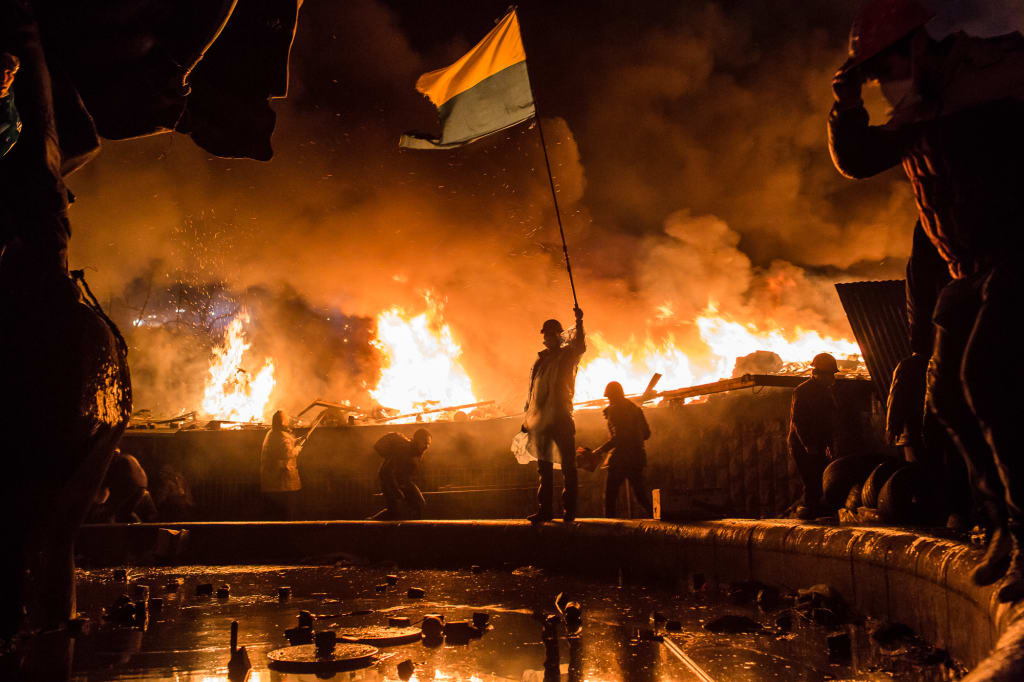
In the winter of 2013, a cold wind blew across the streets of Kyiv, carrying with it the hopes and aspirations of thousands of Ukrainians. The Euromaidan protests, also known as the Euromaidan movement, would come to be one of the most significant and transformative chapters in Ukraine's modern history. What began as a call for closer integration with Europe evolved into a powerful expression of national identity, democracy, and the struggle against corruption and authoritarianism.
Roots of Discontent:
The roots of the Euromaidan protests can be traced back to years of simmering discontent with Ukraine's political leadership and its complex relationship with Russia. Following Ukraine's independence in 1991, the country experienced a tumultuous path toward democracy, marked by economic challenges, political corruption, and wavering policy stances.
Throughout the years, Ukraine maintained close ties with Russia, particularly in energy and trade. However, under the leadership of President Viktor Yanukovych, elected in 2010, the country seemed to be moving away from its aspirations for closer integration with Europe.
The Spark that Ignited the Fire:
In November 2013, the Yanukovych government announced its decision to suspend the signing of an Association Agreement with the European Union (EU). The agreement aimed to deepen political and economic ties between Ukraine and the EU and was seen by many as a step towards European integration.
The sudden suspension of the agreement sparked widespread frustration and ignited a pro-European movement. Ukrainians from all walks of life took to the streets, calling for the government to reverse its decision and embrace a path of greater engagement with Europe.
The Rise of Euromaidan:
The Maidan Nezalezhnosti, or Independence Square, in Kyiv became the epicenter of the protests. The square had a rich history of hosting significant events, but it had never seen a gathering of such scale and determination.
The protestors, who came to be known as Euromaidan activists, camped out in tents, enduring freezing temperatures and snowstorms. They waved Ukrainian flags and EU banners, singing national anthems and chanting slogans demanding change.
The movement quickly transcended the issue of the EU Association Agreement. It evolved into a broader demand for democratic reforms, an end to corruption, and the ouster of President Yanukovych's government.
The Violence and Crackdown:
As the protests gained momentum, tensions escalated. On November 30, 2013, riot police forcefully dispersed a peaceful pro-European demonstration in Kyiv, igniting further anger and determination among the protestors.
The violent crackdown backfired, drawing more people to the streets in solidarity with the protestors. The brutality of the police actions galvanized public opinion, not only in Ukraine but also internationally, drawing support from Western governments and leaders.
The Protests Intensify:
As the months rolled on, the Euromaidan protests continued to grow in size and scale. The demands of the demonstrators extended beyond political grievances, encompassing issues of social justice, human rights, and media freedom.
In December 2013, the European Union offered support and the promise of financial assistance to Ukraine if it signed the Association Agreement. This development further bolstered the protestors' resolve and amplified their message that a European future was the path Ukraine should take.
The Turning Point:
By early 2014, the situation had reached a boiling point. The Ukrainian government responded to the ongoing protests by passing a series of harsh anti-protest laws, severely restricting civil liberties and freedom of assembly.
In response, the protests escalated into intense clashes between protestors and security forces. The world watched in horror as the streets of Kyiv turned into a battleground.
On February 20, 2014, the violence reached a tipping point when dozens of protestors were killed in the deadliest day of clashes. The bloodshed fueled an unprecedented unity among the protestors and sent shockwaves across Ukraine and the world.
Yanukovych's Ouster:
The scale of violence and loss of life prompted a dramatic turn of events. On February 22, 2014, facing mounting pressure and fearing for his safety, President Yanukovych fled Kyiv and sought refuge in Russia. The Ukrainian Parliament subsequently voted to remove him from power, declaring him unable to fulfill his duties as president.
With Yanukovych gone, an interim government took power, led by opposition figures and pro-Euromaidan activists. This marked a historic turning point in Ukraine's political landscape, symbolizing a victory for the Euromaidan movement and a step towards democratic reform.
Aftermath and Challenges:
The Euromaidan protests left an indelible mark on Ukrainian society. The events of that winter galvanized a renewed sense of national identity and pride, with Ukrainians from diverse backgrounds uniting under a shared vision for a more democratic and European-oriented Ukraine.
However, the aftermath of the protests brought new challenges. Russia's subsequent annexation of Crimea and the eruption of conflict in Eastern Ukraine added further complexities to the nation's journey towards stability and sovereignty.
Ukraine's path towards reform and European integration continues to be an ongoing process, marked by both progress and setbacks. The Euromaidan protests of 2013-2014, though a defining moment, are just one chapter in the country's complex and evolving history.
As the spirit of Euromaidan endures, it serves as a poignant reminder of the power of collective action and the enduring human spirit in the pursuit of justice, freedom, and a better future. The legacy of the Euromaidan protests lives on, as Ukrainians continue their quest for a more prosperous, democratic, and united nation.
About the Creator
James Michael Andrews
Writing is my profession.
Keep reading
More stories from James Michael Andrews and writers in History and other communities.
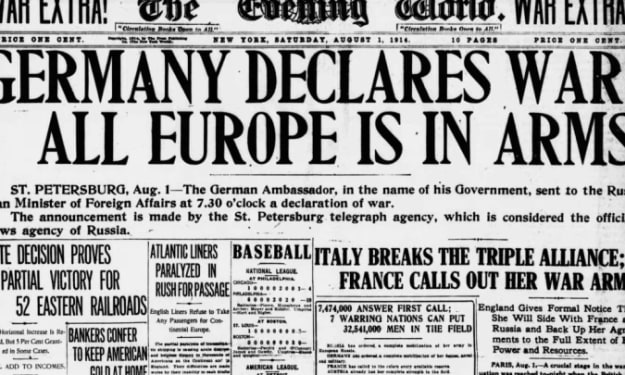
This Day in History- War Unleashed
In the smoke-filled rooms of Berlin, a decision was forged that would echo across the ages. On the first day of August in the year nineteen hundred and fourteen, Germany unleashed the ravages of war upon the vast expanse of Russia. The Kaiser's ironclad will, devoid of empathy, set the world ablaze with the stroke of a pen.
By James Michael Andrews 2 years ago in History
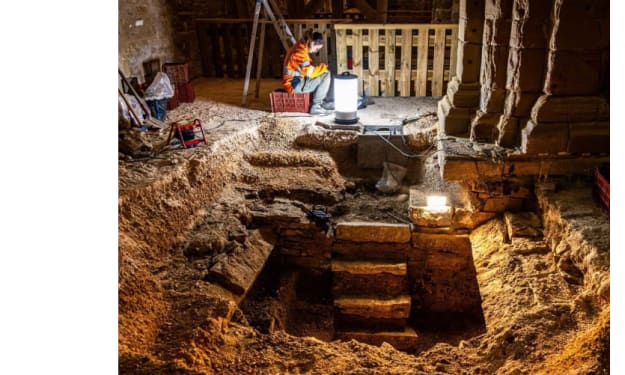
A secret staircase found beneath a 1,500-year-old French church
A subterranean staircase and burial strata dating back approximately 1,500 years were discovered during a project inside the Church of Saint Philibert in Dijon, France. The stairs were discovered by restoration workers inside the church when repairs were being made, and the excavation soon ensued.
By Francis Dami4 days ago in History
Martin Luther King's 'I Have a Dream' Speech: Things People Still Don't Know
Former President Ronald Reagan declared the third Monday in January to be Martin Luther King Jr. Day to celebrate the slain civil rights activist. Had he lived, he would be celebrating his birthday at age 97 on January 15, 2026, but he was assassinated at the young age of 39 on April 4, 1968.
By Margaret Minnicksa day ago in History
Wild Card Weekend Recap: What Happens Now?
I think I figured out why I love Wild Card Weekend so much. It's because it's the first playoff anything of the calendar year. The NFL season starts in the fall, and once upon a time, the champion was crowned either on or slightly before New Year's. The evolution of the NFL schedule has resulted in the playoffs starting just into the New Year, and currently, the final week of the season falls on the first weekend of the New Year, with Wild Card Weekend coming a week after that. So yes, chronologically, the NFL's Wild Card Weekend serves as the first playoff anything of the calendar year.
By Clyde E. Dawkins7 days ago in Unbalanced


Comments
There are no comments for this story
Be the first to respond and start the conversation.