
The Epic Battles of Panipat
A Chronicle of Power, Betrayal, and Bloodshed in Indian History

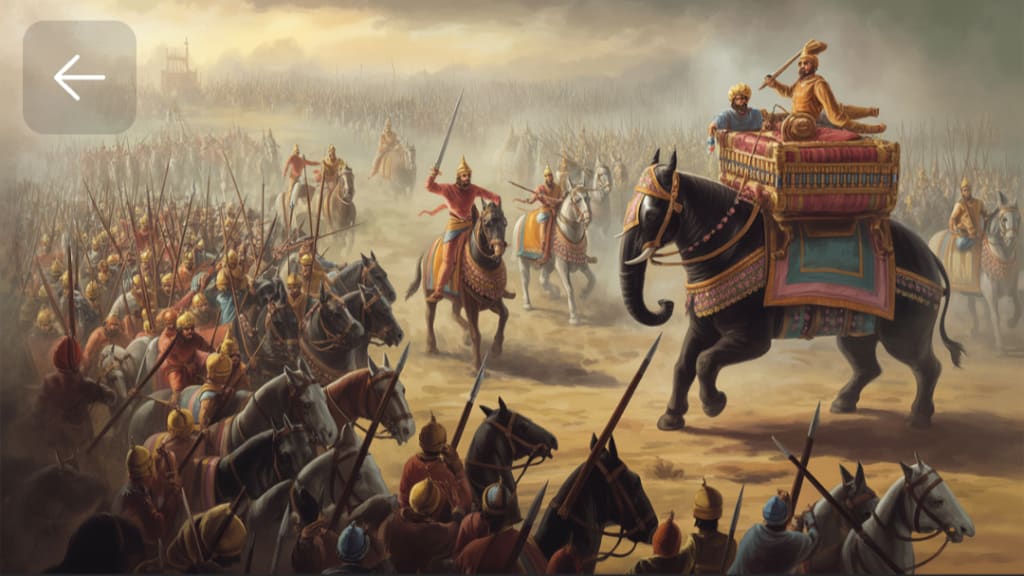
In the dusty plains north of Delhi lies the town of Panipat, a name etched in the chronicles of Indian history with blood, steel, and betrayal. Across three centuries, this unassuming patch of land witnessed three epic battles that changed the fate of empires, shattered dynasties, and redrew the political map of the Indian subcontinent.
From the death throes of the Delhi Sultanate to the meteoric rise of the Mughal Empire, from the ambitions of foreign conquerors to the tragic downfall of indigenous powers — Panipat became the final arbiter of fate for rulers and warriors alike.
The First Battle of Panipat (1526): The Dawn of the Mughals
The first storm came in the early 16th century, when the weakened Lodi dynasty, the last of the Delhi Sultans, found itself facing a fearsome invader from Central Asia — Zahir-ud-din Muhammad Babur, a descendant of both Timur and Genghis Khan. Driven out of his ancestral homeland of Ferghana and weary from defending Kabul, Babur looked to the rich plains of India to establish a lasting empire.
The reigning Sultan, Ibrahim Lodi, ruled with an iron hand but was deeply unpopular with his nobles. Internal dissent and poor leadership left the Sultanate vulnerable.
In April 1526, Babur’s army of 15,000 stood against Ibrahim’s massive force of over 100,000 soldiers and 1,000 war elephants. But numbers meant little to Babur. With superior tactics, including the innovative use of Tulughma (dividing the army into flanks) and Ottoman-style artillery, Babur crushed the Lodi army.
Ibrahim Lodi was killed on the battlefield, his head presented to Babur. The Mughal Empire was born.
Panipat had spoken: a new dynasty would now rule northern India for centuries.
The Second Battle of Panipat (1556): The Empire in Peril
Three decades later, the young Mughal empire teetered on the brink of collapse.
The death of Humayun, Babur’s son, left the throne to a 13-year-old boy: Akbar. Seizing this moment of weakness, Hemu (Hemu Vikramaditya), the capable Hindu general of the Afghan ruler Adil Shah Suri, declared himself emperor and marched toward Delhi. Hemu had already won 22 battles and was determined to restore Afghan rule.
Akbar’s regent, Bairam Khan, took swift action. The two forces met again on the field of Panipat in November 1556.
Hemu’s army initially had the upper hand. His war elephants wreaked havoc on the Mughal lines. But fate turned with a single arrow. Hemu was struck in the eye and collapsed unconscious. Leaderless, his army panicked and fled. He was captured and beheaded on the field, and Akbar’s fragile reign was secured.
The Second Battle of Panipat reaffirmed Mughal authority and preserved the empire that Akbar would later turn into one of the greatest in Indian history.
The Third Battle of Panipat (1761): Triumph and Tragedy
If the first battle marked the birth of the Mughal Empire, the third signaled the beginning of the end — not just for one empire, but for the dream of a united, indigenous Indian power.
In the 18th century, the once-mighty Mughal Empire was crumbling. As Delhi weakened, new powers rose — none more formidable than the Marathas, under the leadership of the Peshwas. They now controlled vast swaths of India, from the Deccan to the north. By 1760, they had installed a puppet emperor in Delhi and aimed to become the de facto rulers of India.
But in the northwest, a new threat loomed: Ahmad Shah Durrani (Abdali), the Afghan king who had already launched multiple raids into India. Alarmed by Maratha expansion and urged by Delhi's Muslim nobility, Durrani marched into India again in 1759, determined to stop them.
The Marathas, led by Sadashivrao Bhau, responded with one of the largest armies ever assembled in Indian history. With over 100,000 soldiers, including the famed Maratha light cavalry and artillery under Ibrahim Khan Gardi, they marched north to face Durrani.
The two armies camped near Panipat for months, locked in a tense standoff. Supply lines were cut, and starvation gripped the Maratha camp. On January 14, 1761, the Marathas, desperate and weakened, engaged in full-scale battle.
What followed was a massacre.
Initially, the Maratha artillery inflicted heavy damage. But Afghan cavalry feigned retreat, drawing the Maratha forces into a trap. Durrani’s reserves struck with ferocity. The Maratha lines collapsed.
Sadashivrao Bhau and his nephew, the heroic Vishwasrao, were killed. The battlefield turned into a charnel house. Over 70,000 Maratha soldiers were slain. Thousands more were captured and slaughtered in the aftermath. Women and children in the Maratha camp were taken or killed.
It was not just a defeat — it was a catastrophe.
Aftermath: Power Shattered, Hope Lost
Though Ahmad Shah Durrani won the battle, he did not stay to rule. His army, too, had suffered greatly. He retreated, leaving behind a broken land. The Mughal emperor was once again a powerless figurehead, and India descended further into chaos.
The Marathas took years to recover. Though they eventually reasserted control in many parts of India, the dream of replacing the Mughals with a pan-Indian Hindu empire died at Panipat.
The Sikh Empire would rise in the northwest, and eventually, British colonialism would fill the vacuum left by the imploding native powers.
Panipat: A Battlefield of Fate
Three times, Panipat decided the fate of empires:
In 1526, it ushered in the Mughal era.
In 1556, it saved the Mughals from extinction.
In 1761, it marked the beginning of the end for all Indian empires, paving the way for colonial rule.
Panipat became more than a battlefield — it became a metaphor for the high stakes of ambition and the tragic cost of disunity.
Each battle was fought not just with weapons but with dreams, betrayals, alliances, and ideologies. They reflected the struggle between indigenous rule and foreign invasion, between chaos and order, and between competing visions of India’s future.
Legacy
Today, Panipat is a town of memories and ruins. The battlefield sites are marked, but often overlooked. Yet the echoes of war, the cries of the fallen, and the ambitions of kings linger in the air.
For students of history, Panipat serves as a solemn reminder: that greatness, when not tempered by unity and foresight, often ends in tragedy.
And thus, the chronicles of Panipat endure — as tales of glory, ambition, and the ever-turning wheel of destiny.
About the Creator
Keep reading
More stories from Zain Ul Abedin Khan and writers in History and other communities.
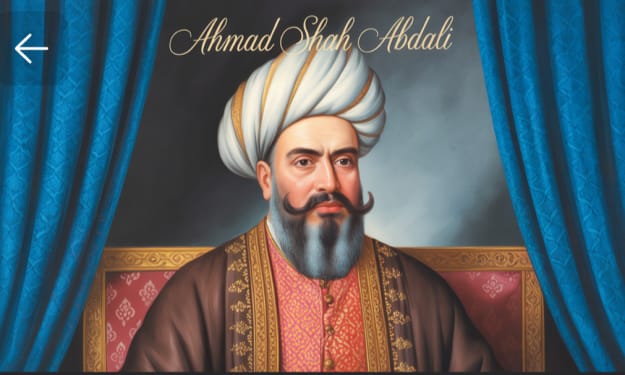
Ahmad Shah Abdali – The Founder of the Durrani Empire
Early Life and Background (c. 1722 – 1747) Ahmad Shah Abdali was born around 1722 in Herat, in present-day western Afghanistan. He belonged to the Sadozai clan of the Popalzai tribe, a subgroup of the Durrani (formerly Abdali) Pashtuns. His father, Muhammad Zaman Khan, was the governor of Herat under the Safavid Empire but died when Ahmad Shah was young. After his father's death, Ahmad and his brother Zulfikar Khan were taken hostage by the Hotaki dynasty of Kandahar, which had overthrown the Safavids in the region.
By Zain Ul Abedin Khan10 months ago in History
The Year 1902 in Review: Fun Facts, Trivia, and Historic Highlights
This quick read is a collection of fun facts, trivia, and historic events from the year 1902. Discover the year’s top news stories, most influential people, sports facts, entertainment trivia, famous birthdays and deaths, and much more.
By Gregory DeVictorabout 23 hours ago in History
A More Human Vocal
When we launched Vocal nearly a decade ago, the world was a very different place. LLMs did not exist, and stories were created one at a time by people sitting down to write, revise, and share something personal. Many of our assumptions about publishing, trust, and participation were built for a world where effort and output were inseparable.
By Justin @ Vocal7 days ago in Resources



Comments (1)
thanks