
The Enigmatic Scarcity of Brahma Temples in Indian Mythology
Brahma’s Role in Hinduism: The Creator Who is Rarely Worshipped

Indian mythology is rich with captivating stories and profound symbolism, and among its many fascinating aspects lies the intriguing scarcity of temples dedicated to Lord Brahma, the creator of the universe. While temples dedicated to Lord Vishnu and Lord Shiva are widespread across India, Brahma’s shrines remain exceptionally rare.
What is the reason behind this puzzling phenomenon?
Brahma's Role in Hinduism: The Creator of the Cosmos
Within the Hindu Trimurti (the holy trinity), Brahma holds the revered role as the creator of the universe. According to ancient texts, Brahma is the source from which the cosmos and all living beings emerged. However, despite his crucial role, Brahma’s worship has diminished significantly compared to Vishnu, the preserver, and Shiva, the destroyer.
This raises an interesting question: If Brahma’s role is foundational to the existence of the universe, why does he not receive the same level of reverence as Vishnu and Shiva?
The Mythological Explanation: The Curse of Lord Shiva
One of the most compelling explanations comes from the Shiva Purana, which narrates a fascinating myth. According to this tale, a rivalry developed between Brahma and Vishnu regarding their supremacy in the cosmos. Brahma, in an attempt to prove his superiority, resorted to deceit, asking a flower for false evidence. Lord Shiva, upon witnessing this act, grew enraged and cursed Brahma, declaring that he would not be worshipped on Earth.
This divine curse is often cited as the primary reason behind the scarcity of Brahma temples, explaining why Brahma’s presence in worship is so minimal.
Symbolism and Philosophy: Creation is Just the Beginning
From a philosophical perspective, Brahma’s role as the creator is considered transient. While creation marks the beginning of the cosmic cycle, the continuous processes of preservation and transformation — symbolized by Vishnu and Shiva — are more closely aligned with the human experience. Hinduism’s cyclical view of existence emphasizes the interplay of these forces. As such, the focus on Brahma as a creator fades in favor of Vishnu and Shiva, whose roles are seen as ongoing and more pertinent to human lives.
Cultural Shifts and Changing Practices
In ancient Vedic traditions, Brahma was revered extensively. Hymns in the Rigveda praise him as the creator of the universe. However, over time, as Puranic traditions evolved, the focus shifted to deities who were more relatable to daily life. Vishnu, Shiva, and the Goddess (Devi) became more central to worship due to their active roles in protecting, blessing, and transforming lives. This shift in focus ultimately led to Brahma's relative obscurity in modern Hindu worship practices.
Temples Dedicated to Brahma: Rare Gems
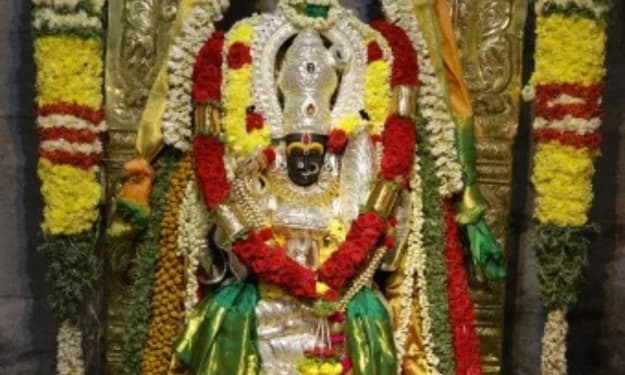
Despite the rarity of Brahma temples, some notable shrines still exist. The Brahma Temple in Pushkar, Rajasthan, is perhaps the most famous, attracting thousands of devotees annually during the Pushkar Fair. Another significant shrine dedicated to Brahma can be found in Kumbakonam, Tamil Nadu. Interestingly, Brahma's presence is subtly acknowledged in the Kamakshi Amman Temple in Kanchipuram, Tamil Nadu, where the narratives and sculptures within the sanctum acknowledge Brahma’s role in the divine cycle.
Beyond the Curse: The Swan and the Lotus
In addition to the curse, other myths contribute to Brahma’s diminished role in worship. One story recounts how Brahma, overwhelmed by arrogance, failed to engage with the world as intimately as Vishnu and Shiva. Another myth involves a divine debate where Brahma’s reliance on a swan and a lotus for evidence led to his downfall. These stories emphasize the virtues of humility and the idea that divine power must be wielded responsibly.
Brahma in the Modern Context
In contemporary interpretations, Brahma's relative rarity in worship is often seen as symbolic. While his role as the creator is undoubtedly monumental, it does not fulfill the emotional and spiritual needs of devotees in the same way that Vishnu’s avatars or Shiva’s dynamic forms do. This shift in focus reflects the evolving priorities of Hindu worship, where deities embodying protection, love, and transformation resonate more with people on a personal level.
Symbolic Reverence: Brahma’s Subtle Presence
While Brahma temples may be few, his essence can still be found embedded in Hindu rituals and iconography. Brahma is invoked in Vedic ceremonies, and his depictions often appear in temples dedicated to other deities. Sculptures of Brahma within the Trimurti represent the cosmic balance between creation, preservation, and destruction. His presence in these depictions serves as a reminder of the harmony required for the universe’s continued existence.
Lessons from Brahma's Story
The story of Brahma serves as a powerful lesson in humility, accountability, and the transient nature of power. His diminished worship underscores the importance of ethical conduct and the need for balance in the cosmic cycle. The symbolism surrounding Brahma encourages reflection on the interconnectedness of all forces in existence and the necessity of preservation and transformation alongside creation.
Conclusion: The Mystery Endures
The scarcity of Brahma temples does not reflect his insignificance but highlights the intricate layers of Hindu mythology and philosophy. While Brahma's role in creation is paramount, it is his interconnectedness with preservation (Vishnu) and destruction (Shiva) that completes the cosmic cycle. The absence of Brahma's grand temples invites contemplation on the nature of creation, humility, and the cyclical flow of existence.
Next time you visit a temple, take a moment to notice Brahma's subtle presence in the carvings or rituals. His legacy continues, not in monumental statues, but in the very essence of creation that surrounds us — a true testament to his significance in the eternal dance of the universe.
About the Creator
Keep reading
More stories from Sri Kamakshi Ambal Temple and writers in History and other communities.
The Sacred Heart of Kanchipuram: A Glimpse into the Sri Kamakshi Ambal Temple"
Introduction Nestled in the heart of Kanchipuram, Sri Kamakshi Ambal Temple is more than just a place of worship; it is a testament to the rich spiritual heritage and architectural brilliance of South India. For centuries, the temple has stood as a symbol of divine grace, drawing countless devotees seeking blessings and spiritual solace. The temple’s timeless presence invites visitors into a journey of faith, beauty, and profound cultural significance.
By Sri Kamakshi Ambal Temple12 months ago in History
Swami Vivekananda: The Voice That Awakened a Nation
Swami Vivekananda stands as one of the most powerful spiritual and intellectual figures of modern India. His life was short—only thirty-nine years—but his influence was immense and lasting. He did not merely preach religion; he awakened self-respect, courage, and unity in a colonized nation and introduced the depth of Indian philosophy to the modern world. Early Life: The Making of Narendra Nath Datta Swami Vivekananda was born on January 12, 1863, in Calcutta (now Kolkata), India, into a well-educated Bengali family. His given name was Narendra Nath Datta. His father, Vishwanath Datta, was a lawyer with a rational, liberal outlook, while his mother, Bhuvaneshwari Devi, was deeply spiritual and had a profound influence on Narendra’s character. From childhood, Narendra was intelligent, energetic, and fearless. He excelled in academics, music, gymnastics, and debate. He questioned everything—especially religion. Unlike blind believers, he wanted direct experience of truth. His constant question was simple yet powerful: “Have you seen God?” The Search for Truth As a young man, Narendra studied Western philosophy and science at Presidency College. He was influenced by thinkers like Kant, Hegel, and Spencer, yet he remained unsatisfied. Logic alone could not answer the deeper questions of life. His search eventually led him to Sri Ramakrishna Paramahamsa, a mystic priest of the Dakshineswar Kali Temple. When Narendra asked Ramakrishna the same bold question—“Have you seen God?”—Ramakrishna replied calmly, “Yes, I see God as clearly as I see you, only more intensely.” This answer changed Narendra’s life. At first, he doubted Ramakrishna and even argued with him, but over time he realized the depth of his spiritual experience. Ramakrishna taught him that all religions lead to the same truth and that service to humanity is service to God. Under his guidance, Narendra experienced spiritual awakening. Loss, Poverty, and Renunciation After Ramakrishna’s death in 1886, Narendra and a group of young disciples formed a monastic brotherhood. Soon after, tragedy struck—Narendra’s father died, leaving the family in financial crisis. Narendra struggled to find work and often went hungry, but his dignity never broke. Eventually, he renounced worldly life and became a wandering monk, taking the name Swami Vivekananda. He traveled across India on foot, living among villagers, saints, and the poor. What he saw deeply disturbed him: widespread poverty, ignorance, social injustice, and loss of self-confidence among Indians under British rule. Vivekananda realized that India’s problem was not lack of religion, but lack of strength, education, and self-belief. Journey to the West In 1893, Vivekananda traveled to the United States to attend the World’s Parliament of Religions in Chicago. He had no official invitation, little money, and faced many hardships. Yet destiny had other plans. On September 11, 1893, Vivekananda stood before a large audience of scholars and religious leaders. He began his speech with the words: “Sisters and brothers of America.” The audience rose in a standing ovation. Those simple words, spoken with sincerity and confidence, instantly captured hearts. In his speech, Vivekananda spoke of tolerance, universal brotherhood, and the harmony of religions. He presented Vedanta not as superstition, but as a rational, spiritual philosophy. For the first time, the West heard India speak with confidence and wisdom. Global Recognition After the Parliament, Vivekananda became famous in America and Europe. He lectured widely, teaching yoga, meditation, and Vedanta. He impressed audiences with his clarity, logic, humor, and spiritual depth. Yet he never forgot India. Even while gaining global recognition, his heart remained with the poor and suffering of his homeland. He believed spirituality must uplift society, not escape from it. Return to India: Awakening a Nation When Vivekananda returned to India in 1897, he was welcomed as a national hero. He traveled across the country, delivering powerful speeches that inspired pride and confidence. His message was clear: “Arise, awake, and stop not till the goal is reached.” Strength is life; weakness is death. Education should build character. Serve the poor as living gods. He emphasized practical spirituality—combining meditation with service. The Ramakrishna Mission To turn his ideas into action, Vivekananda founded the Ramakrishna Mission in 1897. The mission focused on education, healthcare, disaster relief, and spiritual training. It became a model of selfless service rooted in spiritual values. Unlike traditional religious institutions, the Ramakrishna Mission welcomed people of all castes, creeds, and backgrounds. Philosophy and Legacy Swami Vivekananda believed in: Unity of all religions Power of the human soul Equality of men and women Education as nation-building Service as worship He rejected superstition, blind faith, and social discrimination. He believed India would rise again—not by copying the West, but by combining ancient wisdom with modern science. Final Years and Mahasamadhi Swami Vivekananda’s intense work took a toll on his health. On July 4, 1902, at the age of 39, he passed away in Belur Math. Many believe he consciously chose the time of his departure. Though his life was brief, his impact was eternal. Why Vivekananda Still Matters Swami Vivekananda did not just speak to India—he spoke to humanity. He taught that every human being carries infinite potential. His words continue to inspire students, leaders, thinkers, and seekers around the world. He once said: “You cannot believe in God until you believe in yourself.” More than a monk, more than a philosopher, Swami Vivekananda was a force of awakening—a reminder that spiritual strength and social responsibility must walk
By The best writer 4 days ago in History
🅼🅸🅳🅽🅸🅶🅷🆃 🆂🅽🅰🅲🅺🆂
"It's 10 in Tuscon! We all know what that means... It's Time for Midnight Snacks with your man, Gerald Gee! Ready to spend the night together? Me too! I'm full of snacks and can't wait to regurgitate them all back into your hungry ears. Crack a brew! Pop some corn! Anything to get ready for one hell of a show where the talk maybe cheap but the words cut deep...
By Lamar Wiggins3 days ago in Fiction


Comments
There are no comments for this story
Be the first to respond and start the conversation.