
The Disappearance of the Flannan Isles Keepers: Food on the Table and an Empty Room
A digital dissection of the most mysterious maritime mystery in Scottish history


Deadly Silence and an Unfinished Meal

December 26, 1900. The steamer *Hesperus* sliced through the black swells, its iron groaning against the oppressive silence of the North Atlantic. No beam of light pierced the dark; no distress signal rose. The Flannan Isles lighthouse stood like a severed transmission tower, as silent as a deactivated server.
Upon landing, a suffocating stillness took hold—an absolute void of pulse or movement. The heavy door yielded to the first touch, surrendering like a breached firewall. Inside, time had frozen: a table was meticulously set for three, the meals cold and the portions untouched. It was as if a sudden "glitch" in the fabric of reality had wiped their existence mid-breath.
No trace of the three keepers was found. No final records remained—only the fading frequencies of lives abruptly cut short, a mystery programmed by fate to remain forever unencrypted.
Records of Horror: What Did the Keepers Write Before the End?

Within the soundless walls of the Flannan Isles lighthouse, three men operated as the central processing units of a hermetic system: James Ducat, the seasoned lead; Thomas Marshall, the secondary node; and Donald MacArthur, a human "firewall" whose stoicism was thought to be impenetrable. However, the final logs reveal a catastrophic breach in their perception of reality. Marshall recorded a storm so fierce it liquidated their mental stability, documenting Ducat’s unsettling silence and the hysterical weeping of MacArthur—a hardened veteran who had suddenly unraveled.
Here lies the anomaly: external meteorological data confirms the skies were clear and the ocean was a mirror of tranquility during those documented hours. Was this "storm" a localized glitch in the fabric of their reality, or a viral infection of the collective mind? The final log—"Storm ended, sea calm. God over all"—reads like a terminal command to initiate a system shutdown. Immediately following that entry, the physical files of their existence were permanently deleted from the world.
The Crime Scene: Twisted Iron and Shattered Secrets

At the West Landing, where the final traces of human presence dissolved, the lighthouse’s physical infrastructure appeared to have suffered a total system failure beyond logical explanation. Superintendent Robert Muirhead surveyed the site with the precision of an expert recovering data from a corrupted hard drive. Standing two hundred feet above the Atlantic's roar, he found iron railings not merely broken, but twisted into impossible geometries—as if a brutal "system override" had been executed by an irresistible terrestrial force.
The heavy equipment, which formed the landing’s physical layer, had been crushed into scrap, as if a remote command for total destruction had been triggered by an unseen hand. Muirhead pinpointed the fatal flaw in the event's core logic: why did the three keepers violate their most sacred security protocols? In a system built on 24/7 redundancy, which strictly mandated that at least one operative remain within the tower at all times, all three had initiated a simultaneous and unexplained "log-out" from duty.
This was no routine human error; it was a total security breach of the laws governing their survival. The wreckage at the West Landing was the byproduct of a "buffer overflow" of natural fury, leaving behind only the metadata of a desperate struggle against a coded force—one that was never meant to appear in the logs of reality.
Between Science and Superstition: Rogue Waves or Hidden Entities?

While scientific logic attempts to "recode" this disappearance through the rogue wave hypothesis—treating these massive energy surges as anomalies in the ocean’s operating system—the theory serves as a desperate software patch for a much deeper structural glitch. In the folklore of the Isles, Flannan was never mere geographic coordinates; it was an ancient server hosting entities omitted from human records. Ghostly birds circle the horizon like fragments of corrupted code, while sea giants act as hidden background processes designed to erase human data from existence.
Was that wave merely a graphical interface for a forced eviction executed by the "Seven Hunters"? Or did the keepers collide with a natural firewall that their fragile consciousness could not bypass? We are witnessing a fundamental data conflict: where science observes a variance in hydrodynamics, legend diagnoses a "delete command" issued by the terrain itself against anyone attempting to decrypt its eternal silence.
A Missing Echo in the Atlantic Depths
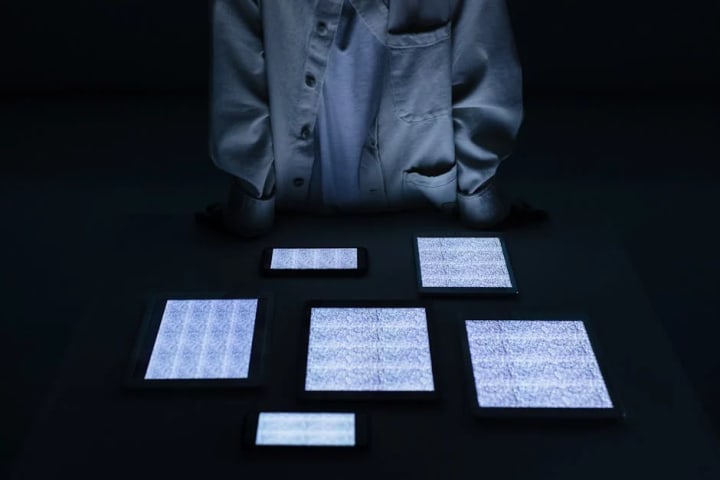
To this day, the Flannan Isles Lighthouse remains operational—a piece of hardware re-synced with the modern world. Yet, its legacy is stained by a void left unpatched since 1900. It pulses light across the vast Atlantic like a silent server guarding a lost echo; a fragment of history permanently deleted, with no backup to be found.
The ultimate irony lies in the code of this tragedy: while the lighthouse underwent a successful reboot, the souls of its three keepers remain lost in the depths, unable to log back into the realm of the living. In an era obsessed with absolute transparency and total data recovery, this enigma stands as a sovereign, high-level firewall. It is a chilling reminder that some secrets were designed to remain encrypted forever—hidden from our algorithms and drifting far beyond the reach of our definitive answers.
About the Creator
Mohammad Hammash
Web search lover🔍 & bookworm📚. Passionate about innovation💡, creativity🎨. Seeking new ideas & perspectives🌉. Making positive impact using tech🌍 humanity💕
Keep reading
More stories from Mohammad Hammash and writers in History and other communities.
Mirror, Mirror: The Long Road to Reconciling with the Body I Tried to Hide for Years
Encrypted Invisibility: Years of Living Behind a Firewall Amid the cold clamor of the city, the silence of the system became my only sanctuary. My clothes were never merely fabric; they were layers of code I programmed to shield myself from the intrusive scans of strangers. Every oversized sweater and pulled-up hood served as a physical firewall, encrypting my existence and filtering the world’s harsh gaze. To the public, I was a ghost in the machine—a stray packet of data lost in transmission. I stopped viewing my body as a living, evolving entity, seeing it instead as legacy hardware: a system riddled with vulnerabilities no patch could ever fix. I wasn't seeking maintenance; I was waiting for a total migration, a final shutdown. Existing in power-saving mode, I remained completely withdrawn, guarding my core from the corrosive eyes that sought to dismantle me.
By Mohammad Hammash29 days ago in Confessions
Are Banks Open on Martin Luther King Jr. Day?
Introduction Martin Luther King Jr. Day, also called MLK Day, is a national holiday in the United States. Many people enjoy a day off from work or school on this day. However, a common question people ask is: Are banks open on MLK Day?
By Farhan Sayeda day ago in History
Power's Sake
When it comes to gaining power, bad people use it to gain more They never gain power to do something with it, they gain power to have it, relish in it, double it down on itself so it grows exponentially and never goes anywhere. Even if you see the people in power commit an atrocity, that is never the true goal. It is a deplorable action for sure but the action itself usually doesn't matter it's the outcome.
By Donny Foley7 days ago in History



Comments
There are no comments for this story
Be the first to respond and start the conversation.