
The Decline of the Aztec Empire: A Significant Moment in History
The decline of the Aztec Empire marks one of the most thrilling and impactful events in the narrative of global history. It encompasses themes of valor, treachery, cultural clash, and the emergence of European imperial dominance in the Americas. At the heart of this story is the Spanish invasion spearheaded by Hernán Cortés, leading to the sorrowful collapse of the formidable Aztec civilization during the early 1500s.

The decline of the Aztec Empire marks one of the most thrilling and impactful events in the narrative of global history. It encompasses themes of valor, treachery, cultural clash, and the emergence of European imperial dominance in the Americas. At the heart of this story is the Spanish invasion spearheaded by Hernán Cortés, leading to the sorrowful collapse of the formidable Aztec civilization during the early 1500s.
The Aztec Empire Prior to Invasion
Prior to the arrival of the Spanish, the Aztecs were among the leading civilizations in Mesoamerica. Their capital, Tenochtitlán, was located on an island within Lake Texcoco and showcased extraordinary engineering and architectural achievements. With a population estimated at more than 200,000, it surpassed most European cities of that period. The city was characterized by intricate canal systems, soaring temples, and lively markets. It stood as a testament to Aztec affluence, refinement, and influence.Start writing...
Under the leadership of Emperor Montezuma II, the Aztec civilization was intricately organized and profoundly spiritual. Their belief system featured a variety of deities that demanded offerings, which at times included human sacrifices. These acts were frequently carried out using captives taken during conflicts with neighboring tribes, leading to widespread bitterness in the area. The Aztec Empire was heavily reliant on military strength and imposed substantial tributes on the peoples they governed, which would eventually benefit the Spanish.
The Spanish Incursion
In the year 1519, Hernán Cortés, a conquistador from Spain, arrived on the eastern shores of modern-day Mexico. While his original intent was to explore and trade, Cortés harbored grander aspirations—conquest and riches. He swiftly disregarded the instructions of the Cuban governor and advanced into the interior with a limited force of approximately 500 troops, equipped with a few cannons and 16 horses.
Even with their small contingent, the Spaniards possessed two significant advantages: advanced military technology and crucial alliances. Their metal swords, firearms, and cavalry provided them with a formidable superiority over indigenous warriors who fought with wooden weapons and obsidian tools. Furthermore, Cortés skillfully employed diplomacy to his advantage. He forged alliances with numerous indigenous tribes that had been oppressed under Aztec control. Most notably, he secured the backing of the Tlaxcalans, resolute fighters who proved to be essential allies in the forthcoming conflicts.
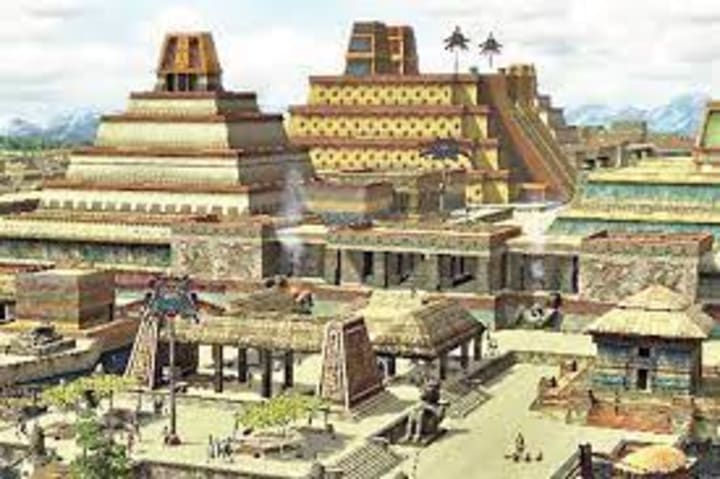
A surprising benefit for the Spanish was the psychological effect they had on the Aztecs. Certain Aztec priests and nobles thought that Cortés could be the arrival of the god Quetzalcoatl, which they believed fulfilled a prophecy. This erroneous understanding may have shaped Montezuma’s early reactions to the Spanish forces.
Entering Tenochtitlán
Cortés, with his troops and numerous indigenous allies, proceeded towards Tenochtitlán. Montezuma received Cortés into the city, perhaps due to diplomatic reasons or fear. Initially, there was a precarious peace between the two groups. However, Cortés soon took Montezuma captive and tried to govern the city through him.
Conditions quickly worsened. In 1520, while Cortés was away addressing a Spanish force sent to arrest him, his soldiers slaughtered Aztec nobles during a religious ceremony. This sparked a significant rebellion. Upon his return, Cortés discovered the city in turmoil. Montezuma, attempting to pacify his people, was hit by a stone and later perished under unclear circumstances, potentially by Spanish hands.
On June 30, 1520, during a rainy night referred to as "La Noche Triste" (The Night of Sorrows), Cortés and his men tried to escape the city. Many Spaniards and their allies lost their lives while they fled across the causeways. Despite the defeat, Cortés was not yet done.
The Siege and Fall
After his escape, Cortés reorganized and took several months to plan a counteroffensive. He forged alliances with additional indigenous groups and built brigantines—small vessels to dominate the lake surrounding Tenochtitlán.
In 1521, Cortés initiated a comprehensive siege of the city. His forces surrounded it both on land and water, cutting off access to food and other supplies. The Aztecs, led by their new leader, Cuauhtémoc, fought valiantly, but they were ultimately overpowered. Smallpox, brought by the Europeans, spread rapidly, claiming the lives of thousands, including several key leaders.
The siege extended for more than 80 days. The population was severely impacted by starvation, illness, and relentless assaults. On August 13, 1521, Cuauhtémoc gave up. The city was devastated, with temples reduced to ashes and its inhabitants either dead or enslaved. The powerful Aztec Empire had collapsed.
Aftermath and Legacy
Following the conquest, Cortés founded Mexico City on the remnants of Tenochtitlán. The Spanish initiated a colonization effort that would reshape the Americas. Indigenous faiths faced suppression, while Catholicism was enforced and European customs were introduced. The native population saw a significant decrease due to warfare, disease, and coerced labor.
However, in spite of the devastation, the Aztec legacy persists. Their language, Nahuatl, continues to be spoken by over a million individuals. Their achievements in agriculture, astronomy, and the arts remain subjects of study and admiration. In contemporary Mexico, Aztec symbols and cultural pride play a crucial role in the national identity.
Conclusion
The conquest of the Aztec Empire unfolds as a multifaceted narrative of aspiration, sorrow, and change. It signaled the onset of European supremacy in the New World and the conclusion of one of the mightiest indigenous cultures. Although the Spanish declared themselves victorious, the cultural heritage of the Aztecs stands as a significant reflection of their lasting resilience and impact throughout history.
About the Creator
Keep reading
More stories from Mohammad Rifat and writers in History and other communities.
"The Haunting Truth: My Childhood Home Was Really Haunted by a Ghost"
I was always skeptical about ghosts—until I experienced living with one. My childhood home was a small, old structure nestled on the outskirts of a peaceful town. It appeared lovely from the exterior: a white porch, blooming flowerbeds, and a spacious yard. However, its interior concealed a mystery that would trouble me for many years.
By Mohammad Rifat 9 months ago in Horror
Why August Wilson’s Joe Turner’s Come and Gone Feels Urgent on Today’s Broadway Stage by NWO Sparrow
Why August Wilson’s vision of identity and movement resonates in today’s political climate by NWO Sparrow Joe Turner’s Come and Gone returns with urgency, reflection, and cultural weight
By NWO SPARROW5 days ago in History
The Koh-i-Noor Diamond
The Koh-i-Noor, meaning “Mountain of Light” in Persian, is one of the most famous and controversial diamonds in the world. More than just a gemstone, it is a symbol of power, conquest, imperial ambition, and historical dispute. For centuries, the Koh-i-Noor passed from one ruler to another, almost always through war, betrayal, or political domination. Its story is deeply intertwined with the history of South Asia, Persia, Afghanistan, and the British Empire. Origins in Ancient India The exact origins of the Koh-i-Noor are surrounded by legend and uncertainty. Most historians agree that the diamond was discovered in India, likely in the Golconda region (modern-day Telangana), which was once the world’s richest source of diamonds. Golconda diamonds were renowned for their exceptional clarity and brilliance, and many legendary gems came from this area. Ancient Indian texts and folklore suggest that the Koh-i-Noor may have been known thousands of years ago. Some legends associate it with the Syamantaka Mani, a mythical jewel mentioned in Hindu scriptures. While this link cannot be proven, it reflects how deeply the diamond is embedded in Indian cultural imagination. What is more certain is that for centuries, India was the only known source of diamonds in the world, making gems like the Koh-i-Noor extraordinarily rare and valuable. The Delhi Sultanate and Early Rulers By the medieval period, the Koh-i-Noor had become part of royal treasuries in northern India. It is believed to have been owned by rulers of the Delhi Sultanate, a series of Muslim dynasties that ruled large parts of India from the 13th to the 16th centuries. During this time, the diamond was not merely an ornament. It symbolized divine favor, royal authority, and military dominance. Possessing such a gem enhanced a ruler’s prestige and legitimacy. However, the diamond’s history already showed a pattern: it rarely stayed with one dynasty for long. The Mughal Empire and the Peacock Throne The Koh-i-Noor reached new heights of fame under the Mughal Empire, one of the greatest empires in South Asian history. In 1526, Babur, the founder of the Mughal dynasty, defeated Ibrahim Lodi at the Battle of Panipat. The diamond came into Mughal possession shortly after. Babur himself mentioned a famous diamond in his memoirs, the Baburnama, describing its immense value. Later Mughal emperors treasured the Koh-i-Noor, but it was under Shah Jahan—the builder of the Taj Mahal—that the diamond achieved legendary status. Shah Jahan placed the Koh-i-Noor in the magnificent Peacock Throne, a jewel-encrusted seat symbolizing Mughal wealth and glory. At this point, the diamond was not just a treasure; it was the heart of imperial power. Nadir Shah and the Name “Koh-i-Noor” In 1739, disaster struck the Mughal Empire. Nadir Shah, the ruler of Persia (modern Iran), invaded India and sacked Delhi. The Mughal capital was looted, and unimaginable wealth was carried away. According to legend, when Nadir Shah first saw the diamond, he exclaimed “Koh-i-Noor!”—Mountain of Light. From that moment, the diamond became known by this name. Nadir Shah took the Koh-i-Noor back to Persia, but his reign was short-lived. He was assassinated in 1747, and once again, the diamond changed hands amid chaos. Afghanistan and the Durrani Empire After Nadir Shah’s death, the Koh-i-Noor came into the possession of Ahmad Shah Durrani, the founder of the Durrani Empire in Afghanistan. For a time, the diamond remained in Afghan royal custody. However, internal conflicts weakened Afghan rulers. One of Ahmad Shah’s descendants, Shah Shuja Durrani, was eventually overthrown and imprisoned. Desperate to regain his throne, Shah Shuja sought help from the Sikh Empire in India—and brought the Koh-i-Noor with him as a bargaining tool. Maharaja Ranjit Singh and the Sikh Empire In the early 19th century, the Koh-i-Noor entered the treasury of Maharaja Ranjit Singh, the powerful founder of the Sikh Empire. Shah Shuja gave the diamond to Ranjit Singh in exchange for military assistance. Ranjit Singh valued the Koh-i-Noor deeply, but unlike many rulers before him, he reportedly wished for the diamond to be donated to a Hindu temple after his death. However, this wish was never fulfilled. After Ranjit Singh’s death in 1839, the Sikh Empire rapidly declined due to internal struggles and British interference. This set the stage for the final and most controversial chapter of the Koh-i-Noor’s journey. British Conquest and Transfer to Britain Following the Anglo-Sikh Wars, the British East India Company annexed Punjab in 1849. As part of the Treaty of Lahore, the Koh-i-Noor was handed over to the British. The diamond was presented to Queen Victoria and transported to Britain. This transfer remains one of the most disputed moments in the diamond’s history, as it occurred under colonial domination, not free consent. In 1851, the Koh-i-Noor was displayed at the Great Exhibition in London. However, many viewers found it disappointing, as its original cut did not reflect light well by European standards. Recutting and the British Crown Jewels To enhance its brilliance, Prince Albert ordered the diamond to be re-cut in 1852. While this made the Koh-i-Noor smaller, it significantly increased its sparkle. The diamond was later set into various pieces of British royal jewelry. Today, it is mounted in the crown of Queen Elizabeth The Queen Mother, part of the British Crown Jewels, and kept in the Tower of London. Traditionally, the Koh-i-Noor is worn only by female members of the royal family, due to a long-standing belief that the diamond brings misfortune to men who possess it. Modern Controversies and Claims In the modern era, the Koh-i-Noor has become a symbol of colonial injustice. India, Pakistan, Iran, and Afghanistan have all, at different times, claimed rightful ownership of the diamond. India argues that the Koh-i-Noor was taken during British colonial rule and should be returned. Pakistan claims it as part of the Sikh Empire’s legacy, which was based in Lahore. Afghanistan cites its period under Durrani rulers, while Iran references Nadir Shah. Britain, however, maintains that the diamond was acquired legally under the Treaty of Lahore. Conclusion: A Symbol Beyond a Gem The Koh-i-Noor is far more than a diamond. It represents centuries of empire-building, conquest, ambition, and loss. Its journey mirrors the violent and complex history of South Asia and imperial expansion. Whether it will ever be returned remains uncertain. But one thing is clear: the Koh-i-Noor is not just a Mountain of Light—it is a mountain of history, carrying within it the stories of rulers, empires, and nations.
By The best writer 2 days ago in History




Comments
There are no comments for this story
Be the first to respond and start the conversation.