
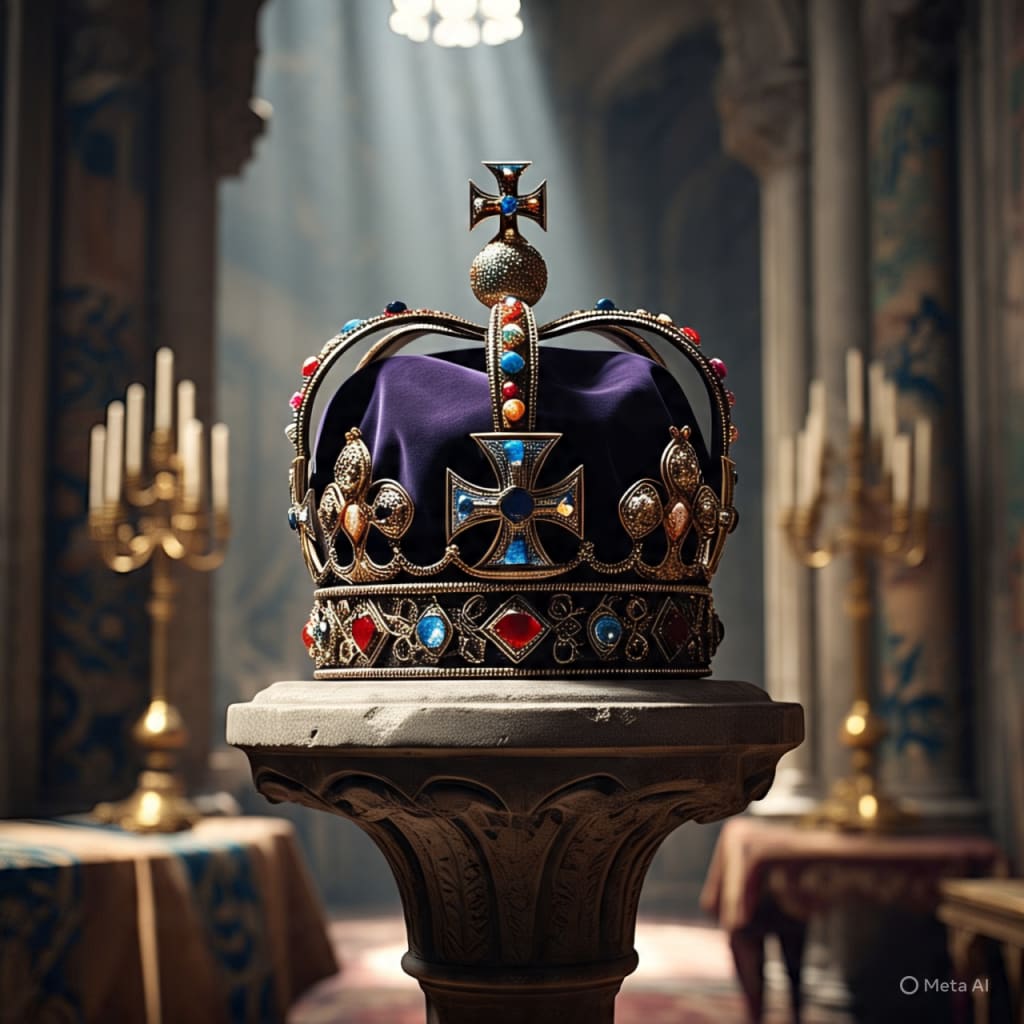
The bells tolled low and mournful across the stone-clad capital of Edrion. The city, once radiant with the gold of royalty, now bathed in the red glow of rebellion. Smoke coiled from the merchant quarter. The palace stood like a wounded beast, its banners torn, its gates shattered.
King Alric IV stood atop the western tower, his crown held loosely in one trembling hand. Below, his kingdom crumbled.
It had begun with whispers in the taverns. Whispers of grain shortages, of taxes rising like tides, and of a king who had not walked among his people in years. The nobles, fat with favor, ignored it. But rebellion does not need armies at first—it only needs hunger and hope.
Sir Marek, captain of the royal guard, entered the tower. Blood soaked his armor, and soot blackened half his face.
“My king,” Marek said, dropping to one knee. “The eastern gate is breached. The rebels are within the palace walls.”
Alric didn’t answer. His eyes fixed on the horizon, where the sun sank like a dying ember.
“I was crowned on this tower,” he said. “My father stood here, proud. He told me to rule with strength, not softness. He said mercy weakens a crown.”
“Your father ruled in a different time, sire.”
“Did he?” Alric asked bitterly. “Or did I simply fail where he succeeded?”
Below them, a thunderous cheer rose—another wing of the palace lost. The rebels had come not as a mob, but as an organized force, led by a former noble turned firebrand named Lysandra Vale. Once a court poet, she had seen her family stripped of lands during Alric’s early campaigns. She wrote verses then. Now she wrote history with steel.
“I should have spoken with her,” Alric muttered. “Listened.”
“Would words have changed her mind?” Marek asked. “Or would it have shown weakness?”
Alric looked at his crown—an elegant band of gold, inset with black pearls from the Eastern Sea. “Perhaps it was weakness not to speak.”
A crash echoed from below. The rebels were near.
Marek rose. “There is still time, sire. We can escape through the catacombs. Regroup, rally loyal lords—”
“No,” Alric said softly. “The crown doesn’t run.”
“Sire—”
“You will go, Marek. Lead my daughter to safety.”
Marek’s jaw clenched. “And you?”
“I will answer for what I’ve done… and what I failed to do.”
Silence stretched between them. Finally, Marek nodded. “As you command.”
When the captain had gone, Alric stood alone. He thought of Queen Elira, buried five winters past. Of Princess Kaelyn, barely sixteen, wiser than her father in too many ways. Of the people who once cheered his name.
Footsteps echoed on the stairs. Alric turned as the door burst open.
Lysandra Vale stood in the doorway, sword in hand, a red sash tied around her arm. Her face bore no hatred—only resolve.
“It’s over,” she said.
Alric nodded. “So it is.”
She stepped forward, slowly. “You have the choice. Surrender, and we end it without blood. Resist, and the rebels won’t be so kind.”
Alric held up the crown. “Do they still want this?”
“They want what it represents to fall,” she said. “But how it falls… that is yours to choose.”
He looked at her, and for a moment, saw the poet she had once been.
“You wrote a poem,” he said quietly. “‘The Crown is a Mirror.’ I remember.”
Lysandra blinked, caught off-guard. “You read it?”
“I did. But I didn’t understand it.”
“And now?”
He smiled sadly. “Now I do.”
He walked to the edge of the tower and held the crown high. Below, thousands of rebels looked up in silence. The gold caught the last of the dying light.
Alric lowered his hand—and let the crown fall.
It spun once, glinting, then vanished into the shadows below.
A cheer rose. Loud. Final. A king had fallen—not by sword, but by choice.
Lysandra stepped forward, but Alric had already turned, walking toward the staircase.
“Take me to the people,” he said. “Let history judge me.”
---
In the months that followed, Edrion changed. The monarchy was abolished, and a council of guilds, farmers, and scholars took its place. Streets once guarded by soldiers were now watched by citizen patrols. Lysandra became the first Chancellor of the Republic.
Alric lived quietly in a modest house by the river. He spent his days writing—letters, regrets, lessons for a daughter who would one day read them.
And on quiet mornings, as the sun rose over the new republic, he would walk through the city he once ruled, unguarded and unseen.
History remembered him not as a tyrant, nor a hero, but as the king who knew when to let the crown fall.
About the Creator
Keep reading
More stories from Usman Khan and writers in History and other communities.
A Nation in Flames
Paris, 1793. Smoke clung to the streets like a second skin. The bells of Notre-Dame no longer sang for weddings or worship, but for blood—each toll echoing a name dragged to the guillotine. Revolution was no longer a dream of liberty; it was a fever, devouring all who caught it.
By Usman Khan8 months ago in History
The Calvine Photo: Best UFO Picture Ever Taken... or the Best-Kept Secret?
Picture this: It's a crisp August evening in 1990, deep in the Scottish Highlands near the tiny hamlet of Calvine. Two young guys-let's call them friends out for a simple hike, nothing fancy-are trudging along a quiet road, probably chatting about the weather or where to grab a pint later. The sun's dipping low, casting long shadows over the rolling hills. Then, out of nowhere, a low humming sound starts. Not mechanical exactly. More like... something alive, but silent in a way that makes the hair on your arms stand up.
By KWAO LEARNER WINFRED8 days ago in History
The Lost Treasure of Alexander the Great: History’s Greatest Unsolved Mystery
Yet, despite detailed historical records of his conquests, one question continues to fascinate historians, archaeologists, and treasure hunters alike: what happened to Alexander the Great’s vast treasure?
By Say the truth 5 days ago in History



Comments (1)
This story really pulls you in. The description of the city and the king's predicament is vivid. It makes you think about how things can go wrong so quickly. I wonder if Alric could have done more to prevent the rebellion. Maybe he should have listened to the whispers in the taverns earlier. And what will happen to him now that the rebels are so close?