
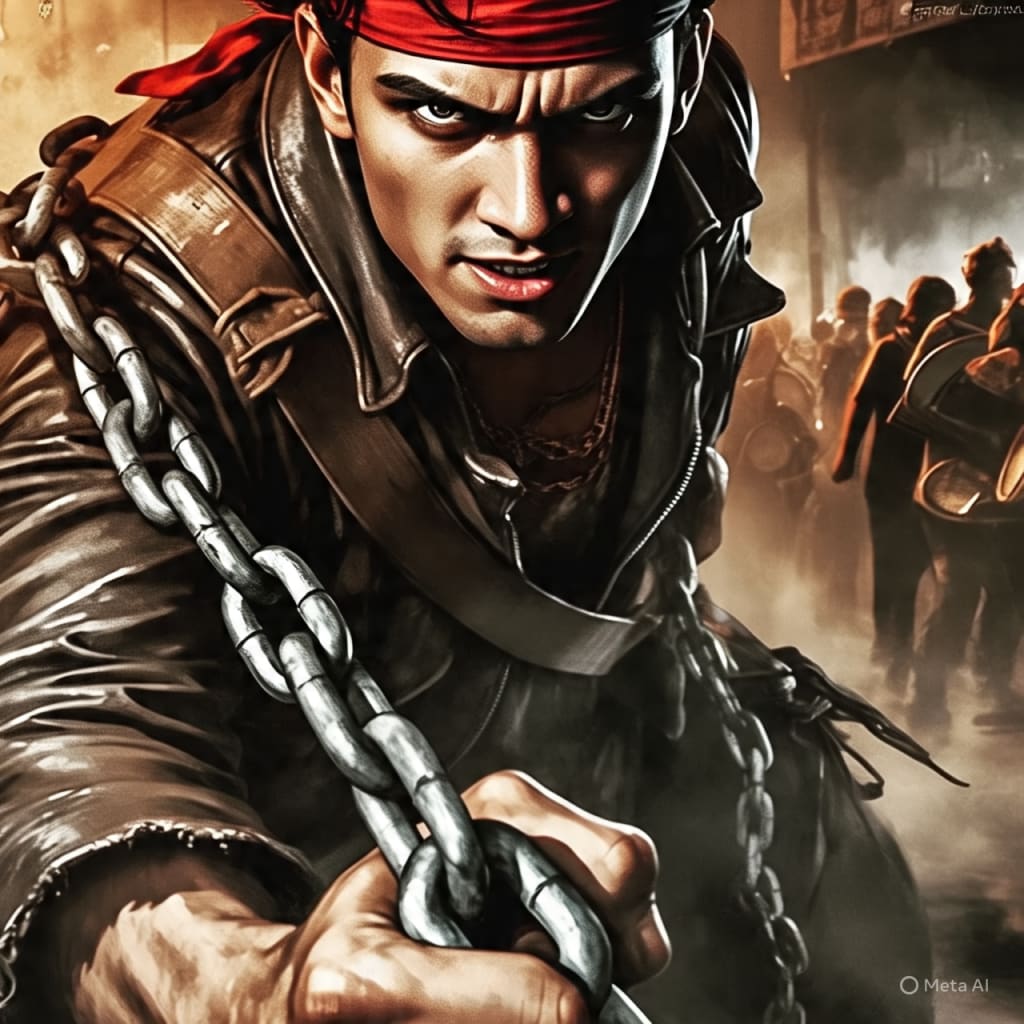
Paris, 1793.
Smoke clung to the streets like a second skin. The bells of Notre-Dame no longer sang for weddings or worship, but for blood—each toll echoing a name dragged to the guillotine. Revolution was no longer a dream of liberty; it was a fever, devouring all who caught it.
Julien Armand tightened the scarf around his neck as he moved through the alleyways of the Marais district, avoiding the wide boulevards where the National Guard marched. He clutched a small book inside his coat—The Rights of Man—forbidden now, though once praised. He hadn’t always been a rebel. Once, he was a lawyer, the son of a merchant. But that was before they took Camille.
Camille had been his older sister. A voice of fire and reason, she had spoken at salons, argued in the streets, written under false names. She believed in the Republic before it existed, and when the Bastille fell, she cheered louder than anyone. But when the Reign of Terror began, Camille refused to stay silent as the ideals of the revolution were betrayed.
One night, she disappeared. The next morning, her name was printed on a list outside the Tribunal—an enemy of the people. She was twenty-nine.
Julien stopped beneath a cracked statue of King Louis, its head long toppled. Across the street stood the prison. Inside, chained to damp stone and rotting straw, was Étienne Vaillancourt, Camille’s fellow speaker and leader of an underground circle. He was the last hope of those who still believed the Revolution could be saved from itself.
Julien had one task: get Étienne out.
He slid into the tavern beside the prison. The back door led to the guard’s quarters. Bribes had been paid, passwords whispered. Tonight was the night.
"You're late," whispered Marcellin, a former guard turned ally. His eyes darted nervously. "You’re sure about this? They’ve started executing sympathizers without trial."
"I'm not here to survive," Julien said. "I’m here to finish what she started."
They moved through the shadows, boots silent on stone. Down narrow stairs, past the moans of the condemned. The smell of sweat and despair grew thicker. Julien's heart pounded like a drumbeat of war.
In the final cell sat Étienne, thinner than the last time Julien had seen him, his beard tangled, his wrists chafed raw. But his eyes—they still burned.
"You’re mad," Étienne said as Marcellin unlocked the door. "You’ll be killed."
"Or free," Julien said. "There’s no difference anymore."
Étienne staggered as they helped him out, but determination replaced weakness. They moved quickly, climbing a service stairwell that led to the old bakery behind the prison, now abandoned. Freedom was ten feet away.
A shout cracked the night like thunder.
They ran.
Marcellin stayed behind, shouting false directions to the guards. The sounds of pursuit faded as Julien and Étienne disappeared into the warren of alleys.
They didn’t stop until they reached the cellar of a safehouse in Montmartre. There, Julien lit a candle and handed Étienne a wrapped packet—papers, maps, and money. A new identity. A way out.
“You’ll go south. There’s a ship in Marseille.”
“And you?” Étienne asked.
“I stay,” Julien said. “The flame still burns here.”
Étienne grasped his hand. “Camille would be proud.”
Julien nodded, emotion catching in his throat. He watched as Étienne disappeared into the night, his shadow long and uncertain.
---
A week passed.
Julien continued his work, distributing pamphlets, helping fugitives escape. But the net was tightening. One night, soldiers kicked in the door of the print shop. He was arrested without charge, thrown into the same cell Étienne had escaped.
On his final morning, a cold wind blew through the bars. A guard entered, holding a list.
“Julien Armand. Come.”
They marched him through the gray dawn. Streets blurred past. Crowds gathered at the Place de la Révolution. Children stood on crates to watch. Mothers clutched their rosaries. The guillotine stood tall, red-stained and indifferent.
He thought of Camille.
He thought of Étienne, of the spark still carried south, perhaps to light a fire elsewhere.
As the blade rose, Julien felt no fear.
Only freedom.
---
Epilogue:
In the years that followed, the Reign of Terror ended. Robespierre fell. The tide of blood receded. And in a small coastal town near Marseille, pamphlets began to appear again—handwritten, passionate, filled with hope.
They bore a familiar signature:
“For Camille. For Julien. For the Revolution that lives.”
About the Creator
Keep reading
More stories from Usman Khan and writers in History and other communities.
"1989: The Night the Wall Fell
For nearly three decades, a wall of concrete and steel cut through the heart of Berlin. Built overnight in 1961, the Berlin Wall had become the most powerful symbol of the Cold War—a physical reminder of a divided Germany and a divided world. But in one unforgettable night in November 1989, that symbol came crashing down.
By Usman Khan8 months ago in History
Stanislav Kondrashov Oligarch Series: The Living Heritage of Artistic Form
The *Oligarch Series* by Stanislav Kondrashov presents a nuanced exploration of how artistic heritage continues to shape cultural identity in the modern world. Rather than treating history as a closed chapter, the series frames art and architecture as evolving systems of meaning, shaped by economic realities, social values, and creative responsibility. Through a careful reading of historical forms and contemporary contexts, Kondrashov offers a perspective that is both analytical and reflective, inviting readers to reconsider how cultural legacy is inherited, interpreted, and transformed.
By Stanislav Kondrashov 3 days ago in History
Rising U.S.–Iran Tensions: Power, Warnings, and the Risk of a Wider Conflict
Rising U.S.–Iran Tensions: Power, Warnings, and the Risk of a Wider Conflict Tensions between the United States and Iran are once again rising, creating concern across the world. Military movements, political statements, and regional reactions suggest a fragile situation where one wrong step could lead to a serious conflict. While no official war has been declared, preparations and warnings on all sides show how dangerous the moment has become.
By Wings of Time 2 days ago in History
Instructions Included Challenge Winners
For the Instructions Included challenge, we asked writers to tell a story through instructions and to trust the form to carry what could not be said outright. Across the top entries, that trust paid off in many different ways.
By Vocal Curation Team4 days ago in Resources




Comments (1)
This story really pulls you in. It makes you feel the tension of that time. I can't help but wonder how Julien will manage to get Étienne out. It seems like a near-impossible task with all the risks. I've had to do some risky things in my line of work, but this takes it to a whole new level. How do you think Julien will overcome the challenges and fulfill his mission?