
The Day That Changed Everything: Remembering 9/11 Through Ordinary Voices
Reflections on how one morning reshaped lives, communities, and the way we see the world.

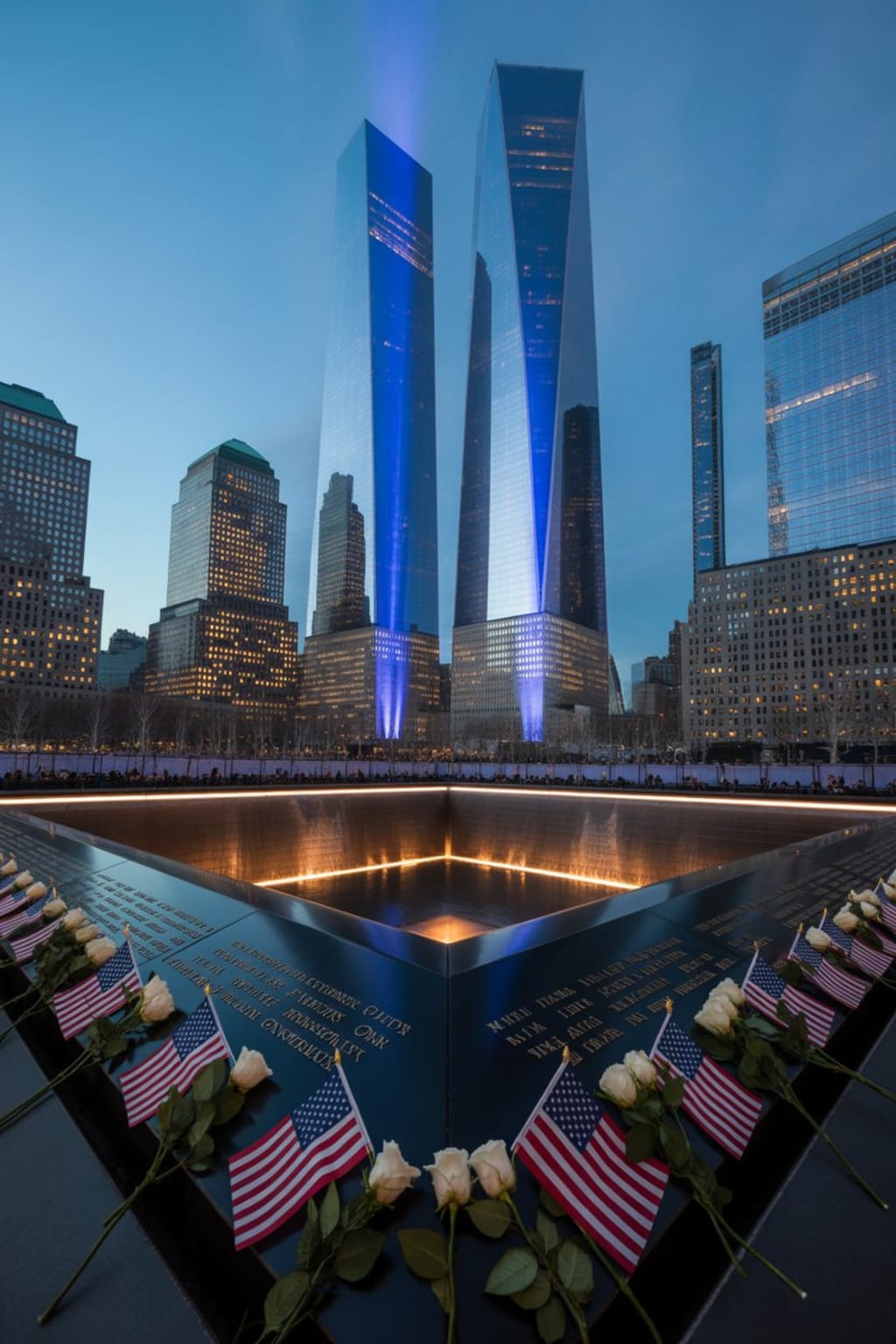
On the morning of September 11, 2001, America woke up to a day that felt like any other. The late summer sky over New York City was clear and blue, the kind of morning that makes people pause to notice the beauty of an ordinary day. Commuters hurried into Manhattan, children walked to school, and office workers rode elevators into the World Trade Center, not knowing it would be their last day.
At 8:46 a.m., the first shock struck. American Airlines Flight 11, hijacked by terrorists, crashed into the North Tower of the World Trade Center. The explosion tore through the upper floors, sending smoke into the sky. At first, confusion spread. Many believed it was a tragic accident—perhaps a small plane had veered off course. But only 17 minutes later, at 9:03 a.m., a second plane—United Airlines Flight 175—struck the South Tower. The impact was broadcast live on television, and the horrifying reality became undeniable: this was no accident. America was under attack.
Panic swept through New York as thousands tried to evacuate the towers. Some were trapped above the impact zones, calling loved ones one last time. Firefighters and police officers raced toward the burning skyscrapers, climbing stairwells while others rushed down. For many of those first responders, it was an ascent they would not return from.
The tragedy was not confined to New York. At 9:37 a.m., a third plane, American Airlines Flight 77, crashed into the Pentagon in Arlington, Virginia, tearing through one of the most secure buildings in the country. The symbol of American defense had been struck, and the sense of vulnerability deepened.
Just minutes later, a fourth plane, United Airlines Flight 93, was hijacked and headed toward Washington, D.C., believed to be targeting either the White House or the Capitol. Passengers on board, after learning of the earlier attacks through phone calls, chose to fight back. Their bravery forced the plane down in a Pennsylvania field at 10:03 a.m. None of them survived, but their actions likely saved countless lives on the ground.
Back in New York, chaos and terror mounted. At 9:59 a.m., less than an hour after the second plane struck, the South Tower collapsed. In just 10 seconds, a 110-story building crumbled into dust, sending shockwaves through Lower Manhattan. People ran through the streets, covered in ash, searching for safety. At 10:28 a.m., the North Tower also collapsed. In less than two hours, both towers of the World Trade Center were gone, and nearly 3,000 lives had been taken.
The skyline of New York was forever altered, but more than that, the lives of millions were changed. Families lost loved ones in an instant. Children grew up without parents. Survivors carried memories that words could barely capture. And across the world, people watched in horror, realizing that the 21st century had begun with an event that would define an era.
In the days that followed, grief blanketed the United States. Yet alongside sorrow came an overwhelming wave of unity. Flags were hung from porches. Blood donation centers overflowed with volunteers. Strangers held one another in subway stations, churches, and sidewalks. Though fear lingered, so did resilience. People discovered a strength in solidarity they had not known before.
For first responders, the heroism of that day became legendary. Firefighters who rushed up the towers, police officers who guided crowds to safety, and paramedics who stayed until the very end were honored as symbols of courage. Many did not survive, and many more would later suffer illnesses from the toxic dust and debris at Ground Zero. Their sacrifice became part of the larger story of 9/11: the reminder that in the face of unthinkable danger, humanity can still shine.
The attacks also reshaped the world beyond that single day. Airports changed forever, with new security measures becoming a part of daily travel. Wars were launched overseas, and foreign policy shifted dramatically. The sense of safety that many Americans once took for granted was replaced by vigilance.
But beyond politics and policies, the deeper lesson of 9/11 lies in the stories of ordinary people. A woman who survived because she stopped for a bagel that morning. A man who carried a stranger down dozens of flights of stairs. The passengers of Flight 93 who made the ultimate choice to resist. These voices remind us that history is not only written by leaders but also by everyday people faced with extraordinary circumstances.
More than two decades later, the memory of 9/11 is still raw. Each year, on its anniversary, the names of the victims are read aloud at memorials in New York, Washington, and Pennsylvania. Bells toll. Families gather. Silence is observed at the exact times of the attacks and collapses. It is not only a ritual of remembrance but a promise: to never forget.
When we look back on that morning, we do not only remember tragedy—we remember courage, resilience, and the fragile beauty of life. The clear blue sky of September 11 became a backdrop for the darkest of days, but it also became a reminder: that even in the face of loss, communities can rise together.
September 11 is history, but it is also a lesson still unfolding. It calls us to cherish ordinary mornings, to value kindness, and to never underestimate the strength of human connection. Because if one day can change the world in an instant, then perhaps our choices—each act of compassion, each moment of courage—can change it too.
About the Creator
Keep reading
More stories from arsalan ahmad and writers in History and other communities.
“Brewing Creativity: How One Coffee Shop Turned Art Into a Business Model
Brewing Creativity: How One Coffee Shop Turned Art Into a Business Model Most small coffee shops survive on regulars, good espresso, and maybe a well-placed Wi-Fi router. But one café in my city found an unexpected path to success—by letting customers sketch in notebooks.
By arsalan ahmad6 months ago in Art
Iran’s Final Warning
Iran’s Final Warning Tensions in the Middle East have reached one of the most dangerous levels in recent years as Iran issued strong warnings to both the United States and Israel during the ongoing conflict. Iranian military leaders and political officials say that if the attacks against Iranian territory continue, the war could expand far beyond its current battlefield.
By Wings of Time 3 days ago in History
Why Didn't Anyone Tell Us
Men, move along. This is not for you. This is for the women. I was forty-five when I began menopause. It is pretty young for that to be going on in a woman’s life, but I had undiagnosed PCOS, my entire life. Thank you to all the gynecologists I had seen my entire life. That in itself should encourage women to keep seeking second opinions, especially when you are not getting correct answers or any at all.
By Alexandra Grant4 days ago in Humans


Comments
There are no comments for this story
Be the first to respond and start the conversation.