
The Chinese Exclusion Act | A Miner’s Lament
One man’s voice against a nation’s silence, echoing through the gold mines of California

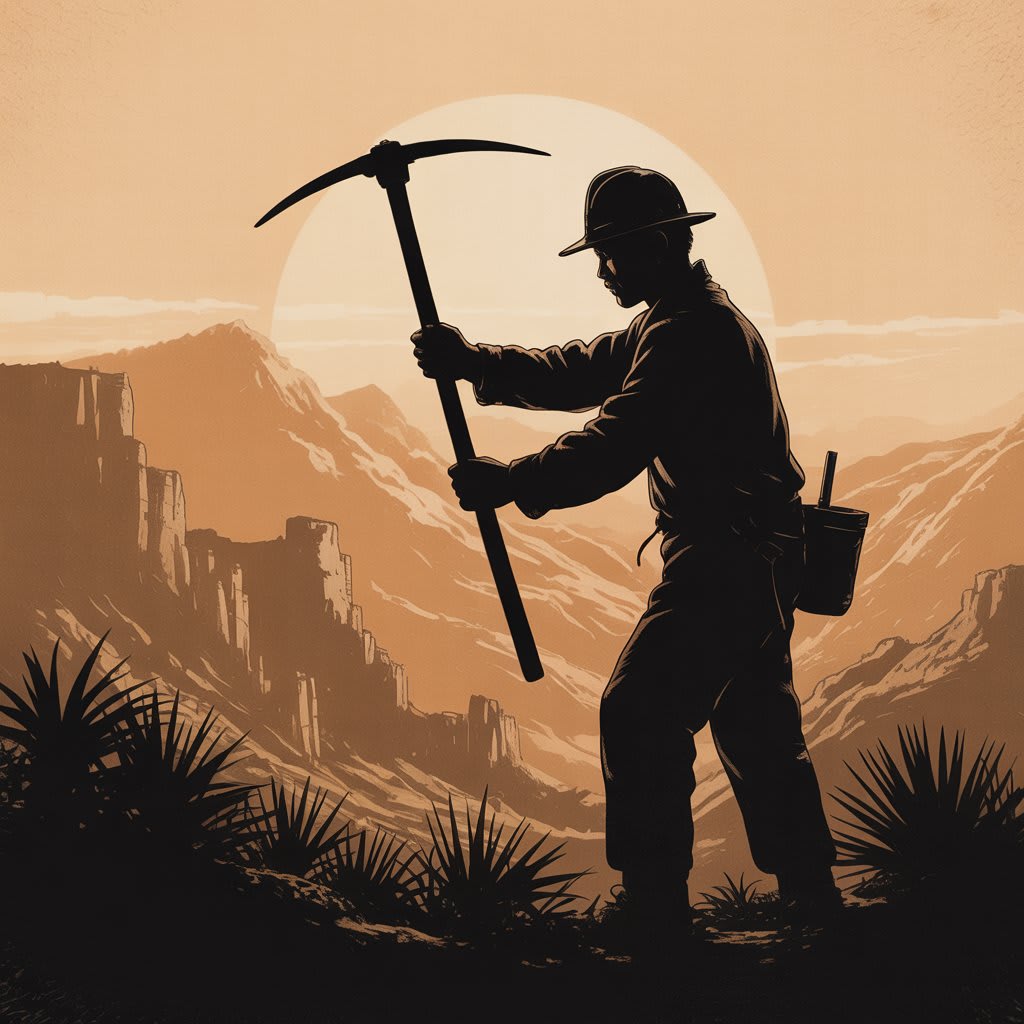
The year was 1882, and the mountains of California rang with the steady rhythm of pickaxes striking stone. Gold fever had long faded, but men still chased after the promise of fortune hidden deep in the veins of rock and dirt. Among them worked Li Wei, a man whose hands bore the hardened calluses of years spent in darkness, and whose spirit carried a far heavier burden than the ore-filled baskets he hoisted each day.
Li Wei had come from Guangdong, like thousands of others, lured by whispers of Gam Saan—the “Gold Mountain.” His mother had pressed a small pouch of rice into his hand before he left, her eyes wet but proud. “Work hard,” she had told him, “and fortune will follow.” The journey across the Pacific had been brutal, the ship crammed with hopeful souls packed like cattle, all dreaming of wealth and new beginnings.
But the America he found was not the one in the stories.
From dawn until dusk, he swung his pick in the dim, choking dust of the mines. White miners spat at his feet, muttering curses. “Chinaman, go back where you came from,” they’d sneer, even as they accepted his labor in silence. He and his companions were paid less than half of what others earned, housed in shacks at the edges of town, their food and tools bought at inflated prices from company stores. Still, they endured. For many, there was no turning back.
Despite the hardship, there was resilience. In the evenings, after washing the grit from their bodies in the river, the Chinese miners gathered around small fires. They cooked rice and dried fish, told stories of home, and passed around tea from tin cups. In those moments, with the soft glow of lanterns flickering against the trees, the mountains almost felt like Guangdong. Laughter sometimes rose above the crackle of the fire, fragile yet defiant against the weight of their lives.
Then came the news of the law.
On May 6, 1882, the United States government signed into existence the Chinese Exclusion Act. It barred Chinese laborers from entering the country, and for those already here, it stripped away any chance of citizenship. To Li Wei and his brothers in the mines, it was more than just a decree on paper—it was a wound carved into their very existence.
Li Wei remembered the day he first heard the words. The foreman read the newspaper aloud, stumbling over the legal phrases but making the message clear: “No more Chinese.” Some men laughed, others cheered. For Li Wei, it was a moment of silence so heavy it crushed the air from his lungs.
Was his labor not enough? He had helped lay the rails that connected the East to the West. He had dug the earth to pull gold from its heart. His sweat had soaked the soil of a land that profited from his pain. And yet, when America looked at him, it did not see a man. It saw a threat.
That evening, Li Wei sat by the fire and began writing a letter to his mother. His brush strokes trembled as he tried to capture the ache in his chest.
Mother, I am told I do not belong here. They say I am unworthy of this land, though my blood and sweat feed it daily. I cannot return, for I have given all I had to come here. But I cannot stay with honor, for they have closed the doors on my kind. I feel as if I am trapped between two worlds, claimed by neither.
He stopped writing then, staring at the paper. He knew he would never send it. To burden her with this sorrow would be cruel. So instead, he folded the paper neatly and tucked it into the pouch of rice she had given him years ago, still carried like a talisman of home.
The days after the Act passed were filled with unease. Violence grew sharper. Men who once spat insults now carried fists, stones, or worse. Chinese quarters were burned in some towns; others were forced out entirely. Each sunrise brought uncertainty—would the mine still open? Would the sheriff turn a blind eye to the mob that threatened them?
Yet Li Wei continued to work. Each swing of his pickaxe became an act of defiance, each breath drawn in the dusty air a refusal to be erased. He told himself that someday, maybe not in his lifetime, but someday, America would remember the hands that had built its railroads, tilled its soil, and mined its gold.
One evening, as the sun bled red across the Sierras, Li Wei stood at the mouth of the mine. The wind carried the smell of pine and earth, and for a moment, silence fell. He whispered into the dusk, his words carried to the hills and beyond:
“They wanted our hands, but not our hearts. We built their railroads, dug their gold, tilled their fields—yet still, they call us strangers. Perhaps one day, this land will remember our sweat and our sorrow, even if they will not.”
The lanterns flickered behind him as his companions began their meal. He turned, shoulders stooped but unbroken, and joined them by the fire. Together they ate, laughed softly, and carried on. For though the law had tried to silence them, their voices remained, carved into the mountains, waiting for history to listen.
About the Creator
LUNA EDITH
Writer, storyteller, and lifelong learner. I share thoughts on life, creativity, and everything in between. Here to connect, inspire, and grow — one story at a time.
Keep reading
More stories from LUNA EDITH and writers in History and other communities.
Alexander the Great
The desert wind stung Alexander’s face as he stared across the endless horizon. Behind him lay an empire that stretched farther than any man before him had ruled—from the sun-baked lands of Egypt to the icy peaks of the Hindu Kush. Yet, even here, at the edge of the known world, he was restless.
By LUNA EDITH5 months ago in History
Why Early Aircraft Designers Had No Second Chances
When I read about the earliest days of aviation, I’m always struck by how unforgiving that era truly was. Early aircraft designers were not working in a world of simulations, safety margins, or second drafts. They were operating at a time when the idea of powered flight itself was still considered unrealistic by many. Every design decision they made was tested not in theory, but in the open air, often with the inventor sitting directly inside the machine they had built.
By Beckett Dowhan2 days ago in History
Dr. Martin Luther King, Jr.
Dr. Martin Luther King, Jr. was born on January 15, 1929. Martin Luther King, Jr. Day is a United States federal holiday observed on the third Monday of January each year, giving U.S. residents a three-day weekend. It is the first federal holiday of 2026.
By Margaret Minnicksabout 9 hours ago in History


Comments (1)
good