
The Childhood Home That Still Haunts Me
A story about the house where I grew up — the memories it holds, the shadows it casts, and how the echoes of the past continue to shape the person I am today.

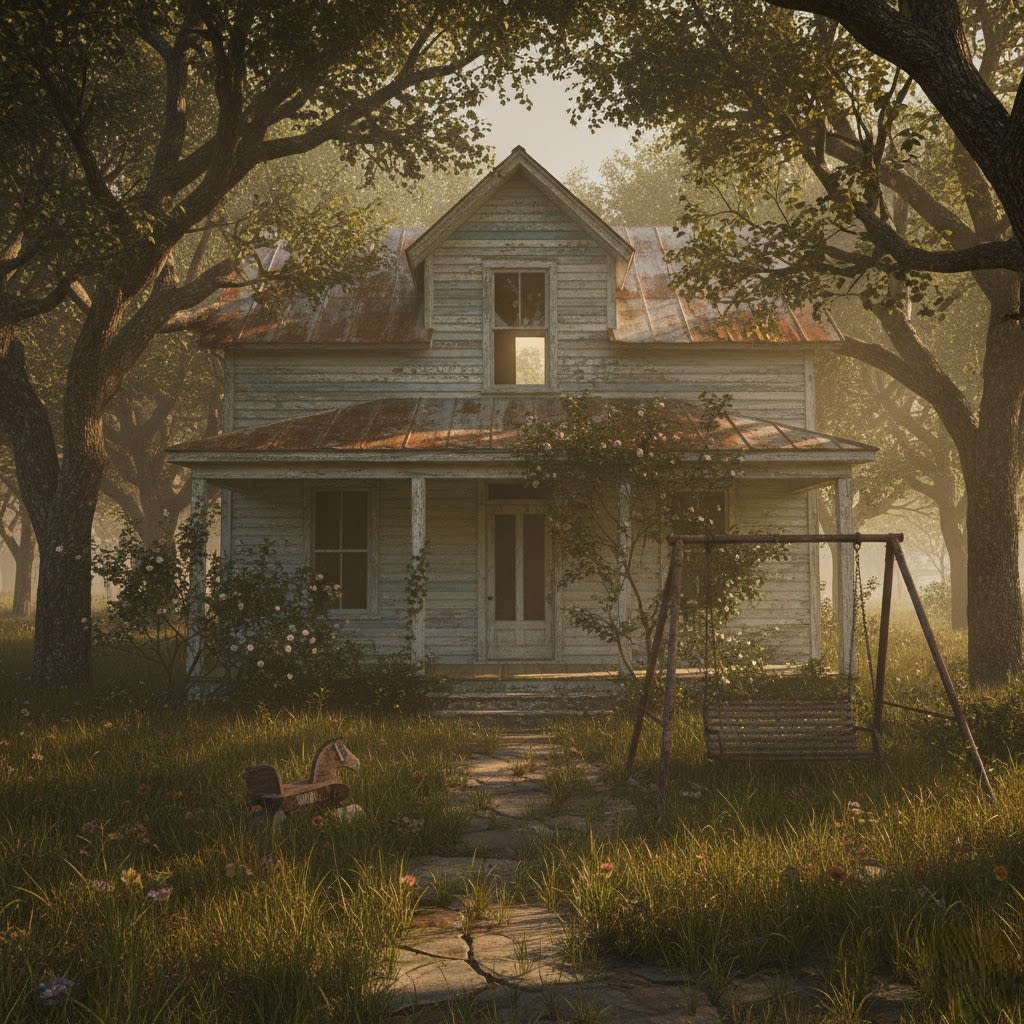
There’s a place that never truly leaves me. A place that exists in my memory like an old photograph, worn at the edges but impossible to forget. My childhood home. At first glance, it was just a house, like any other. A small, weathered structure with a creaking front door, windows that let in just enough sunlight, and walls that held the laughter and tears of our family. But to me, it was more than that. It was the beginning of everything — joy, fear, love, and the kind of pain that lingers long after the doors are closed.
The front yard was always alive with possibilities. Summer days were spent chasing the wind, barefoot across the grass, imagining worlds that only children can see. The old swing in the backyard, hanging crooked from a sturdy tree, carried me higher than the rooftops, higher than my worries, higher than the world itself. In those moments, the house was a haven. I felt invincible, wrapped in the security of familiar walls and the soft hum of home.
But home is never only laughter. It carries shadows too. In the corners of those same rooms, I learned fear. I learned that love could hurt, that silence could be heavier than words, and that what is supposed to protect you can sometimes trap you. Nights were the hardest. The creaks of the floorboards became whispers, the shadows in the hallway became shapes with faces I didn’t recognize. Even in daylight, the house had its ways of reminding me that not everything in childhood is safe, and that the heart can hold both wonder and dread at the same time.
I remember the kitchen most vividly. Its walls smelled of old wood and spices, the kind of smell that should have meant comfort. But in the quiet mornings, when the house held its breath and the world outside had not yet begun, I would sit alone at the table, feeling the weight of things I could not name. The echoes of arguments, the tension that settled like dust, the unspoken rules that governed our days — they lingered long after voices faded. That kitchen, which once meant nourishment, became a place where memory and fear intertwined.
Even now, years later, the house has a way of haunting me. It comes back in dreams — a familiar hallway stretching farther than it should, doors that open to rooms that never existed, windows framing skies I’ve never seen. Sometimes I see myself as that small child, carrying invisible burdens and learning early lessons about the fragility of happiness. I feel both the comfort of memory and the sting of loss at the same time. The house is gone, sold to strangers who never knew its secrets, but the imprint it left on my mind refuses to fade.
What haunts me most is not a single event, but the accumulation of everything that happened within those walls. The joy, the fear, the small victories and quiet defeats, the moments of love intertwined with moments of pain. They formed a foundation, shaky and uneven, but unmistakably mine. That house taught me who I was before the world told me who to be. It taught me resilience, patience, and the bittersweet truth that the places we leave behind often shape us more than the places we carry forward.
Sometimes, I wish I could go back. Not to change the past, but to walk through those rooms as an adult and understand the child I once was. To tell her that the fear she felt was real, but that she was stronger than she knew. To tell her that even if the walls sometimes closed in, she would survive. That childhood home, with all its beauty and its terror, is a mirror of life itself — a mixture of love, loss, and learning.
And yet, as haunting as it is, I have learned to carry it with grace. I do not visit the house anymore, but I visit the memories. I let them teach me, remind me, and even challenge me. Every creak of a floorboard in an old home, every smell of wood and dust, every faded photograph — they are reminders of where I came from and why I continue to move forward. The house may have shaped me, but it does not define me. I define myself by what I have carried forward, by what I have chosen to let go, and by the life I build beyond the shadows of that old home.
The childhood home that still haunts me is a paradox — it is both a ghost and a guide. It reminds me of pain and joy, loss and hope, fear and courage. It shows me that the past, no matter how heavy, can be carried without breaking. And in that delicate balance, I find strength. I survived that house, and in surviving, I learned how to survive myself.
About the Creator
Keep reading
More stories from Kashif Wazir and writers in History and other communities.
The Lost City of Atlantis – Fact or Ancient Fiction?
**The Legend That Refuses to Sink** – For centuries, people have been fascinated by the mystery of Atlantis — the legendary city said to have vanished beneath the sea. The story began with the ancient Greek philosopher **Plato**, who first mentioned Atlantis around 360 BC. According to him, Atlantis was a powerful and advanced civilization that existed thousands of years before his time. It was said to be a land of magnificent palaces, golden temples, and unmatched technology. But because of human greed and pride, the gods became angry, and Atlantis was swallowed by the ocean in a single night. Since then, the world has been divided — was Atlantis real, or was it just a story meant to teach a lesson about arrogance and morality?
By Kashif Wazir5 months ago in History
The Strait of Hormuz: When the World Held Its Breath
The sea was calm, but the tension in the air was anything but peaceful. At the narrow waters of the Strait of Hormuz, one of the most important shipping routes on Earth, warships began to appear on the horizon. Oil tankers slowed down, merchant ships changed their routes, and the world watched nervously.
By Imran Ali Shahabout 14 hours ago in History



Comments
There are no comments for this story
Be the first to respond and start the conversation.