
"The Bizarre Dancing Plague of 1518: When Dancing Was Deadly"
By Kay
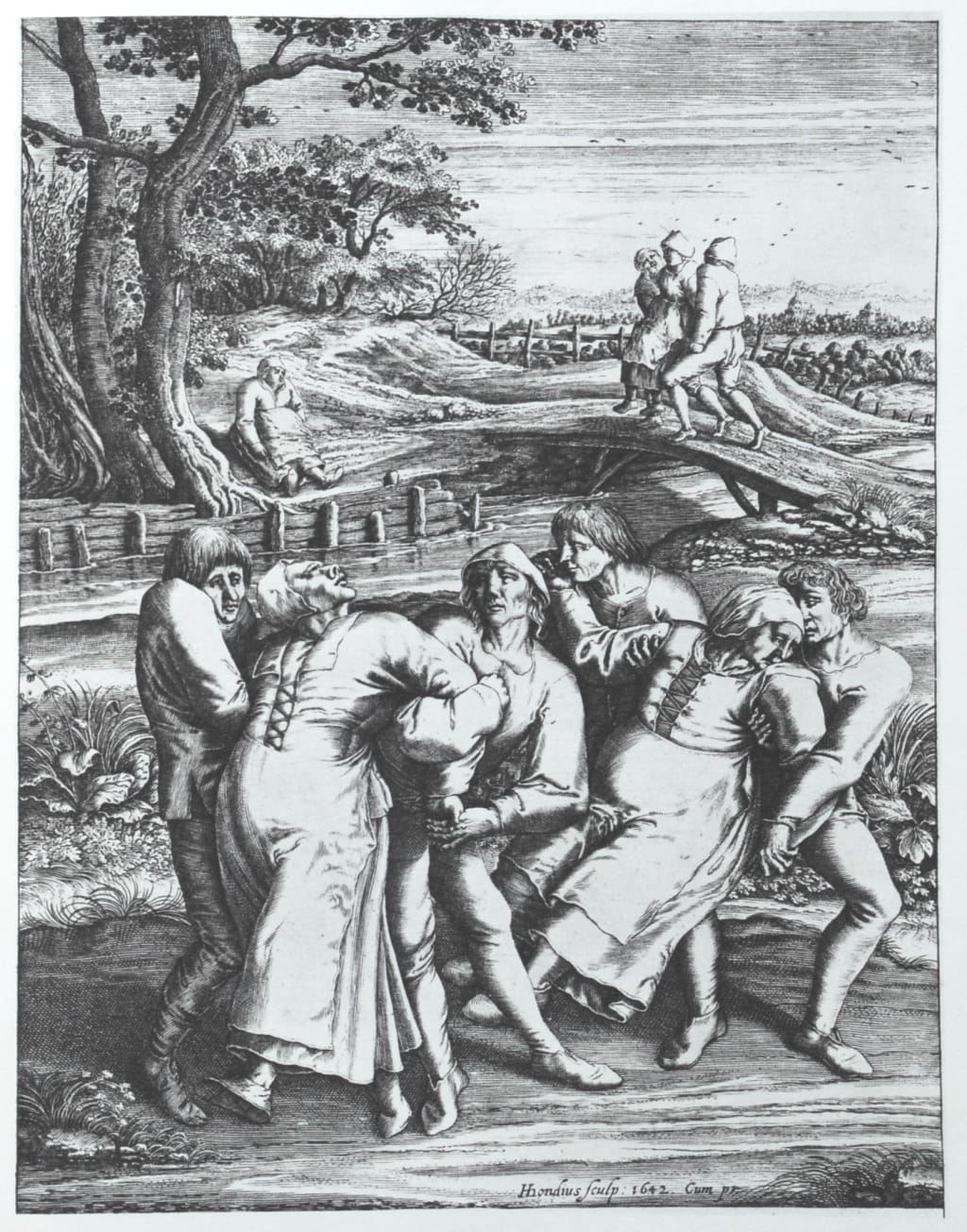
Medieval Europe witnessed its fair share of deadly diseases, but none were as peculiar and strangely fascinating as the "Dancing Plague" of 1518. Let us delve into the historical account of Frau Troffea and how her inexplicable dancing set off a bizarre and deadly phenomenon that gripped the town of Strasbourg.
The Unlikely Beginning:
Our story commences on a scorching July day in 1518, as a German housewife named Frau Troffea stepped out of her home in Strasbourg and began dancing uncontrollably to an unseen beat. This strange episode, unfolding in the streets of a small town, marked the start of an extraordinary and eerie event.
Frau Troffea's dance continued throughout the day, much to the bewilderment of her husband, who remained unaffected by this inexplicable compulsion. She danced until exhaustion forced her into a few hours of restless sleep, only to awaken the next day with her feet still tapping out a relentless rhythm.
The Dance Spreads:
Soon, a crowd gathered around Frau Troffea, witnessing her bizarre solo performance. But she was not destined to dance alone for long. Approximately 30 others from the town began to join her in this unusual dance, and the spectacle grew increasingly strange. It was not long before a full-fledged "dance troupe" emerged, with up to 400 people becoming involuntary participants in this peculiar phenomenon.
The Struggle to Contain the Madness:
As the epidemic of dancing, later known as "dancing mania," spread like wildfire throughout Strasbourg, the city council found itself facing a crisis unlike any other. The affected individuals were clearly suffering, screaming in agony, and begging for relief from this inexplicable affliction.
As the summer heat intensified, the situation deteriorated further. Tragically, as many as 15 people per day succumbed to the relentless dancing in the streets. The city council, desperately searching for a solution, and also turned to local physicians for help.
The Unconventional Diagnosis:
Physicians of the time grappled with understanding this bizarre plague. They ruled out astrological and supernatural causes and settled on a diagnosis of "hot blood." In their view, the balance of a person's humors had been disrupted, causing an overheated brain and subsequent madness.
The prescribed remedy for "hot blood" was bloodletting, a common medical practice of the era. However, given that the afflicted individuals couldn't stop moving voluntarily, bloodletting was an impractical solution.
The Failed Attempt to Dance It Away:
Desperate to end the dancing plague, the city council attempted an unusual approach: they organized musicians and encouraged even more dancing. Their misguided belief was that by exhausting the dancers, they would eventually stop. Instead, this approach exacerbated the problem.
As the exhausted dancers stumbled and slowed down, the musicians increased the tempo of their music, inadvertently urging the dancers to move even faster. It was a failed cure that intensified the epidemic.
The Dancing Ban:
Faced with no other options, Strasbourg took drastic measures and banned dancing altogether, imposing a fine on anyone caught dancing in the streets. Even music was prohibited, with the exception of string music at weddings. But the ban on dancing and music did little to quell the dancing plague.
The Unusual Pilgrimage:
With no conventional solution in sight, the city council resorted to an unconventional approach. They loaded the afflicted dancers onto wagons and transported them to a shrine dedicated to Saint Vitus, a legendary healer. There, the priests conducted masses, distributed blessed crosses and red shoes, and miraculously, the dancing plague began to subside.
The Legacy of the Dancing Plague:
In retrospect, the bizarre dancing plague of 1518 is often attributed to mass hysteria. The city of Strasbourg had endured a series of hardships, including famines and outbreaks of diseases, which had left the population in a state of heightened fear and superstition. It was the perfect environment for mass hysteria to take hold, with individuals believing they were under the influence of an unstoppable force.
While modern experts have proposed various theories, the dancing plague remains a unique and perplexing historical event, a testament to the power of mass hysteria and the mysteries of the human mind.
The Dancing Plague of 1518 stands as one of the most bizarre and intriguing episodes in mediaeval history. It reminds us of the profound impact mass hysteria can have on communities and how a seemingly innocuous event can spiral into something both extraordinary and deadly. Frau Troffea's dance and the subsequent dancing mania serve as a captivating reminder of the strange and unpredictable aspects of human behaviour throughout history
About the Creator
The Year 1964 in Review: Fun Facts, Trivia, and Historic Highlights
This quick read is a collection of fun facts, trivia, and historic events from the year 1964. Discover the year’s top news stories, most influential people, sports facts, historic firsts, entertainment trivia, and much more.
By Gregory DeVictor2 days ago in History




Comments
There are no comments for this story
Be the first to respond and start the conversation.