
"The Birth of the Atomic Bomb: A Tale of Science, Fear, and Fallout"
How fear of Nazi power, genius minds, and the race against time gave rise to the most devastating weapon in human history.

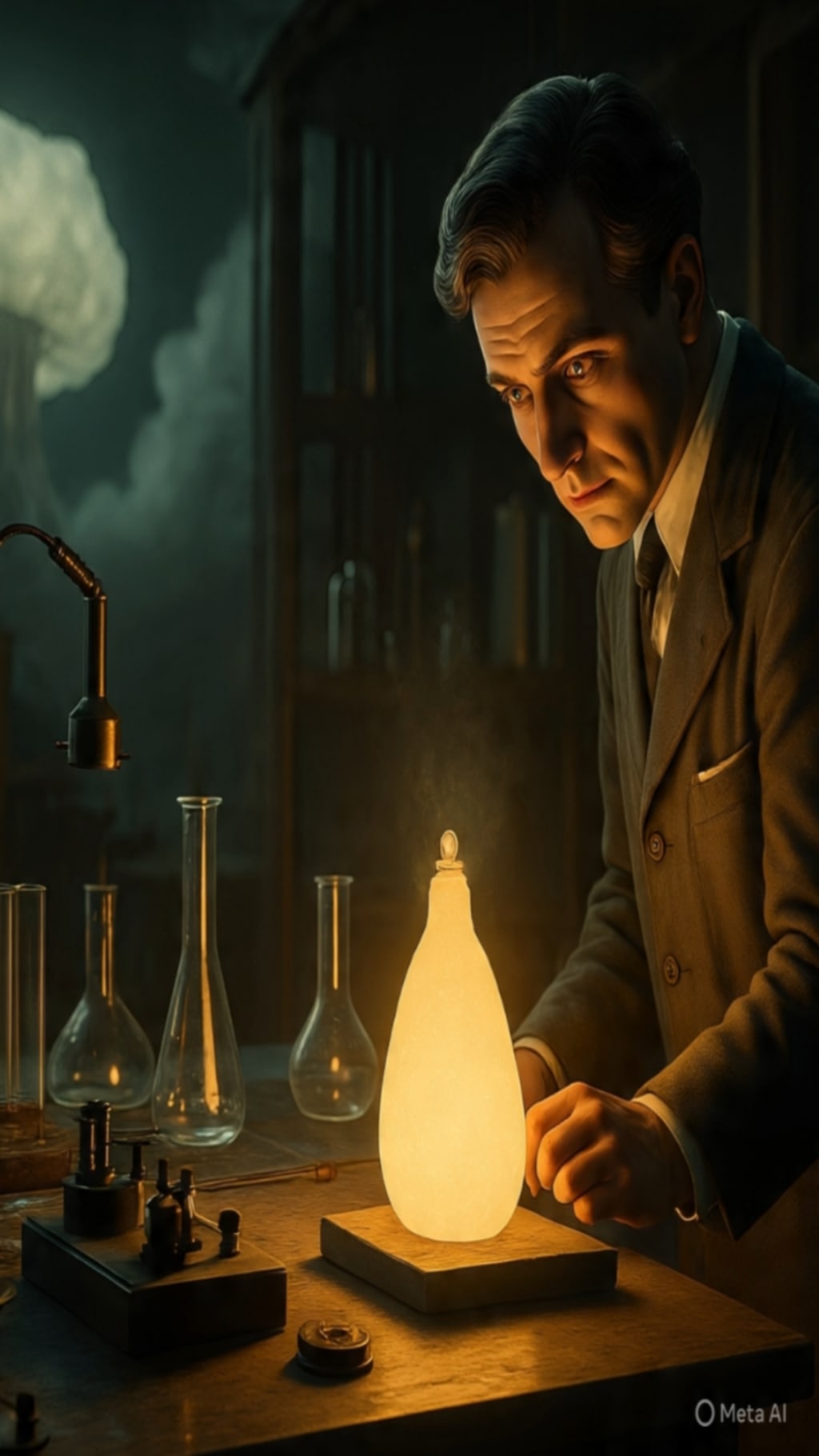
The year was 1938. The world stood on the edge of a storm, unaware of how deep the darkness would go. In a quiet lab in Nazi Germany, two scientists—Otto Hahn and Fritz Strassmann—performed an experiment that split the uranium atom. What they discovered was nuclear fission: a chain reaction releasing immense energy. They didn’t realize it then, but they had just unlocked the secret to one of the most powerful forces in the universe.
Back in the United States, a Hungarian physicist named Leo Szilard, already exiled by fascism, heard the news. Szilard had long feared that scientific discoveries could become weapons. Now, with Germany learning how to unleash nuclear energy, that fear was becoming real.
Germany had brilliant scientists. It had uranium. It had the ambition to conquer the world.
Szilard knew what could come next: an atomic bomb—in Hitler’s hands.
But the great irony of history is this: the man who feared the bomb most would help give birth to it.
Szilard, alongside fellow Jewish physicists who had fled Europe—most famously, Albert Einstein—wrote a letter to President Franklin D. Roosevelt in 1939. The letter warned that Nazi Germany might be developing an unimaginably powerful weapon. They urged the United States to act fast and begin its own nuclear research.
Roosevelt listened. That letter sparked what would become the Manhattan Project—a secret U.S. government program to build the first atomic bomb.
---
Across hidden labs in America—from Los Alamos in New Mexico to Oak Ridge in Tennessee—scientists, engineers, and military men gathered. Some were refugees. Some were patriots. Some were just curious minds. They were led by theoretical physicist J. Robert Oppenheimer, later known as the “father of the atomic bomb.”
These men were brilliant—and burdened.
Some worked out of duty, believing they were preventing a Nazi atomic bomb.
Some worked out of fear—that if they didn’t, someone else would.
Some worked for science itself—the joy of understanding the universe.
And some, like Oppenheimer, had no simple answer for why they were doing it.
They were building something that had never existed—a weapon that could erase entire cities in seconds. And they did it in total secrecy.
On July 16, 1945, in the Trinity test in the New Mexico desert, the first atomic bomb was detonated.
The ground trembled. The sky exploded into fire. Observers miles away felt the heat on their skin.
Watching it, Oppenheimer quoted the Bhagavad Gita:
> “Now I am become Death, the destroyer of worlds.”
Just three weeks later, on August 6 and August 9, the United States dropped atomic bombs on the Japanese cities of Hiroshima and Nagasaki.
The cities were vaporized.
More than 200,000 lives were lost—most civilians. Countless others were injured or suffered for generations from radiation.
The war ended.
But the world had changed forever.
---
So, who invented the atomic bomb?
Not one man. Not one country. Not even one reason.
It was born from fear, ambition, genius, and desperation. It was created by people who wanted peace—and built a weapon of destruction.
It wasn’t just a bomb. It was a mirror.
A mirror reflecting our brilliance—and our blindness. Our progress—and our peril. Our courage—and our cruelty.
The bomb was a symbol of what humanity could achieve… and what it could destroy.
And perhaps the better question is not who invented the bomb—but why.
Why do we chase such power?
Why do we take the beauty of science and twist it into instruments of war?
The story of the atomic bomb is not just about physics or politics. It’s about us. It’s about the choices we make—and the consequences that follow.
---
About the Creator
Keep reading
More stories from World of knowledge and writers in History and other communities.
The Birth of the Atomic Bomb: A Tale of Science, Fear, and Fallout"
The year was 1938. The world stood on the edge of a storm, unaware of how deep the darkness would go. In a quiet lab in Nazi Germany, two scientists—Otto Hahn and Fritz Strassmann—performed an experiment that split the uranium atom. What they discovered was nuclear fission: a chain reaction releasing immense energy. They didn’t realize it then, but they had just unlocked the secret to one of the most powerful forces in the universe.
By World of knowledge 7 months ago in Education
Rajendra Chola I and the Conquest of the Ganga: A Monumental Feat in Indian History
Known as the “Gangaikonda Chola” (the Chola who conquered the Ganga), Rajendra transformed a South Indian maritime empire into a pan-Indian power whose influence stretched from the Indian Ocean to the heart of the subcontinent. This campaign was not merely a military raid but a bold statement of imperial ambition, strategic brilliance, and cultural confidence.
By Say the truth 6 days ago in History



Comments
There are no comments for this story
Be the first to respond and start the conversation.