
The Bengali New Year is being celebrated with Bangla Noboborsho.
Suvo Noboborsho
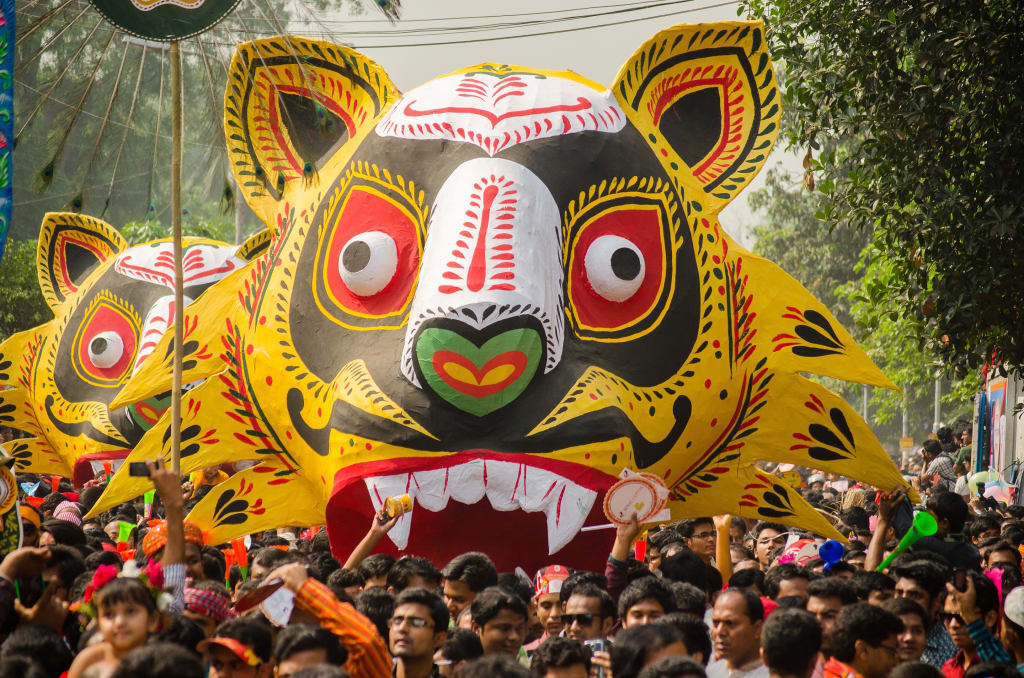
The Bengali New Year is being celebrated with Bangla Noboborsho.
The first day of the Bengali calendar is Bangla Noboborsho, also known as Pohela Boishakh. Celebrated with great enthusiasm across Bangladesh and in Bengali communities around the world, this festival is not just the beginning of a new year—it is a cultural phenomenon, a time for unity, reflection, and festivity. Observed on the 14th or 15th of April, Noboborsho cuts across religious and social lines, uniting people through shared traditions and joy.
Historical Background and Origins The roots of Bangla Noboborsho can be traced back to the Mughal era, particularly to the reign of Emperor Akbar. Because it did not coincide with the solar agricultural cycles, Akbar realized in the 16th century that the Islamic lunar calendar was not suitable for collecting taxes from agrarian communities. He introduced the Bangla calendar, a hybrid of the solar Hindu calendar and the lunar Islamic calendar, to address this issue. As a result, Pohela Boishakh became a celebration as well as a tool for administration. Over the centuries, the day evolved from a fiscal necessity to a cherished cultural event. While the original intent was economic, today Noboborsho is a celebration of identity, creativity, and the passage of time.
Cultural Significance
Bengali culture is deeply influenced by Pohela Boishakh. It stands for rebirth, hope, and unity. The phrase "Shubho Noboborsho," which translates to "Happy New Year," is used to ring in the new year. Businesses open new account books (known as Haal Khata), often accompanied by religious rituals to invoke prosperity. For many, it is also a time to clean homes, wear new clothes, and start afresh with optimism.
Additionally, the day is regarded as a commemoration of Bengali heritage. Folk art, poetry, music, and dance come to the forefront to help people remember where they came from and keep local customs alive. Cultural organizations, artists, and students all play significant roles in organizing events to mark the day.
Celebrated Traditions The celebrations of Bangla Noboborsho are vibrant and filled with color. Perhaps the most iconic aspect is the Mangal Shobhajatra, a traditional parade that originated in Dhaka and has now become a symbol of peace and solidarity. Organized by students of Dhaka University’s Faculty of Fine Arts, this procession features large, colorful masks, replicas of animals, and traditional motifs. Recognized by UNESCO as an Intangible Cultural Heritage of Humanity, it represents the aspirations of the people for peace, harmony, and justice.
Another important aspect of the celebration is the food. Traditional dishes such as panta ilish (fermented rice with fried hilsa fish), lentils, green chilies, and various bhartas (mashed vegetables) are commonly served. These dishes are about more than just taste; they also help people connect with Bengali society's agrarian past. People wear traditional attire, with men often donning panjabi and women wearing sarees, typically in red and white, symbolizing purity and joy. Many choose this day for cultural performances, visiting fairs, and exchanging gifts with loved ones.
Urban versus Rural Celebrations
While the essence of Noboborsho remains the same across urban and rural areas, the way it is celebrated can differ. In cities like Dhaka, Chittagong, and Kolkata, cultural shows, parades, art exhibitions, and concerts are common. Government and private institutions often sponsor these events, turning them into grand public celebrations.
Local fairs (known as Boishakhi Melas), traditional games, and neighborhood gatherings make up rural celebrations, which are more community-centered and intimate. These fairs offer local crafts, folk music, puppet shows, and other cultural activities that reflect the rural lifestyle and customs.
Today's power and global reach With the passage of time, Noboborsho has also adopted modern elements. Events that are live-streamed, broadcast on television, and shared on social media connect the global Bengali diaspora to the celebrations in their home country. Events held by community centers and cultural organizations help Bengalis who live abroad, particularly in the United Kingdom, the United States, Canada, and the Middle East, maintain the spirit of the day. In recent years, there has also been a resurgence of interest among younger generations in reconnecting with the traditional aspects of Pohela Boishakh, often blending them with contemporary expressions like fusion music, digital art, and fashion.
Conclusion
Bangla Noboborsho is more than just a calendar event. It is a vibrant expression of Bengali identity, a reaffirmation of cultural pride, and a hopeful look into the future. In a world increasingly driven by speed and change, Pohela Boishakh offers a moment to pause, celebrate heritage, and move forward with renewed energy.
To everyone, happy shabho noboborsho, and may the coming year bring joy, prosperity, and peace.
About the Creator
Keep reading
More stories from Samudra Nandan and writers in History and other communities.
article World must act with urgency to save Palestinians in Gaza
To save Palestinians in Gaza, the world must act immediately. Gaza is swollen. Everybody is watching. Not only is the situation in the Gaza Strip a humanitarian emergency, but it is also a full-blown catastrophe brought on by unrelenting violence, political stagnation, and neglect from the international community. As civilian casualties mount and critical infrastructure collapses under the weight of relentless bombardment and blockade, it has become clear that platitudes and passive diplomacy are no longer acceptable. The time for urgent, coordinated global action is now.
By Samudra Nandan10 months ago in Humans
The Quiet Rise of Global Militarization
The Quiet Rise of Global Militarization Across the world, governments are increasing military spending, expanding defense industries, and modernizing weapons systems—often without openly acknowledging why. There are no formal declarations of war, no mass troop mobilizations, and no clear enemy named in many cases. Yet behind the scenes, a quiet shift is taking place. Global militarization is rising, not loudly, but steadily, reshaping international relations in ways that may define the coming decades.
By Wings of Time 8 days ago in History
Rage
Content Warning: Domestic Violence, Assault Rage D. A. Ratliff “Who did this?” My voice echoed through the house. All I wanted was a cup of tea, but one of the twins, running through the house like maniacs, knocked it over. My nerves tingled, and every muscle in my body felt coiled like a spring. Survival seemed out of reach.
By D. A. Ratliff7 days ago in Fiction



Comments
There are no comments for this story
Be the first to respond and start the conversation.