
The battle of virata and susharma
The battle before uttara gograhana
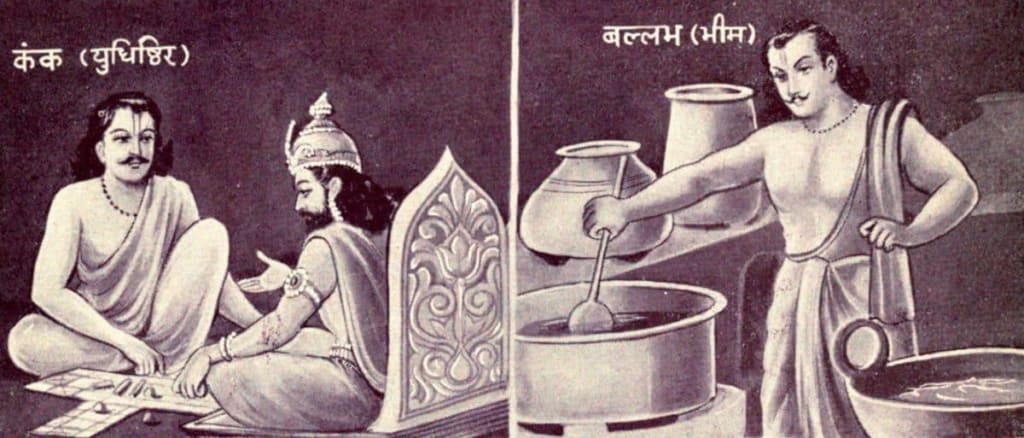
Background: The Pandavas in Agyatvas
The Pandavas were in the final year of their thirteen-year exile, called Agyatvas or incognito exile. According to the terms of their punishment, they had to remain hidden during this year, failing which they would have to repeat another twelve years in exile. To stay concealed, they took refuge in the Kingdom of Virata and assumed different disguises:
Yudhishthira became Kanka, a royal advisor and dice player.
Bhima became Ballava, the royal cook.
Arjuna became Brihannala, a eunuch and teacher of dance and music to Princess Uttara.
Nakula became Granthika, the caretaker of horses.
Sahadeva became Tantipala, the caretaker of cattle.
Draupadi became Sairandhri, a maidservant to Queen Sudeshna.
During this time, the Matsya Kingdom faced multiple threats from neighboring rulers, including the Trigartas, led by Susharma, who harbored animosity toward King Virata.
Susharma’s Plan to Raid Virata’s Cattle
Cattle were a significant measure of wealth in ancient times, and raiding a kingdom’s cattle was both a strategic move to weaken the enemy and a symbolic insult. Encouraged by Duryodhana, who hoped to expose the Pandavas’ hiding place, Susharma decided to launch a cattle raid on the Matsya Kingdom.
One day, Susharma’s forces attacked the royal cattle stations and captured a large portion of Virata’s herds. News of the raid quickly reached King Virata, who was infuriated by the audacity of the Trigartas. Determined to protect his kingdom’s honor and wealth, Virata rallied his army and prepared to confront Susharma.
The Pandavas Step In
King Virata, unaware of the true identities of the Pandavas, sought advice from his court. Yudhishthira, in his guise as Kanka, suggested that Ballava (Bhima), the royal cook, accompany the king to the battlefield. He hinted at Bhima’s great strength and assured Virata that Ballava’s presence would ensure victory. Trusting Yudhishthira’s counsel, Virata agreed.
Bhima, eager for action and enraged by the insult to his host, prepared to join the battle. The Pandavas, even in disguise, felt a deep sense of loyalty toward Virata for providing them refuge and saw this as an opportunity to repay his hospitality.
The Battle Between Virata and Susharma
The Matsya army, led by King Virata and supported by Bhima, marched to confront Susharma’s forces. The battlefield was soon alive with the sounds of clashing weapons, war cries, and the thundering hooves of horses. The Trigartas, confident in their superior numbers, fought fiercely to retain the stolen cattle.
Bhima’s Heroics
Once the battle began, Bhima’s strength and prowess became evident. Despite being disguised as a cook, he charged into battle with the might of a seasoned warrior. Using his immense physical power and unmatched combat skills, he wreaked havoc on the Trigarta army:
Destroying the Enemy: Bhima wielded his mace with devastating force, crushing enemy soldiers and scattering their formations.
Protecting King Virata: Bhima stayed close to Virata, shielding him from enemy attacks and boosting the morale of the Matsya soldiers.
Unleashing Fury: Bhima’s rage was unstoppable as he tore through the battlefield, leaving the Trigartas overwhelmed and demoralized.
Susharma’s Capture
Amid the chaos, Bhima directly confronted Susharma, the leader of the Trigarta forces. In a fierce duel, Bhima overpowered Susharma with ease, demonstrating his dominance as a warrior. Susharma, unable to withstand Bhima’s might, was captured alive. Bhima dragged him before King Virata, bound and humiliated.
The Aftermath
The defeat of Susharma marked a decisive victory for the Matsya Kingdom. The stolen cattle were recovered and returned to the royal herds, restoring the kingdom’s wealth and pride. King Virata praised Ballava (Bhima) for his unmatched bravery and skill, unaware that his “cook” was one of the greatest warriors in the world.
Susharma’s capture served as a warning to other neighboring kingdoms not to underestimate Matsya’s strength. However, the Pandavas ensured that they remained discreet, protecting their true identities even amidst their heroic actions.
Themes and Lessons
The battle between Virata and Susharma offers several moral and strategic lessons:
Loyalty and Gratitude:
The Pandavas, despite their incognito status, demonstrated their loyalty to King Virata by defending his kingdom. Their actions exemplified their gratitude and sense of duty.
Heroism in Humility:
Even while disguised as a cook, Bhima’s heroic deeds on the battlefield proved that true strength lies in one’s character, not one’s title.
Righteous Valor:
The Pandavas’ actions highlight the importance of using strength and skill to protect the innocent and uphold dharma.
The Power of Strategy:
Yudhishthira’s advice to include Bhima in the campaign shows his foresight and strategic thinking, ensuring the Matsya army’s success.
The Consequences of Arrogance:
Susharma’s overconfidence led to his downfall, serving as a reminder of the dangers of underestimating one’s opponents.
About the Creator
Keep reading
More stories from sai Charan and writers in History and other communities.
The story of keechaka and his death
The story of Keechaka is a significant episode in the Mahabharata during the Pandavas’ incognito exile at the court of King Virata. It is a tale of Draupadi’s courage, Keechaka’s arrogance, and Bhima’s wrathful justice, highlighting themes of dharma, loyalty, and retribution.
By sai Charanabout a year ago in History
3 Times the Wrong Person Was in Charge at the Worst Possible Moment
Leadership matters most when things go wrong. In calm times, almost anyone can appear competent. Meetings happen. Papers get signed. Coffee is consumed with confidence. But crises are different. Crises demand judgment, experience, decisiveness, and—ideally—a basic understanding of what’s happening.
By Enoch Sagini4 days ago in History


Comments
There are no comments for this story
Be the first to respond and start the conversation.