
The Babylonian Hanging Gardens: A Wonder of the Ancient World
History


The Babylonian Hanging Gardens, often hailed as one of the Seven Wonders of the Ancient World, remain shrouded in mystery and allure. These legendary gardens, purportedly built in the ancient city of Babylon, modern-day Iraq, symbolize the grandeur and architectural ingenuity of ancient Mesopotamian civilization. Despite the ongoing debate about their actual existence, the Hanging Gardens continue to captivate historians, archaeologists, and enthusiasts alike. In this article, we delve into the history, legends, and enduring legacy of the Babylonian Hanging Gardens.

Historical Context and Purpose
Construction During Nebuchadnezzar II's Reign
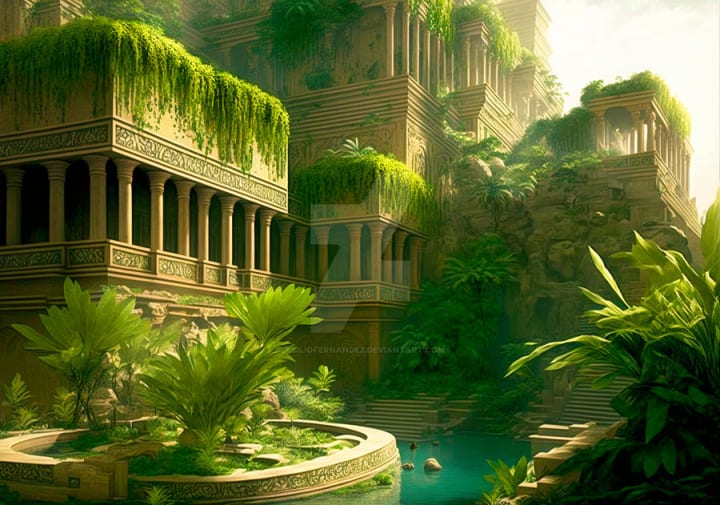
The Hanging Gardens are believed to have been constructed during the reign of King Nebuchadnezzar II, who ruled Babylon from 605 to 562 BCE. According to ancient texts, Nebuchadnezzar built the gardens for his wife, Amytis of Media, who longed for the green hills and valleys of her homeland. To alleviate her homesickness, the king created an extraordinary terraced garden filled with lush vegetation, exotic flowers, and cascading waterfalls.
Descriptions from Ancient Historians
Accounts from Berossus, Strabo, and Diodorus Siculus
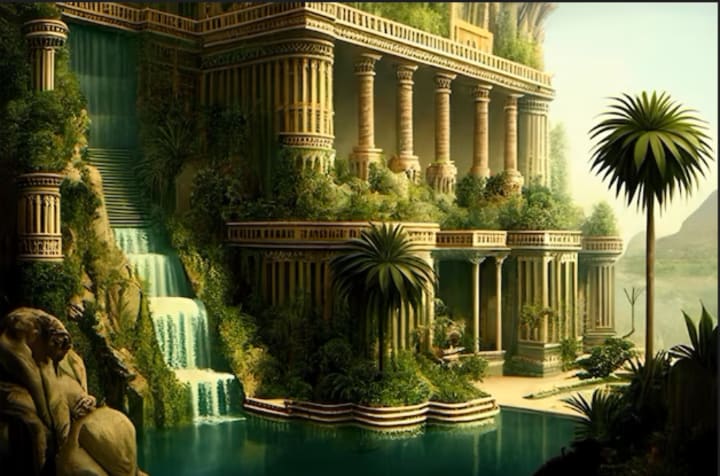
Descriptions of the Hanging Gardens come primarily from ancient historians, such as Berossus, Strabo, and Diodorus Siculus. These accounts paint a picture of a series of tiered gardens reaching up to 75 feet high, supported by stone columns and irrigated by a sophisticated water management system. The gardens were said to be an oasis in the arid landscape of Babylon, with trees, shrubs, and vines hanging from the terraces, creating a verdant and fragrant paradise.
The irrigation system of the Hanging Gardens is particularly noteworthy. Given Babylon's dry climate, providing water to such an extensive garden would have required advanced engineering. Ancient texts suggest the use of a chain pump or a similar mechanism to lift water from the Euphrates River to the top of the gardens. From there, the water would flow down through a network of channels and aqueducts, nourishing the plants on each terrace.
The Debate Over Their Existence
Lack of Archaeological Evidence
Despite the detailed descriptions, there is a significant lack of concrete archaeological evidence to confirm the existence of the Hanging Gardens. Excavations in Babylon have yet to uncover definitive remains of the gardens, leading some scholars to speculate that the gardens might have been located elsewhere or that they were a mythical creation.
Alternative Theories and Locations
One theory posits that the Hanging Gardens were actually in Nineveh, built by the Assyrian King Sennacherib, who ruled from 705 to 681 BCE. This theory is supported by texts describing elaborate gardens and advanced irrigation systems in Nineveh.
Enduring Fascination and Legacy
Symbol of Ancient Ingenuity
The absence of direct evidence has not diminished the allure of the Hanging Gardens. They continue to inspire fascination and admiration for the ancient world's architectural and engineering capabilities. The concept of a man-made paradise, with its terraces overflowing with greenery and water, symbolizes humanity's desire to harmonize with nature and create beauty even in challenging environments.
Cultural and Historical Impact
Reflection of Mesopotamian Culture and Innovation
The legacy of the Babylonian Hanging Gardens extends beyond their physical description. They represent the peak of Mesopotamian culture and innovation, reflecting the region's advancements in horticulture, architecture, and technology. The gardens are a testament to the human ability to transform and enhance the natural environment, showcasing a blend of artistry and practical engineering.
In addition to their historical significance, the Hanging Gardens have left an indelible mark on literature, art, and popular culture. They have been depicted in countless works of art, from ancient mosaics to modern paintings, and have inspired numerous literary references and adaptations. The enduring fascination with the Hanging Gardens underscores their status as a symbol of ancient wonder and creativity.
Conclusion
A Testament to Human Aspiration
While the debate over the existence and location of the Hanging Gardens continues, their story remains a powerful reminder of the grandeur of ancient civilizations. The gardens symbolize not only the splendor of Babylon but also the broader human aspiration to create beauty, comfort, and harmony in our surroundings. They are a tribute to the ingenuity and ambition of those who came before us, whose legacies continue to shape our understanding of history and culture.
The Babylonian Hanging Gardens, whether they existed in physical form or solely in the imagination of ancient writers, embody the pinnacle of human achievement in the ancient world. Their story is one of love, innovation, and the enduring quest to bring nature into the heart of civilization. As we continue to explore and interpret the past, the Hanging Gardens remain a symbol of the extraordinary capabilities of ancient societies and their enduring impact on our cultural heritage.
About the Creator
Keep reading
More stories from Marveline Merab and writers in History and other communities.
The Great Wall of China: An Enduring Monument of Ancient Engineering
The Great Wall of China stands as one of the most iconic and awe-inspiring feats of ancient engineering, symbolizing the ingenuity and determination of Chinese civilization. Spanning thousands of miles, this colossal structure not only served as a formidable defense mechanism but also as a testament to the cultural and historical significance of China. In this article, we explore the history, construction, and enduring legacy of the Gr
By Marveline Merab2 years ago in History
3 Everyday Rules That Exist Because Someone Once Did Something Very Stupid
Everywhere you go, you are surrounded by rules that feel oddly specific. Do not touch. No running. Contents hot. Do not insert body parts. These warnings aren’t theoretical. They weren’t written by pessimists or lawyers with too much free time. They exist because at some point in history, a real human being looked at a situation and thought, “This will probably be fine.”
By Enoch Sagini4 days ago in History
Nanchang: A Modern Symbol of China’s Naval Power
In recent years, the world has closely watched the rapid modernization of the Chinese People’s Liberation Army Navy (PLA Navy). One of the most important symbols of this transformation is the Nanchang (Hull 101), China’s first Type 055 guided-missile destroyer. Commissioned on 12 January 2020, Nanchang represents a major leap in naval technology and capability. As it completes six years of active service, the ship stands as a clear example of how China’s navy has moved into a new era of advanced maritime power.
By sehzeen fatima6 days ago in History



Comments
There are no comments for this story
Be the first to respond and start the conversation.