
The Asian Industrial Revolution: A Tale of Transformation
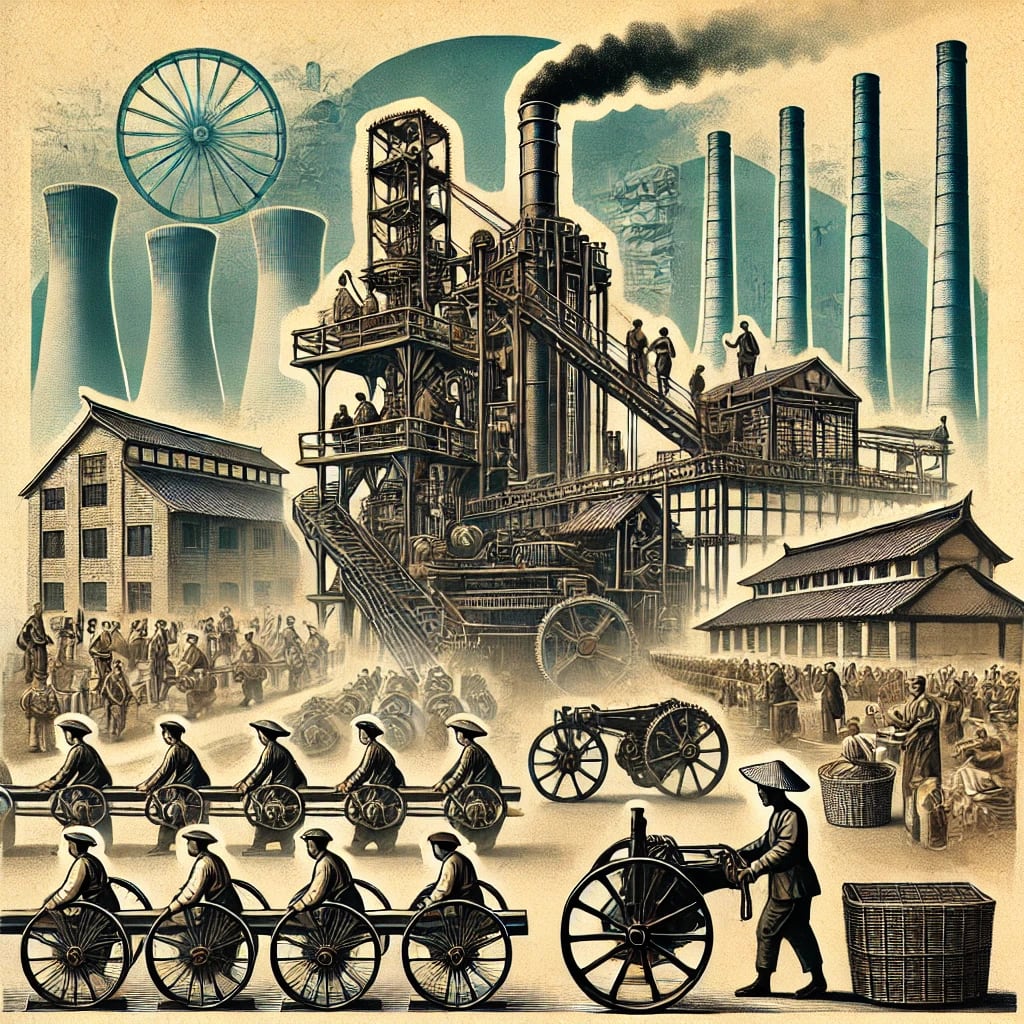
In the grand tapestry of history, the Industrial Revolution is often associated with the smoke-filled skies of 18th-century Britain or the assembly lines of America. Yet, the rise of industry in Asia remains one of the most compelling and transformative chapters of the modern era. This revolution not only reshaped economies but also redefined societies, lifting millions out of poverty and setting the stage for the continent’s economic dominance in the 21st century.

The Asian Industrial Revolution: A Tale of Transformation
In the grand tapestry of history, the Industrial Revolution is often associated with the smoke-filled skies of 18th-century Britain or the assembly lines of America. Yet, the rise of industry in Asia remains one of the most compelling and transformative chapters of the modern era. This revolution not only reshaped economies but also redefined societies, lifting millions out of poverty and setting the stage for the continent’s economic dominance in the 21st century.
The Dawn of Industrialization in Asia
The roots of industrialization in Asia can be traced back to the late 19th and early 20th centuries, when colonial rulers introduced mechanized production to the region. However, the real transformation began after World War II, when countries like Japan, China, South Korea, and India embarked on ambitious industrialization programs.
Japan, once devastated by war, became a global powerhouse by the 1960s, pioneering industries in automobiles, electronics, and heavy machinery. Meanwhile, China, under Deng Xiaoping’s reforms in the late 20th century, turned into the “world’s factory,” leveraging its vast labor force to manufacture goods at an unprecedented scale.
Bangladesh: From Jute to a Textile Giant
Bangladesh’s industrial journey is a testament to resilience and ambition. Before independence in 1971, Bangladesh (then East Pakistan) was primarily an agrarian economy with a reliance on jute exports. However, the 1980s and 1990s saw a strategic shift toward textiles and garment manufacturing, which today accounts for over 80% of the country’s exports.
The rise of the Ready-Made Garment (RMG) sector transformed Bangladesh into the world’s second-largest apparel exporter, after China. The success of this industry was driven by an abundant labor force, strategic trade policies, and investments in infrastructure. Industrial zones such as Savar, Gazipur, and Chattogram became hubs of production, drawing international brands and fostering economic growth.
Technology and Automation: A New Era
The 21st century has ushered in a new wave of industrialization across Asia, driven by digitalization, artificial intelligence, and automation. In Bangladesh, factories are gradually shifting from traditional manual labor to semi-automated production lines, increasing efficiency while maintaining competitiveness.
The advent of smart factories, robotics, and sustainable industrial practices is paving the way for the Fourth Industrial Revolution in Asia. Countries like South Korea and Japan are leading in robotics and AI integration, while China’s Belt and Road Initiative is reshaping global trade and infrastructure.
Challenges and the Road Ahead
Despite remarkable growth, challenges remain. Bangladesh’s industrial sector still grapples with issues such as labor rights concerns, environmental sustainability, and dependence on a single export sector. Meanwhile, across Asia, balancing industrial expansion with environmental responsibility is becoming a critical concern.
However, with the rise of green industries, renewable energy investments, and digital transformation, Asia is poised to lead the next phase of global industrialization. Bangladesh, in particular, is diversifying its economy with ventures into pharmaceuticals, shipbuilding, and IT services, signaling a promising future.
Conclusion
The Industrial Revolution in Asia is an ongoing saga of transformation, resilience, and progress. From the textile mills of Bangladesh to the high-tech factories of Japan, the continent continues to shape the global industrial landscape. As nations innovate and adapt, the future of industrialization in Asia remains brighter than ever, setting a precedent for sustainable growth and technological advancement in the years to come.
About the Creator
jashim uddin
hi guies you get something from me Every day
Keep reading
More stories from jashim uddin and writers in History and other communities.
The Rise, Fall, and Return of Donald J. Trump
Title: The Rise, Fall, and Return of Donald J. Trump Donald John Trump was born on June 14, 1946, in Queens, New York. As the fourth child of Fred and Mary Trump, he was raised in a wealthy yet disciplined household. His father, a real estate developer, instilled in him the value of hard work and business acumen. From a young age, Trump showed a competitive spirit, often seeking ways to stand out among his peers.
By jashim uddin11 months ago in History


Comments (1)
Beautiful I subscribed to you please add me read my stuff too 🏆🏆🏆🏆