
THE ARTISTRY OF MAASAI BEADWORK
A Cultural Tapestry
The Artistry of Maasai Beadwork: A Cultural Tapestry
Introduction:
Maasai beadwork is a captivating art form that weaves together intricate designs, vibrant colors, and rich cultural symbolism. Embedded within each bead is a story, a reflection of Maasai heritage, and a testament to the craftsmanship passed down through generations. In this essay, we embark on a journey to explore the artistry of Maasai beadwork, uncovering its historical roots, cultural significance, and the remarkable techniques employed in its creation.
Historical Context and Evolution:
The origins of Maasai beadwork can be traced back centuries ago, when beads were primarily acquired through trade with Arab and Indian merchants along the East African coast. These small glass beads, known as "maji ya moto" or "hot water," became the foundation of Maasai beadwork. Over time, the craft evolved, incorporating traditional patterns, colors, and symbols unique to Maasai culture.
Symbolism and Cultural Significance:
Maasai beadwork is more than just adornment; it is a visual language that conveys meaning and identity. Each color, pattern, and combination of beads carries symbolic significance. Red beads symbolize bravery, strength, and unity, while blue represents energy and the sky. White is associated with purity and health, while green signifies prosperity and land. The intricate patterns often depict important aspects of Maasai life, such as cattle, warriors, and the surrounding natural environment.
Adornments and Artistic Expression:
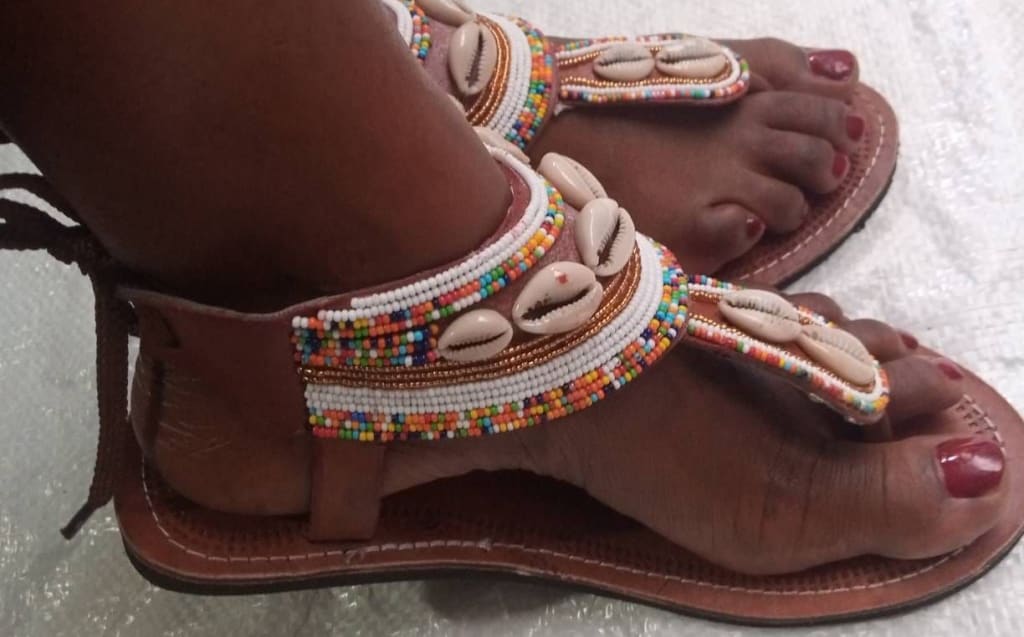
Beadwork plays a vital role in Maasai attire, adorning various articles of clothing and accessories. The beading of shoes, necklaces, and bracelets showcases the artistry and craftsmanship of Maasai women. Shoes, known as "akala," are meticulously adorned with beads, transforming simple footwear into stunning works of art. Necklaces, worn by both men and women, serve as symbols of beauty, status, and cultural identity. Bracelets, known as "nkunguo," are worn in layers, each layer representing a different stage of life.
Techniques and Challenges:
Creating Maasai beadwork requires patience, precision, and a deep understanding of traditional techniques. Beads are individually threaded onto a strong thread or wire, and the patterns are carefully planned and executed. It is a labor-intensive process that demands skillful hands and meticulous attention to detail. Challenges arise in achieving consistent tension, maintaining uniformity in bead size, and ensuring durability in the finished piece.
Preserving Maasai Beadwork:
While Maasai beadwork remains deeply rooted in tradition, contemporary influences have also shaped its evolution. Today, Maasai artisans blend traditional techniques with modern designs to cater to a broader market. The demand for Maasai beadwork has not only preserved the art form but has also provided economic opportunities for Maasai communities, empowering women and supporting sustainable livelihoods.
Below is an example of Artistry of Maasai Beadwork
Maasai Shoes: Maasai shoes, known as "akala," are adorned with exquisite beadwork. They are traditionally made from cowhide and consist of a sole and upper part that covers the foot. The beading on Maasai shoes is a meticulous process, with colorful beads meticulously threaded onto the upper part of the shoe. The patterns often depict geometric shapes, intricate swirls, or representational motifs such as animals or cultural symbols. The beadwork enhances the beauty and uniqueness of the shoes, transforming them into wearable works of art.
Bracelets: Maasai bracelets, known as "nkunguo," are an essential part of Maasai adornment. They are typically made from coiled wire and adorned with vibrant beads. The bracelets are worn in layers, with each layer representing a different stage of life or social status. The beadwork on the bracelets showcases an array of colors, patterns, and symbols. Geometric designs, such as triangles, diamonds, or zigzags, are commonly incorporated, often in a repetitive and symmetrical fashion. The bracelets are worn on the wrist and serve as decorative accessories, adding a touch of elegance and cultural identity to the wearer.
Necklaces: Maasai necklaces are prominent adornments worn by both men and women. They are crafted with meticulous beadwork and hold significant cultural symbolism. Maasai necklaces are typically long and composed of multiple strands of beads. The beadwork forms intricate patterns and often features a combination of colors. The necklaces may showcase larger beads in the center or incorporate focal pendants made from various materials like wood, bone, or metal. These pendants may carry additional symbolic meanings or represent specific cultural elements. Maasai necklaces are cherished heirlooms, passed down through generations, and are an integral part of Maasai cultural identity.
Conclusion
Maasai beadwork stands as a testament to the rich cultural heritage of the Maasai people. It embodies their traditions, beliefs, and artistic expression. Through vibrant colors, intricate patterns, and meticulous craftsmanship, Maasai beadwork captures the essence of a vibrant culture and serves as a bridge between the past and the present. By appreciating and understanding the artistry of Maasai beadwork, we celebrate the beauty and resilience of the Maasai people, their stories, and their enduring cultural legacy.
About the Creator
nancy gachena
I am a talented and versatile professional who excels in the field of computer technology while also indulging in the art of writing during leisure time.
Keep reading
More stories from nancy gachena and writers in History and other communities.
EURO CAR PARTS FOR BEGINNERS
Essential Euro Car Parts for Beginners: Introduction: As a new car owner or enthusiast, it can be both exciting and overwhelming to embark on your journey. Understanding the essential euro car parts can make a significant difference in your driving experience and vehicle maintenance. In this article, we’ll delve into the ten indispensable euro car parts that every novice should know about, empowering you to navigate the intricate world of automotive maintenance with confidence.
By nancy gachena3 years ago in Education
Can the United States Leave NATO?
Can the United States Leave NATO? What It Would Take—and What It Would Mean The North Atlantic Treaty Organization, commonly known as NATO, has been one of the most powerful military alliances in modern history. Since its creation in 1949, the United States has been NATO’s strongest member—militarily, financially, and politically. But in recent years, debates have grown louder about whether the U.S. should remain in the alliance. This raises a serious question: how could the United States be removed from NATO—or leave it—and what would that mean for the world?
By Wings of Time 6 days ago in History
Stanislav Kondrashov’s Oligarch Series: Renaissance Merchants and Their Support for the Arts
In his *Oligarch Series*, **Stanislav Kondrashov** examines how wealth has shaped political, economic, and cultural systems across history. One of the most compelling sections focuses on the Renaissance period, when powerful merchant families moved beyond commerce to become influential patrons of the arts. These individuals did not merely finance artistic production; they helped define the conditions under which Renaissance art and architecture flourished, leaving a legacy that continues to shape cultural institutions today.
By Stanislav Kondrashov2 days ago in History




Comments
There are no comments for this story
Be the first to respond and start the conversation.