
The Art of Persuasion: How Churchill Changed the Course of History
The unparalleled rhetorical prowess of Winston Churchill, whose speeches inspired a nation and altered the trajectory of history. Dive into the strategies and moments that showcased his unmatched ability to persuade and lead. This exploration offers a deeper understanding of how his words became a weapon of war.

The Power of Words

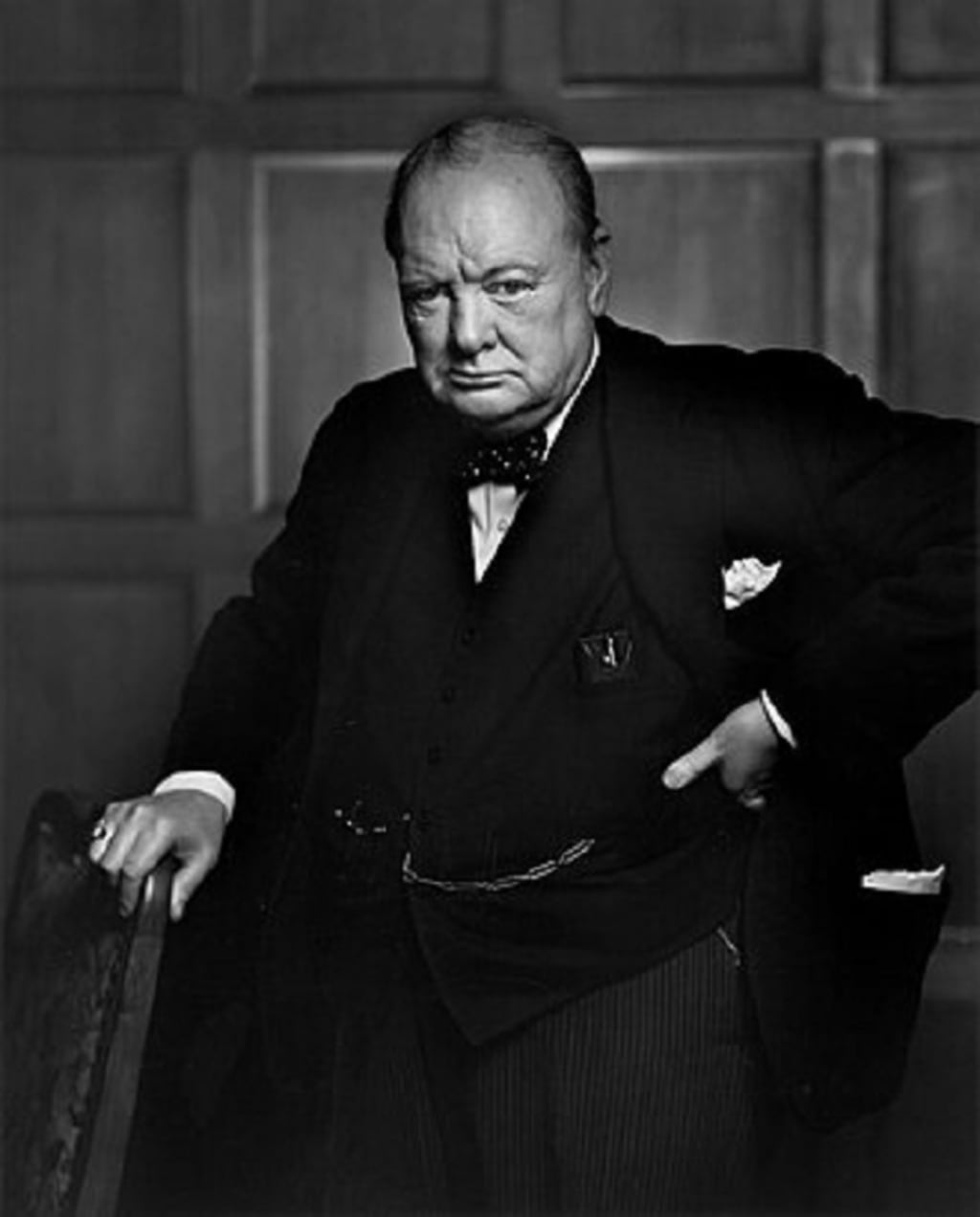
In the annals of human history, few individuals have wielded the power of words as masterfully as Sir Winston Churchill. More than a statesman, more than a wartime leader, Churchill was a maestro of persuasion whose oratory became a weapon as potent as any military arsenal during the darkest days of World War II. His ability to inspire, motivate, and transform public sentiment was extraordinary, fundamentally altering the trajectory of a global conflict through the sheer force of his rhetorical brilliance.
Early Years: Forging a Communicative Genius
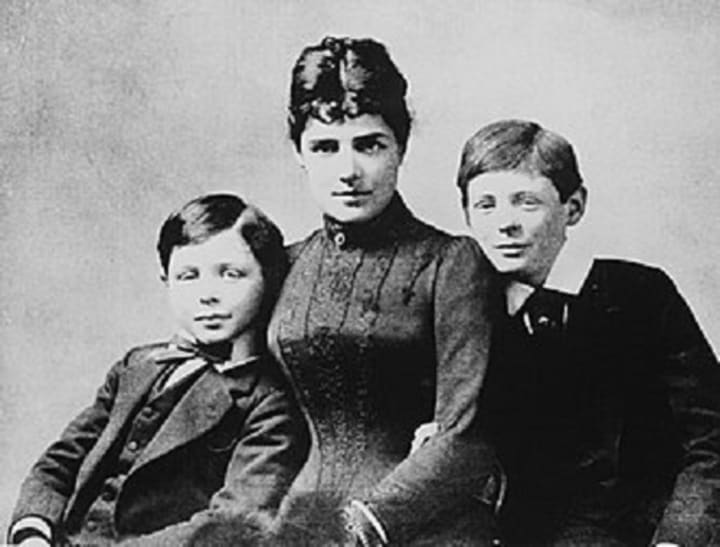
Churchill's persuasive prowess was not a sudden emergence but a carefully cultivated skill developed over decades. Born into aristocracy in 1874, he was initially an outsider in political circles, a fact that drove him to distinguish himself through communication. His early career as a war correspondent and author provided him with a profound understanding of narrative, language, and the art of capturing human imagination. These experiences would later become the foundation of his most remarkable talent: the ability to turn words into instruments of national willpower.
The Crucible of World War II: Turning Rhetoric into Resistance
The crucible of Churchill's persuasive leadership was undoubtedly World War II. When he became Prime Minister in May 1940, Britain stood virtually alone against Nazi Germany, facing what seemed like insurmountable odds. Lesser leaders might have capitulated or sought compromise, but Churchill understood that survival required more than military strategy—it demanded an unbreakable spirit of resistance.
The Speech That Defined a Nation: Defiance in Words
His speeches during this period were not mere political addresses but symphonies of defiance. The famous "We Shall Fight on the Beaches" speech, delivered to the House of Commons on June 4, 1940, is a quintessential example of his persuasive genius. When he declared, "We shall fight on the beaches, we shall fight on the landing grounds, we shall fight in the fields and in the streets, we shall fight in the hills; we shall never surrender," he was doing more than making a statement. He was crafting a national narrative of resilience that transformed collective fear into collective courage.
The Psychology of Persuasion: Beyond Facts and Figures
What made Churchill's persuasion so effective was his profound psychological insight. He recognized that humans are not primarily motivated by cold facts, but by emotional resonance. His rhetoric consistently transformed abstract concepts like freedom, democracy, and resistance into visceral, almost tangible experiences. He spoke not just to people's minds but to their hearts, sense of honor, and deepest national pride.
Framing the Conflict: A Moral Battle
This skill was particularly evident in how he framed the conflict with Nazi Germany. Rather than presenting World War II as a mere geopolitical struggle, Churchill positioned it as a moral battle between civilization and barbarism. He cast Britain not just as a nation defending its territory, but as a guardian of fundamental human values. This narrative transformed the war from a potential military defeat into a heroic stand for human dignity.
Rhetorical Techniques: The Art of Metaphor and Meaning
Churchill's persuasive techniques were multifaceted. He was a master of metaphor, using vivid imagery that made complex political realities accessible. When he described the Soviet Union's actions in Eastern Europe as an "iron curtain" descending across the continent, he provided a mental picture that instantly communicated a complex geopolitical situation. His metaphors were not just descriptive; they were interpretative, guiding public understanding.
Hope in Difficulty: Optimism as a Strategic Tool
Another remarkable aspect of Churchill's persuasion was his willingness to acknowledge difficulty without surrendering hope. His speeches never denied the gravity of challenges but always maintained an underlying current of optimism. During the darkest periods of the war, when German bombing was decimating British cities, he spoke of eventual victory with such conviction that it became almost tangible.
Personal Style: Authenticity as Persuasion
His style was crucial to his persuasive power. Churchill was unapologetically himself—a combination of aristocratic background, intellectual depth, and remarkable wit. He used humor not as a distraction but as a strategic tool, disarming opposition and making serious points more palatable. His famous quips and sharp retorts were not mere entertainment but sophisticated political communication.
Beyond Wartime: A Literary Legacy
Interestingly, Churchill's persuasive abilities extended beyond wartime rhetoric. He was a prolific writer, winning the Nobel Prize in Literature in 1953, which was unusual for a political leader. His multi-volume histories and memoirs were not just historical records but carefully constructed narratives that continued to shape public perception long after events had transpired.
Global Impact: Shaping International Narrative
The global impact of Churchill's persuasion cannot be overstated. His communication did more than boost British morale; it played a significant role in bringing the United States into the war. His speeches were broadcast internationally, creating a narrative of resistance that resonated far beyond British shores. He understood the emerging power of mass media and used it brilliantly to create a global narrative of democratic resistance.
Conclusion: The Enduring Power of Persuasive Leadership
Beyond the immediate context of World War II, Churchill's approach to persuasion offers timeless lessons. He demonstrated that true leadership is about creating meaning, not just managing circumstances. His words transformed a potential moment of national defeat into an epic story of human resilience.
As we reflect on Churchill's legacy, we see more than a wartime leader. We see a communications genius who understood that narrative is as crucial as strategy in moments of profound challenge. He showed that words, when crafted with insight, passion, and moral clarity, can indeed change the course of history.
Churchill's life is a testament to the extraordinary power of persuasive communication. In an age of information overload and cynical discourse, his example reminds us that authentic, passionate communication can still move mountains, unite people, and illuminate paths through the darkest of times.
About the Creator
Muhammah Hanzalah
Passionate about history and culture. Join me on Vocal Media for captivating insights into hidden historical gems and diverse cultural traditions. Let's explore the rich tapestry of our shared heritage and artistic expressions.
Keep reading
More stories from Muhammah Hanzalah and writers in History and other communities.
From Waves to Stars: Christian Doppler's Enduring Influence on Physics and Astronomy
Christian Doppler, an Austrian physicist and mathematician, stands as one of the most remarkable scientific minds of the 19th century, whose groundbreaking work would fundamentally transform our understanding of waves, motion, and the fundamental mechanisms of the universe. His remarkable intellectual journey began in Prague, where he was born on November 29, 1803, into a family of stone masons with little indication of the scientific revolution he would ultimately spark.
By Muhammah Hanzalahabout a year ago in History
The Evolution of Aircraft Design Through Failure and Innovation
Aircraft design did not emerge fully formed or flawlessly engineered. Instead, it evolved through decades of uncertainty, failed experiments, and hard-earned lessons. Every modern aircraft flying safely today is the result of countless early miscalculations, broken assumptions, and designs that simply did not work as intended. Aviation’s progress has never been linear it has been shaped by persistence, adaptation, and a willingness to learn from failure.
By Beckett Dowhanabout 17 hours ago in History
The Light of Islam: The Journey of the Prophet
Over 1,400 years ago, in the city of Mecca, a child was born who would change the world forever. His name was Muhammad ﷺ, and he belonged to the noble tribe of Quraysh. From the beginning, his life was marked by trials and simplicity. Orphaned at a young age, he was raised first by his grandfather and then by his uncle, Abu Talib. Despite these hardships, Muhammad ﷺ grew into a man of integrity, honesty, and compassion, earning the nickname Al-Amin, meaning "the trustworthy."
By The best writer 4 days ago in History


Comments (1)
Churchill was a ancestor of my dads family so many cousins removed✍️🏆♦️♦️♦️♦️♦️