
From Waves to Stars: Christian Doppler's Enduring Influence on Physics and Astronomy
Christian Doppler's pioneering work on the Doppler Effect revolutionized our understanding of wave phenomena, impacting fields from acoustics to light waves. His contributions have paved the way for modern technologies like radar and ultrasound, as well as advancements in astronomy, such as measuring the movement of stars and galaxies. Doppler's legacy continues to resonate across the scientific community, demonstrating his enduring influence on physics and astronomy.

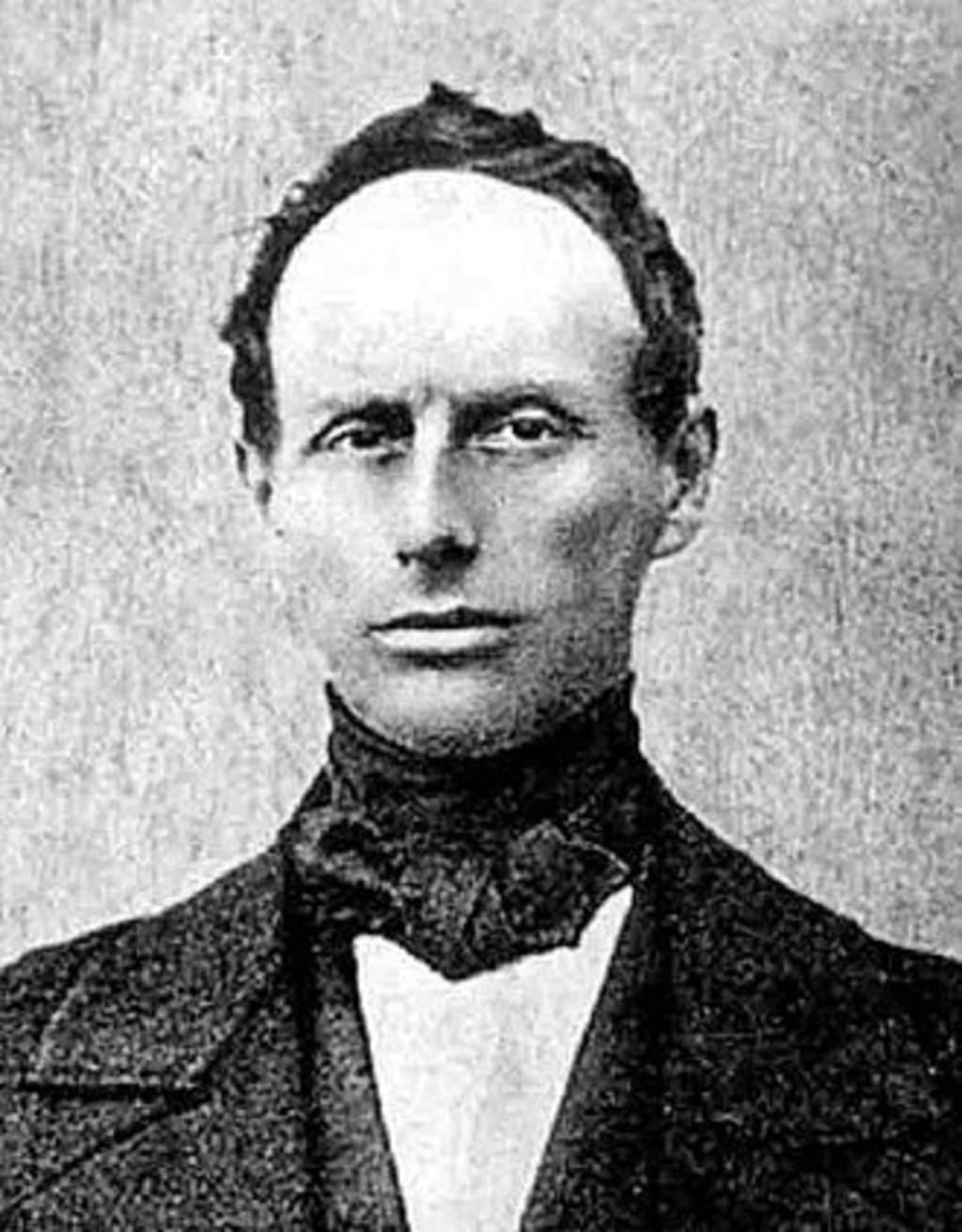
Christian Doppler, an Austrian physicist and mathematician, stands as one of the most remarkable scientific minds of the 19th century, whose groundbreaking work would fundamentally transform our understanding of waves, motion, and the fundamental mechanisms of the universe. His remarkable intellectual journey began in Prague, where he was born on November 29, 1803, into a family of stone masons with little indication of the scientific revolution he would ultimately spark.
Early Life and Academic Challenges
Doppler's path to scientific prominence was neither straightforward nor easy. Growing up in a traditional craftsman's family, he initially struggled to pursue his intellectual passions. Despite the constraints of his social background, he demonstrated an extraordinary aptitude for mathematics and physics from a young age. His determination led him to overcome significant socioeconomic barriers, eventually studying at the Prague Polytechnic and later developing a reputation as a meticulous and innovative researcher.
The Doppler Effect: A Revolutionary Concept
In 1842, Doppler published his most revolutionary work, "On the Colored Light of the Double Stars and Certain Other Stars of the Heavens," a paper that would fundamentally alter scientific understanding of wave phenomena. The core of his theory—now known as the Doppler Effect—proposed that the observed frequency of a wave changes when the source of the wave and the observer are in relative motion.
To illustrate this principle, imagine a sound wave emitted by an approaching ambulance. As the vehicle moves toward an observer, the sound waves are compressed, resulting in a higher pitch. Conversely, as the ambulance moves away, the sound waves stretch, producing a lower pitch. This simple yet profound observation became a cornerstone for understanding wave dynamics across multiple scientific disciplines.
Astronomical Implications
Doppler's most profound contribution emerged in the realm of astronomy. His theory provided scientists with a revolutionary method to measure the velocity of celestial bodies. By analyzing the spectral shifts of light from stars and galaxies, astronomers could now determine whether cosmic objects were moving toward or away from Earth—a breakthrough that would later become crucial in understanding the expansion of the universe.
The concept became particularly significant during the 20th century when Edwin Hubble used spectral observations to demonstrate that distant galaxies were receding from Earth, supporting the theory of an expanding universe. This discovery, fundamentally rooted in Doppler's original insights, laid the groundwork for modern cosmological understanding.
Interdisciplinary Impact
While initially conceived in the context of light and sound waves, the Doppler Effect demonstrated remarkable versatility across scientific domains. In medical imaging, the principle enables ultrasound technology to measure blood flow and diagnose cardiovascular conditions. Meteorologists utilize Doppler radar to track storm movements and predict severe weather patterns. Even modern navigation systems rely on Doppler-based technologies for precise positioning and velocity measurements.
Scientific Recognition and Challenges
Despite the eventual profound impact of his work, Doppler faced significant skepticism during his lifetime. Many contemporary scientists struggled to comprehend the full implications of his theory. His ideas challenged established scientific paradigms, requiring a fundamental reimagining of wave propagation and observer dynamics.
Personal Struggles and Legacy
Doppler's professional journey was marked by persistent challenges. He moved between academic institutions, often facing financial instability and institutional resistance. His health deteriorated in later years, and he spent his final period in Venice, where he continued his scientific investigations despite increasing physical limitations.
On March 17, 1853, Christian Doppler passed away, leaving behind a scientific legacy that would continue to expand and influence generations of researchers. His original insights would be refined and extended by subsequent scientists, transforming our understanding of wave mechanics, astronomical observation, and the fundamental nature of motion.
Modern Scientific Validation
Contemporary physics has comprehensively validated Doppler's original theories. From quantum mechanics to relativistic physics, the Doppler Effect remains a fundamental principle. Modern technologies—ranging from medical ultrasonography to space exploration—continue to rely on principles first articulated by this visionary scientist.
Philosophical and Scientific Significance
Beyond its technical applications, Doppler's work embodies a profound scientific philosophy. His approach demonstrated how careful observation, mathematical rigor, and imaginative thinking could unlock fundamental mysteries of the natural world. By recognizing the dynamic relationships between sources, waves, and observers, Doppler revealed the universe as an interconnected, constantly moving system.
Conclusion
Christian Doppler's scientific journey represents more than a series of mathematical calculations or theoretical propositions. It is a testament to human curiosity, intellectual courage, and the transformative power of scientific imagination. From the compressed sound of an ambulance to the expansive motion of distant galaxies, his work continues to resonate, reminding us that breakthrough understanding often emerges from seemingly simple observations about the world around us.
About the Creator
Muhammah Hanzalah
Passionate about history and culture. Join me on Vocal Media for captivating insights into hidden historical gems and diverse cultural traditions. Let's explore the rich tapestry of our shared heritage and artistic expressions.
Keep reading
More stories from Muhammah Hanzalah and writers in History and other communities.
Tuning In to History: Exploring the Legacy of Radio City Music Hall of the Air
In the golden age of radio, few programs captured the imagination and entertainment spirit of mid-20th century America quite like Radio City Music Hall of the Air. This groundbreaking radio show was more than just a broadcast—it was a cultural phenomenon that brought the magic of live performance into living rooms across the nation, bridging the gap between stage and home, and creating a shared national entertainment experience.
By Muhammah Hanzalahabout a year ago in History
Is NATO Facing Its Biggest Crisis Yet?
Is NATO Facing Its Biggest Crisis Yet? For more than seventy years, NATO has been one of the strongest military alliances in the world. Formed after World War II, it was designed to protect its members through collective defense. An attack on one was considered an attack on all. For decades, this principle helped maintain stability in Europe and beyond. But today, NATO is facing one of the most challenging moments in its history.
By Wings of Time 6 days ago in History
Nobel Peace Prize
The Nobel Peace Prize has stood as one of the world’s most recognized honors. Awarded annually in Oslo, it is meant to celebrate individuals or organizations that have made significant contributions toward peace, diplomacy, and humanitarian progress. While its mission appears straightforward, the Nobel Peace Prize has never been free from debate. In recent years, conversations surrounding global politics—particularly discussions about the Trump Nobel Peace Prize—have brought renewed attention to how peace is defined, measured, and rewarded in the modern era. The Origins and Meaning of the Nobel Peace Prize The Nobel Peace Prize was established by Alfred Nobel, the Swedish inventor best known for creating dynamite. In his final will, Nobel directed that a portion of his wealth be used to recognize efforts that foster peace among nations, reduce standing armies, or promote diplomacy and cooperation. Since its first award in 1901, the prize has honored activists, diplomats, organizations, and world leaders whose actions shaped international dialogue. Unlike other Nobel categories, the peace prize is awarded by a Norwegian committee rather than a Swedish institution. This distinction reflects Nobel’s desire to separate the prize from national interests and focus instead on global responsibility. Over time, the definition of “peace” has expanded. Early recipients were often disarmament advocates or mediators. More recent laureates have included human rights defenders, climate activists, and international organizations working in conflict zones. Politics and the Nobel Peace Prize Despite its humanitarian ideals, the Nobel Peace Prize has always intersected with politics. Recognizing peace efforts often means evaluating political leadership, international negotiations, and long-term consequences—none of which are easy to measure in real time. Some awards have been widely celebrated, while others sparked controversy. Critics often argue that certain laureates were honored prematurely, before the lasting results of their actions became clear. Supporters counter that the prize is meant to encourage peace efforts, not merely reward completed achievements. This tension has made the Nobel Peace Prize a reflection of global priorities at any given moment, rather than a simple historical judgment. Donald Trump and Nobel Peace Prize Discussions Few modern political figures have generated as much debate in connection with the Nobel Peace Prize as Donald Trump. During and after his presidency, conversations about a potential Trump Nobel Prize emerged repeatedly, particularly among supporters who pointed to his role in diplomatic initiatives. The phrase Trump Nobel Peace Prize gained traction following agreements and negotiations in regions long marked by conflict. Advocates argued that these diplomatic efforts aligned with Alfred Nobel’s vision of reducing international tension through dialogue rather than force. At the same time, critics questioned whether these actions met the broader ethical and humanitarian standards traditionally associated with the award. They pointed to domestic divisions, foreign policy controversies, and unresolved global conflicts as reasons for skepticism. This divide highlights a core challenge of the Nobel Peace Prize: peace is rarely absolute, and political leadership is often complex and contradictory. Trump Nobel Peace Prize 2026: Speculation and Context As global politics continue to evolve, speculation around a Trump Nobel Peace Prize 2026 has appeared in media discussions and public commentary. It is important to note that nominations for the Nobel Peace Prize are confidential for decades, and speculation does not confirm consideration or selection. However, the mere discussion of Trump Nobel Peace Prize 2026 reflects how the award has become part of broader cultural and political conversations. Supporters view such recognition as validation of diplomatic achievements, while critics see the speculation as politicizing an institution meant to rise above partisan debate. This dynamic is not unique to Trump. Many past leaders, from various ideological backgrounds, were debated heavily before or after receiving the prize. The Nobel Peace Prize often mirrors global disagreements rather than resolving them. How the Nobel Committee Makes Its Decision Each year, hundreds of nominations are submitted by qualified individuals, including academics, lawmakers, and previous laureates. The Nobel Committee evaluates these nominations through research, expert consultation, and internal debate. The process considers intent, impact, and long-term significance. However, because peace efforts often unfold over years or decades, the committee must make decisions without full historical clarity. This reality explains why some awards age gracefully while others remain controversial. The committee rarely responds directly to public pressure or online campaigns. Media attention, including discussions around a Trump Nobel, does not guarantee influence over the final decision. The Broader Impact of the Nobel Peace Prize Beyond individual recipients, the Nobel Peace Prize plays a symbolic role. It brings global attention to issues that might otherwise be ignored, from humanitarian crises to fragile peace processes. Even controversial nominations can spark meaningful debate about what peace truly means in the modern world. The prize also raises questions about accountability. When leaders are considered for such recognition, the public is encouraged to examine policies, outcomes, and moral responsibility more closely. In this sense, discussions surrounding the Trump Nobel Peace Prize are not just about one individual. They reflect deeper conversations about diplomacy, leadership, and the evolving standards by which peace is judged. Conclusion: A Prize That Reflects the World The Nobel Peace Prize remains one of the most influential and debated honors in global society. Its power lies not only in recognizing peace efforts but also in challenging the world to think critically about conflict, cooperation, and responsibility. Whether discussions involve historic activists or modern political figures like those associated with Trump Nobel Peace Prize 2026 speculation, the award continues to reflect the complexities of international relations. Peace is rarely simple, and neither is the process of honoring it. Ultimately, the Nobel Peace Prize serves as a reminder that striving for peace is an ongoing journey—one shaped by ideals, actions, and the difficult choices that define human history.
By Saboor Brohi 2 days ago in History


Comments
There are no comments for this story
Be the first to respond and start the conversation.