
The Antarctica Nazi Base Theory Operation Highjump
Did Hitler’s Followers Really Build a Secret Base at the Edge of the World?

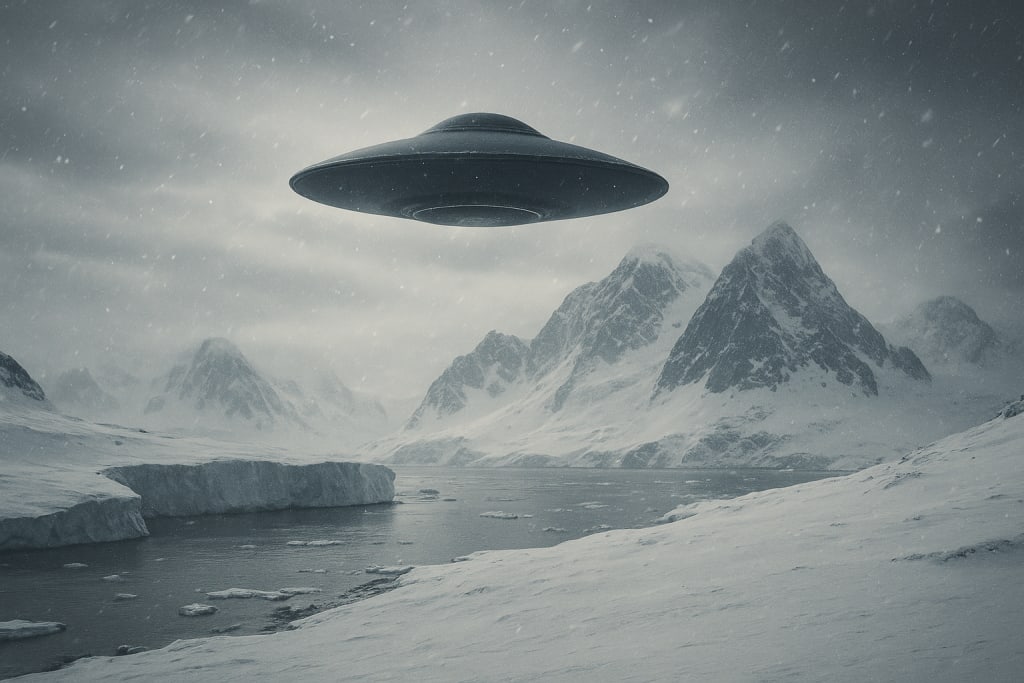
Antarctica Earth’s last true frontier. A place so remote, so hostile, and so untouched by human civilization that it almost feels like another planet. Endless white deserts, howling winds, and sub-zero temperatures guard its secrets. For centuries, this frozen continent was ignored by much of the world. It had no civilizations, no fertile lands, no gold at least not at first glance.
But in the shadows of World War II, Antarctica suddenly became a hotspot of conspiracy, mystery, and whispers of something sinister. According to one of the strangest theories in modern history, Nazi Germany infamous for its obsession with advanced technology, secret weapons, and occult myths built a secret base deep in the icy wilderness of Antarctica.
And as the theory goes, the Allies knew it. In 1946–47, the United States launched one of the largest military expeditions in Antarctic history Operation Highjump, led by Admiral Richard E. Byrd. Officially, it was a scientific mission. Unofficially? Some believe it was a battle an attempt to destroy what remained of Nazi power in a hidden fortress at the bottom of the world.
Is this pure fantasy, or could there be a sliver of truth? Let’s dive into the chilling mystery of the Antarctica Nazi Base Theory.
The Nazi Obsession with the Occult and Exploration
Before we talk about Antarctica, we need to understand something crucial: the Nazis weren’t just a political regime they were obsessed with mysticism, ancient civilizations, and the idea of secret powers hidden across the Earth.
Heinrich Himmler, head of the SS, funded the Ahnenerbe, an institute dedicated to researching ancient myths, lost civilizations, and “Aryan origins.”
Expeditions were sent to Tibet, the Middle East, and even the Arctic, all searching for supposed hidden knowledge or ancient technologies.
Nazi propaganda often mixed science, mythology, and superstition, portraying Germany as destined to inherit ancient powers.
So when rumors emerged that Antarctica contained hidden caves, warm-water lakes beneath the ice, and even hollow-earth entrances, it didn’t seem too outlandish for Nazi leadership to take interest.
Neuschwabenland: The Official Antarctic Expedition
In 1938–39, Nazi Germany actually sent a real expedition to Antarctica. This wasn’t myth it’s historical fact.
The expedition was led by Captain Alfred Ritscher.
They explored a region of Antarctica that Germany later named “Neuschwabenland” (New Swabia).
They dropped Nazi flags across large areas of ice, staking a claim.
Reports suggest they found vast ice-free areas, geothermal lakes, and possibly underground cave systems.
On the surface, it was about whale oil resources (important for Germany’s economy). But conspiracy theorists claim the mission’s real purpose was to scout locations for a hidden base.
The Birth of the Nazi Base Theory
So how did this theory take shape?
After World War II ended in 1945, countless Nazi leaders and soldiers disappeared. While some were captured and tried at Nuremberg, others vanished without a trace. Theories began to circulate that they had fled to South America, to hidden underground facilities, and even to Antarctica.
The idea was simple yet thrilling:
Nazis discovered natural caverns beneath Antarctica.
Using advanced engineering, they built bunkers and research facilities.
Here, away from the prying eyes of the Allies, they continued their experiments from advanced aircraft (“flying saucers”) to new energy sources.
And here’s where it gets even stranger some theorists believe Adolf Hitler himself never died in Berlin, but escaped via submarine convoys to Antarctica or Argentina.
Operation Highjump: The Mysterious U.S. Mission
Enter 1946. World War II was over, but tensions with the Soviet Union were rising. Suddenly, the U.S. Navy launched Operation Highjump, the largest Antarctic expedition ever.
Led by Admiral Richard E. Byrd.
Included 13 ships, 33 aircraft, and over 4,700 military personnel.
Official goal: training troops in polar conditions, mapping Antarctica, and testing new technologies.
Unofficial rumors: they were there to hunt down Nazi remnants.
The mission, scheduled to last six months, abruptly ended after just two and a half months. Why?
Admiral Byrd’s Strange Statement
After Operation Highjump returned, Admiral Byrd gave an interview to a Chilean newspaper. In it, he made a chilling remark:
“The United States should prepare for the possibility of fighters that can fly from pole to pole at incredible speeds.”
Wait, what? This was 1947 years before supersonic jets. Why would Byrd warn about “fighters” near Antarctica?
Conspiracy theorists jumped on this. They argued that Byrd’s forces encountered advanced aircraft possibly Nazi or even extraterrestrial in origin. Some stories even describe aerial battles between U.S. planes and mysterious flying saucers that shot down several American aircraft.
Of course, the U.S. Navy never confirmed this. Officially, the mission ended early because of bad weather and logistical issues.
The “Flying Saucer” Connection
One reason this theory refuses to die is the timing. The late 1940s saw a surge in UFO sightings including the famous Roswell Incident of 1947. Many conspiracy believers link these events:
Nazis had supposedly developed experimental “flying discs” like the Haunebu and Vril crafts.
These designs were decades ahead of their time, and many were lost or hidden after Germany’s defeat.
Antarctica, with its secrecy, would have been the perfect place to continue these experiments.
So, when people saw strange flying objects in the sky after 1945, some insisted these were Nazi crafts launched from a hidden Antarctic base.
Cold War Secrets and Disinformation
Now, let’s pause. Could all of this be… Cold War propaganda?
The 1940s and 50s were a time of paranoia, secrecy, and psychological warfare. Both the U.S. and the Soviet Union spread disinformation to confuse each other. Some historians argue the Nazi base myth was intentionally exaggerated a convenient way to justify military presence in Antarctica and fuel public fear.
But the theory never died. Even today, documentaries, books, and online forums keep it alive, mixing fact with fantasy.
The Science Behind the Myth: Could a Base Really Exist?
Here’s where modern science enters the conversation. For decades, Antarctica was thought to be a lifeless block of ice. But 20th and 21st century research has revealed shocking truths:
Subglacial Lakes: Scientists have discovered more than 400 lakes beneath Antarctica’s ice, including Lake Vostok, one of the world’s largest. These lakes are liquid despite being buried under miles of ice thanks to geothermal heat. A base hidden here would remain warm, secret, and cut off from the outside world.
Ice Caves and Lava Tubes: In 2017, researchers found vast lava tubes beneath Mount Erebus, an active volcano in Antarctica. These natural tunnels are big enough to hide entire buildings and they stay warm due to geothermal activity. If nature already provides such hiding spots, could Nazis have used them?
Geothermal Hotspots: Antarctica isn’t all frozen wasteland. NASA studies show that parts of the continent are heated by geothermal activity from below. This creates ice-free valleys and underground warm zones. These areas would have been perfect for hidden installations.
Unexplored Territory: Even today, we’ve barely scratched the surface. Only about 2% of Antarctica’s landmass is explored. That leaves 98% under thick ice the perfect place for legends to thrive.
All of these discoveries don’t prove the Nazi Base theory, but they give it a strange credibility: Antarctica really does have places where something secret could survive.
So… Was There Really a Nazi Base?
Let’s break it down:
✅ Fact: Nazis sent an Antarctic expedition in 1938–39.
✅ Fact: Operation Highjump was real, massive, and cut short unexpectedly.
✅ Fact: Admiral Byrd made strange remarks about future threats.
❌ Speculation: Nazis built underground fortresses.
❌ Speculation: Operation Highjump fought UFOs.
❌ Speculation: Hitler escaped to Antarctica.
Most historians dismiss the Nazi base theory as fiction. But like all great mysteries, the lack of closure keeps it alive.
Why We Still Believe
So why do people still believe this theory? Because it taps into something universal:
The allure of lost secrets.
The fear of hidden enemies.
The thrill of unexplored frontiers.
Antarctica remains one of Earth’s least explored places. Beneath miles of ice, entire ecosystems, lakes, and possibly even unknown life forms exist. If there’s anywhere on Earth a mystery could survive, it’s here.
Conclusion: Fact, Fiction, or Something In-Between?
The Antarctica Nazi Base Theory sits at the crossroads of history and imagination. On one side, it’s fueled by real expeditions, strange statements, and Cold War secrecy. On the other, it’s propped up by fantasy, UFO mythology, and our fascination with conspiracies.
Did the Nazis really carve out a hidden world beneath Antarctica? Did Admiral Byrd encounter a threat unlike anything seen before? Or are these just ghost stories of a war-torn century?
We may never know the full truth. But one thing is certain: Antarctica still guards its secrets, buried beneath endless ice waiting for the day someone dares to uncover them.
About the Creator
Muhammad Ayaan
🎙️ Rebooting minds with stories that matter.
From news & tech to real talk for youth no face, just facts (and a bit of fun).
Welcome to the side of the internet where thinking begins.
Reader insights
Outstanding
Excellent work. Looking forward to reading more!
Top insights
Compelling and original writing
Creative use of language & vocab
Easy to read and follow
Well-structured & engaging content
Excellent storytelling
Original narrative & well developed characters
Expert insights and opinions
Arguments were carefully researched and presented
Eye opening
Niche topic & fresh perspectives
Heartfelt and relatable
The story invoked strong personal emotions
Masterful proofreading
Zero grammar & spelling mistakes
On-point and relevant
Writing reflected the title & theme
Keep reading
More stories from Muhammad Ayaan and writers in History and other communities.
Thief who stole $3.5 billion but lost all in one phone call part 2
The following year, the owner of Silk Road was arrested and the FBI shut down the website, seizing about 170,000 Bitcoins. However, 51,680 Bitcoins were still missing, and investigators had been trying to trace them for years.
By Imran Ali Shah7 days ago in History




Comments (1)
amazing