
The 12 Unsolved Mysteries of the World
Devil's Bible/Nazca Lines/Mu civilization and etc
There are countless unsolved mysteries on this Earth, with a global population of approximately 7.5 billion people. Perhaps in your backyard, ancient artifacts and symbols that we still cannot fully understand can be discovered. Now, let me take you to see some of the unknown things left by our ancestors~
The first mystery is the Devil's Bible. It is a massive medieval book written by a monk in the 13th century, who is said to have completed it after making a pact with the devil. According to legend, the monk broke his vow and was punished. The Devil's Bible manuscript is extremely long, seemingly completed in just one day by a single person. It is made from over 160 types of animal skins and requires two people to lift. It contains a complete Latin translation and various texts, including medical and exorcism-related articles, as well as descriptions of the devil himself. The original manuscript has twelve missing pages, which may contain human secrets or rumored articles about Satan.
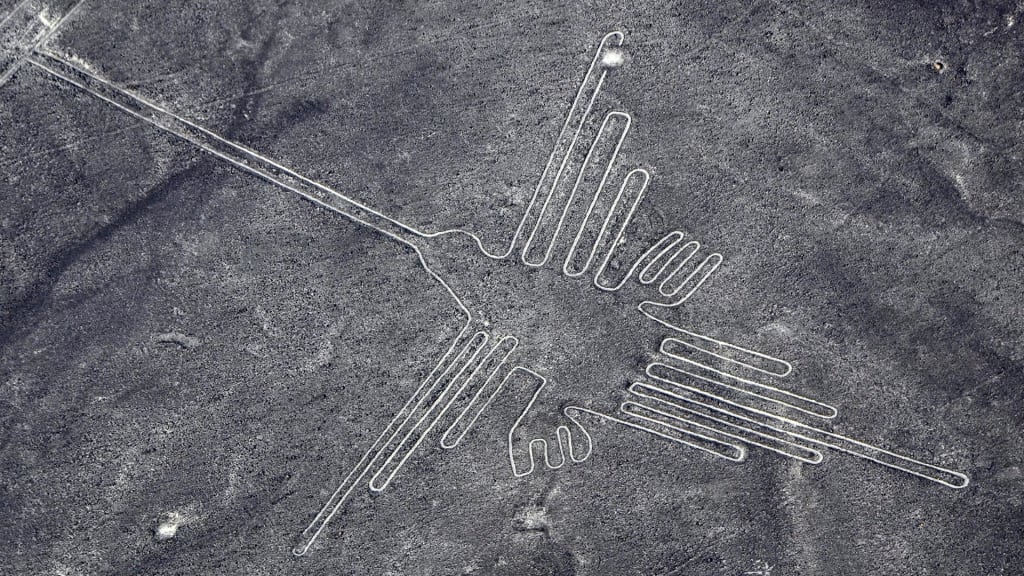
The second mystery is the Nazca Lines, found in the dry desert plains of southern Peru. Created by the Nazca culture around 500 BC, these large geoglyphs depict over 100 designs, ranging from simple lines to complex representations of monkeys, humans, fish, jaguars, and birds. Although these symbols are recognizable, their true purpose remains a mystery. Some speculate that the glyphs were used as a navigation aid for sailors, while others suggest they served astronomical purposes, signaling to other planets.
The third mystery is the Mu civilization, submerged ancient ruins near the coast of Yonaguni Island. This massive underwater city, believed to be at least 5,000 years old, was initially discovered by divers in 1995. Initially thought to be just a series of strange natural rock formations, further exploration revealed constructions ranging from large stone passageways to carved staircases and streets, to arch-shaped towers.
The fourth mystery is the Roman Dodecahedra. Unlike many other ancient artifacts, there are about a hundred of these mysterious objects, usually made of stone or bronze. The hollow Roman Dodecahedra have 12 faces, each with a small circular hole and a protruding sphere from the connecting corners. Though similar to navigational instruments, the purpose of these dodecahedra remains unclear. Historians speculate they might have been used for astrology, religious purposes, or as calibration tools for Roman architects.
The fifth puzzle is the King's List, dating back to around 3000 BC, it is a Sumerian King List that lists all the Sumerian kings, their respective dynasties, locations, and times. While seemingly straightforward, the inscriptions embedded with mythological elements include stories of the Great Flood and Gilgamesh. Some theorists believe the stories in the Old Testament of the Bible are true, or that the listed kings were actually gods or demigods.
The sixth is the symbols of Easter Island. Easter Island is famous for its large moai statues, but another mystery is a series of complex petroglyphs thought to be primitive writing. Discovered in 1864, these symbols are said to date back to around 1200 AD. Carved using small obsidian pieces or shark teeth on wood, their exact meaning remains unknown. If indeed a form of writing, it would represent a unique language.
The seventh mystery is the Sahama Lines, a series of large drawings etched on the ground in western Bolivia. Initially discovered in 1932, these lines with widths ranging from 3 to 10 feet, intricately weave through an area of approximately 8,700 square miles. Not only are they the largest archaeological site in the Andes Mountains, but they might also extend globally. The purpose behind these mysterious lines, however, remains unknown, with scientists speculating that they were created by indigenous people living near the Sahama volcano, possibly for religious purposes.
The eighth mystery is the Baghdad Battery. In 1838, German archaeologist Wilhelm König discovered numerous clay jars, each containing an iron rod, during his work in present-day Iraq. Considering the age of the objects, it would be an astonishing technological development dating back to the Parthian era, around 200 BC. While some proposed the theory of batteries, others believe the containers were used to store scrolls wound around iron rods and enclosed in copper cylinders.
The ninth is the giant stone spheres of Costa Rica. Since the 1940s, archaeologists have been uncovering mysterious stone spheres in Costa Rica. Ranging in size from a few centimeters to over two meters in diameter, some weighing as much as 16 tons, these spheres, although many have been relocated to various prominent sites or are privately owned, still defy explanation regarding their origin in the valleys.
The tenth mystery is the White Shaman Rock in southwest Texas, a 4,000-year-old cave painting referred to as the "White Shaman Rock." The 24-foot cave painting is interpreted as a depiction of warriors in battle. Although ancient paintings are present in numerous caves in the region, the role these paintings played in tribal life remains unknown.
The eleventh is the Antikythera Mechanism. Sometime between 70 and 60 BC, a Greek ship traveling from Asia Minor to Rome sank in the Mediterranean. In 1900, when a group of divers discovered the sunken ship, they found three bronze objects, including one known as the Antikythera Mechanism. This artifact, about the size of a shoebox, puzzled scholars for over a century due to its gearwork and internal complexity surpassing any known Greek technology of the time. Initially considered evidence of ancient alien visitation, later X-ray analysis revealed its use in tracking astronomical movements. The 2006 CT scans confirmed inscriptions describing it as an ancient computer, raising questions about early Greek technology.
The twelfth mystery is the circular objects on the Plain of Jars. On the Plain of Jars, there are some peculiar large circular objects scattered across the countryside. They are believed to be implements used in ancient funeral ceremonies. These objects, made of sandstone and weighing at least a ton, are located in areas heavily affected during the Secret War in the United States. Many of these circular objects were destroyed by missiles during the conflict. Today, tourists are still not allowed to visit most of the ancient sites.
These ancient unsolved mysteries are truly fascinating, while the modern mysteries of online trolls are simply exasperating.
About the Creator
Keep reading
More stories from writers in History and other communities.
Alexander the Great: The Life, Conquests, Vision, and Legacy of History’s Greatest Warrior King
Part 1: Birth and Early Life Alexander was born in 356 BCE in Pella, the capital of Macedonia. He was the son of King Philip II of Macedon and Queen Olympias. From an early age, Alexander was surrounded by power, politics, and warfare. Olympias deeply influenced him, often telling him that he was descended from Achilles and even the god Zeus. These stories shaped Alexander’s belief that he was destined for greatness.
By Say the truth 7 days ago in History
The Ecology of Self-Destruction
Human civilizations often imagine their downfall as something imposed from the outside—by enemies, invasions, or natural disasters. Yet, as Jared Diamond argues in Collapse: How Societies Choose to Fail or Succeed, many societies have played the central role in their own destruction. Through the reckless over-exploitation of natural resources, short-term thinking, and failure to adapt to environmental limits, nations repeatedly undermine the very ecological systems that sustain them. Diamond’s comparative study of past and present societies reveals a sobering pattern: environmental self-destruction is rarely accidental, and collapse is often the predictable outcome of collective choices.
By Rachid Zidine5 days ago in History
Our Song
Evening has given way to night. Gently, I settle next to you on the comfortable, old love seat and reach for your hand. You snatch it away, again. It cuts me to the quick, but I hide the pain, understanding that the reaction is but part of your demented state. Since the accident, your presence here in our cozy home has been clouded by a haze I can't see. Nevertheless, I feel the frigidity of your expressions and it serves as an excruciating reminder of the immeasurable distance between us.
By Dana Crandell7 days ago in Fiction



Comments
There are no comments for this story
Be the first to respond and start the conversation.