
Temples Through Time: From Ancient Reverence to Modern Worship
Exploring the Transformation of Sacred Spaces, Featuring the Kamakshi Amman Temple
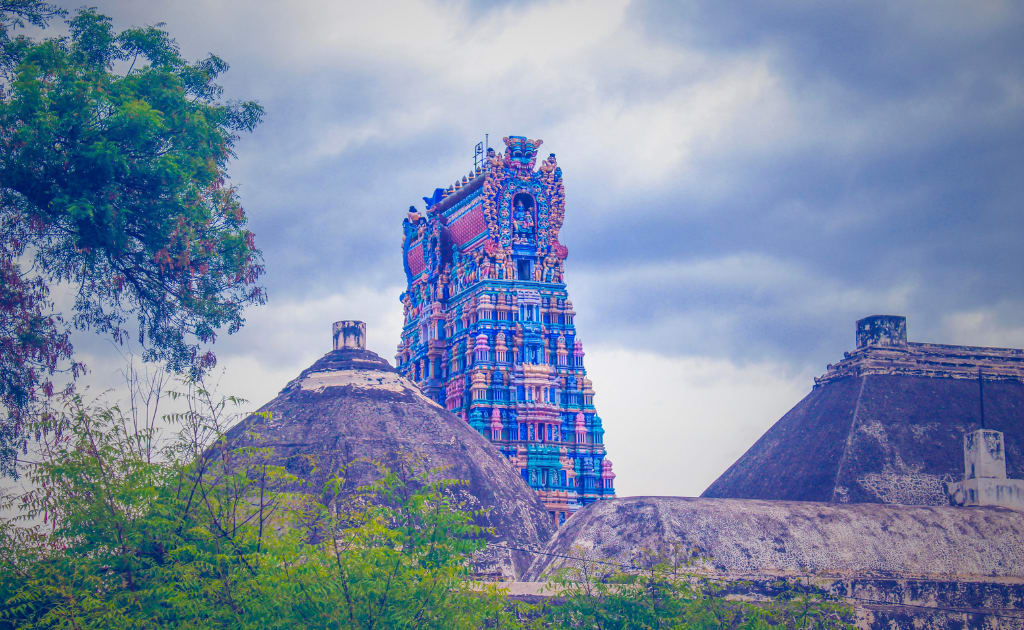
The Evolution of Temples: From Ancient Reverence to Modern-Day Worship
Temples have always held a special place in the cultural and spiritual fabric of India. In ancient times, temples were not just places of worship; they were centers of community life, education, and culture. They were treated with the highest reverence and were often seen as the abode of the divine, where both the spiritual and material worlds converged. Over the centuries, the treatment and significance of temples have evolved, reflecting changes in society, technology, and spirituality.
Let’s take a journey through time and explore how temples, including the iconic Kamakshi Amman Temple, were treated in the olden days compared to modern times.
Temples in Ancient Times: The Heart of Society
In the ancient era, temples were considered the very heartbeat of the community. Constructed with intricate architectural designs, these temples were not just places of worship but were often the cultural, educational, and social centers of life.
The Kamakshi Amman Temple in Kanchipuram, for instance, dates back to over a thousand years and stands as a testament to the architectural brilliance of ancient India. In the past, temples like these were often large, majestic structures built by kings, emperors, and wealthy patrons, with an emphasis on divine and artistic representation.
Spiritual Hub
Temples in ancient India were viewed as the earthly homes of gods and goddesses, where devotees came to offer prayers, make offerings, and perform rituals to maintain harmony between the spiritual and material worlds. The Kamakshi Amman Temple, dedicated to Goddess Kamakshi, has a central deity that devotees worship for blessings of fertility, prosperity, and spiritual awakening. These temples were seen as sanctified places where the divine energy resided, and thus, they were meticulously maintained and treated with utmost reverence. Priests and spiritual leaders performed daily rituals, and the divine presence was believed to be felt strongly in every corner of the temple.
Cultural and Educational Centers
In ancient times, temples also served as educational and cultural hubs. Many temples had schools attached to them where children were taught philosophy, scriptures, languages, music, and arts. Temples like Kamakshi Amman also played a key role in preserving ancient knowledge, acting as repositories of wisdom and traditions. Temples often held festivals, dances, and theatrical performances that were deeply rooted in mythological stories and religious practices. This integration of religious, cultural, and social functions made temples vital parts of ancient Indian life.
Communal and Charitable Role
Temples were also a source of charity and communal support. Wealthy patrons and rulers often donated land, gold, and other valuables to the temple, which were then used to feed the poor, support the arts, and maintain the temple. Pilgrims who traveled from distant lands often found solace in the temples, where they received shelter and food. The Kamakshi Amman Temple itself has been a focal point for devotees and pilgrims, who visit the temple not only to worship but also to partake in the community services provided by the temple.
The Transformation in Modern Times: Temples in Contemporary Society
While the role of temples in society has evolved, they still retain much of their historical and spiritual significance. Today, temples continue to be places of worship and pilgrimage, but their functions and the way they are treated have seen significant changes.
Modern-Day Architecture and Infrastructure
Unlike the intricate and expansive designs of ancient temples, many modern temples are built with a focus on convenience and functionality. With the increasing number of visitors, modern temples often feature better infrastructure, including parking facilities, larger halls for worship, and advanced lighting and sound systems to enhance the visitor experience.
The Kamakshi Amman Temple has also undergone various renovations over the years, while still maintaining its traditional architectural elements. The modernization of temple structures, including the installation of air-conditioning in some places and the availability of food courts, reflects the growing need to cater to a wider audience.
Technological Integration
One of the biggest differences between ancient and modern temple practices is the integration of technology. Many modern temples now have online booking systems for special rituals and temple visits, and digital screens are used to display hymns and prayers for the convenience of devotees.
The Kamakshi Amman Temple, like many others, has adopted technology to streamline rituals and provide better service to the influx of pilgrims. Live streaming of temple events and religious ceremonies is now common, allowing devotees from around the world to participate virtually, something that was unimaginable in ancient times.
Pilgrimage and Tourism
In modern times, temples have become an important part of the tourism industry. While ancient temples like the Kamakshi Amman Temple were primarily places of spiritual importance, they now attract thousands of tourists who come not only for religious reasons but also to experience the rich history, culture, and architecture.
Temples have evolved into major tourist destinations, often accompanied by guided tours and souvenir shops. This commercialization of temples has led to concerns about the preservation of their sanctity, but it has also brought attention to the spiritual and historical significance of these monuments.
Shift in Rituals and Worship
In ancient times, rituals were primarily conducted by priests in the inner sanctum of the temple. Today, many temples have made significant strides in making worship more accessible to the masses. At the Kamakshi Amman Temple, for example, devotees can now easily offer prayers, participate in rituals, and seek blessings from the deity with the assistance of temple staff.
The advent of online donations and virtual darshans further reflects the shift in how worship is conducted. While the fundamental rituals remain the same, the way people connect with the temple has transformed in the modern era.
Comparing Ancient and Modern Temples: A Changing Landscape
While the reverence and devotion towards temples remain unchanged, the role and treatment of temples have evolved significantly. In ancient times, temples were sacred centers of the community, culture, and education. They were treated with the utmost respect and were seen as the center of social life. Temples like Kamakshi Amman Temple were not only religious sites but also integral to the preservation of tradition and knowledge.
In contrast, modern temples have adapted to the changing times, integrating technology, providing better infrastructure, and catering to a larger and more diverse crowd. The rise of tourism and commercialization has also altered the way temples are treated, but they continue to be revered as spiritual sanctuaries where devotees seek blessings and connect with the divine.
Conclusion
Temples, whether ancient or modern, remain a symbol of spiritual connection, cultural heritage, and community welfare. The Kamakshi Amman Temple, like many others, beautifully encapsulates the balance between tradition and modernization.
As society evolves, so too does the treatment and role of temples, but their core essence as sacred spaces for worship and devotion remains unchanged.
Whether it’s the grandeur of ancient temples or the convenience of modern-day worship, temples continue to be the heart and soul of spiritual life in India.
About the Creator
Keep reading
More stories from Sri Kamakshi Ambal Temple and writers in History and other communities.
Discover the Hidden Shrines of Kamakshi Amman Temple: A Spiritual Journey Awaits
The Kamakshi Amman Temple, located in the ancient city of Kanchipuram, Tamil Nadu, is one of the holiest and most revered shrines in India. Dedicated to Goddess Kamakshi, an incarnation of Parvati, this temple is a beacon of spiritual significance. While the central sanctum, where Goddess Kamakshi is enshrined, draws the majority of pilgrims, there are several other shrines within the temple complex that deserve exploration. These shrines, each with its unique spiritual importance, offer a deep dive into the rich cultural heritage and spiritual vibrancy of this sacred place.
By Sri Kamakshi Ambal Temple11 months ago in History
Jesus Christ — A Life That Changed the World
Start writing...Jesus Christ is one of the most influential figures in human history. Revered by Christians as the Son of God and the Savior of humanity, and respected by Muslims as a great prophet (Isa), his life and teachings have shaped civilizations, moral values, art, law, and faith for more than two thousand years. The story of Jesus is not only a religious narrative but also a profound human story of compassion, sacrifice, and hope. Humble Beginnings Jesus was born around 4–6 BCE in Bethlehem, a small town in Judea, during the reign of King Herod the Great. According to the Gospels, his birth was miraculous. His mother, Mary, was a young woman who conceived by the will of God, and Joseph, her husband, was a carpenter. Jesus’ birth took place in modest circumstances, symbolizing humility and simplicity rather than power or wealth. Soon after his birth, King Herod, fearing the arrival of a rival “King of the Jews,” ordered the killing of infant boys in the region. To protect the child, Mary and Joseph fled to Egypt and later returned to settle in Nazareth, a quiet town in Galilee. Jesus grew up there, living an ordinary life and learning his father’s trade as a carpenter. Early Life and Preparation The Gospels provide limited details about Jesus’ childhood. One notable event occurred when he was about twelve years old, when he was found in the Temple in Jerusalem, discussing religious matters with scholars. This moment hinted at his deep spiritual insight and sense of divine purpose. For many years, Jesus lived quietly in Nazareth. This long period of preparation emphasizes an important theme of his life: greatness can emerge from patience, discipline, and ordinary daily work. Baptism and Beginning of Ministry Jesus’ public ministry began when he was around thirty years old. He traveled to the Jordan River to be baptized by John the Baptist, a preacher calling people to repentance. During the baptism, the Gospels describe a powerful moment in which God’s approval was revealed, marking the beginning of Jesus’ mission. After his baptism, Jesus spent time in the wilderness fasting and praying, resisting temptation and strengthening his resolve. He then began traveling throughout Galilee, preaching a message centered on love, repentance, forgiveness, and the coming of the Kingdom of God. Teachings and Parables Jesus taught in simple but powerful ways, often using parables—short stories drawn from everyday life. Through these stories, he explained deep spiritual truths. He spoke about loving one’s neighbor, forgiving enemies, caring for the poor, and seeking inner purity rather than outward show. One of his most famous teachings, the Sermon on the Mount, emphasized humility, mercy, peace, and sincerity. Jesus taught that true righteousness comes from the heart. His message challenged social norms and religious hypocrisy, calling people to a higher moral and spiritual standard. Miracles and Compassion Jesus was also known for performing miracles, which drew large crowds. According to the Gospels, he healed the sick, restored sight to the blind, fed the hungry, and calmed storms. These acts were not only signs of divine power but also expressions of deep compassion for human suffering. Through his actions, Jesus showed that God’s love was not limited to a select group. He welcomed sinners, spoke with outcasts, and treated women and the poor with dignity at a time when society often ignored them. Opposition and Conflict As Jesus’ influence grew, so did opposition. Religious leaders felt threatened by his authority and teachings, which challenged established traditions. Jesus criticized leaders who focused on rules but neglected justice, mercy, and faithfulness. Despite knowing the dangers, Jesus continued his mission with courage. He openly spoke about sacrifice, suffering, and the cost of following truth. His message was not about political power but about transforming hearts. Final Days in Jerusalem Jesus eventually traveled to Jerusalem, where he was welcomed by crowds who saw him as a hopeful leader. However, tension quickly increased. During the Jewish festival of Passover, Jesus was arrested after being betrayed by one of his followers. He was brought before religious authorities and then handed over to Roman officials. Though many found no true fault in him, Jesus was condemned and sentenced to death by crucifixion—a punishment reserved for criminals. Crucifixion and Sacrifice Jesus was crucified outside Jerusalem. Christians believe that his death was a sacrifice for the sins of humanity, an ultimate act of love and obedience to God. Even in suffering, Jesus demonstrated forgiveness and compassion, praying for those who harmed him. His death shocked his followers, who had hoped for a different ending. It seemed as though his mission had come to an end. Resurrection and Lasting Impact According to Christian belief, three days after his death, Jesus rose from the dead. The resurrection became the foundation of Christian faith, symbolizing victory over sin and death. Jesus appeared to his disciples, strengthening their faith and commissioning them to spread his message. After these appearances, Jesus ascended into heaven. His followers went on to share his teachings across the world, forming communities that grew into the global Christian Church. Legacy of Jesus Christ The life of Jesus Christ continues to inspire billions. His teachings on love, forgiveness, humility, and faith remain relevant in every generation. Beyond religion, Jesus’ influence can be seen in movements for justice, charity, peace, and human dignity. Whether viewed as the Son of God, a prophet, or a moral teacher, Jesus Christ stands as a symbol of hope—a reminder that compassion can overcome hatred, and that a life lived for others can change the world forever.
By The best writer 4 days ago in History
Edgar Allan Poe – The Master of Shadows
On a cold January night in 1809, in the city of Boston, a child was born who would one day change the world of literature. His name was Edgar Allan Poe. His life would be filled with sorrow, mystery, brilliance, and tragedy—much like the haunting stories and poems he later wrote. Edgar’s parents were traveling actors, but his childhood was marked by loss almost from the beginning. His father abandoned the family when Edgar was very young, and soon after, his mother died of illness. Edgar was only three years old. Orphaned and alone, he was taken in by a wealthy merchant named John Allan and his wife, Frances, in Richmond, Virginia. Though they never formally adopted him, Edgar carried the name “Allan” as his middle name. As a boy, Edgar was intelligent and imaginative. He loved reading poetry and writing stories. He also excelled in languages and academics. However, his relationship with John Allan was troubled. John wanted Edgar to become a successful businessman, but Edgar dreamed of becoming a writer. Their disagreements grew stronger as Edgar grew older. In 1826, Edgar attended the University of Virginia. He was a talented student but struggled financially. John Allan did not give him enough money to cover his expenses, and Edgar fell into gambling debt. Ashamed and frustrated, he left the university after only one year. With nowhere to go and no financial support, Edgar made a bold decision. In 1827, he enlisted in the United States Army under a false name. During this time, he published his first small book of poems, though it received little attention. After two years, he left the army and entered the United States Military Academy at West Point. However, his heart was not in military life. He purposely neglected his duties and was eventually dismissed from the academy. Now fully committed to writing, Edgar faced years of struggle. The world did not easily accept his dark and unusual style. He worked as an editor for several magazines and newspapers, gaining a reputation as a sharp literary critic. His reviews were honest and often harsh, which earned him both respect and enemies. In 1836, Edgar married his young cousin, Virginia Clemm. She was only thirteen at the time, and Edgar was twenty-seven. Though their marriage may seem unusual today, they were devoted to each other. Virginia became his source of comfort and inspiration. However, happiness did not last long. Edgar’s life was shadowed by illness and poverty. Virginia became sick with tuberculosis, the same disease that had killed Edgar’s mother. For years, Edgar watched helplessly as her health declined. The fear of losing her haunted him deeply, and this sorrow found its way into his writing. In 1845, Edgar published the poem that would make him famous—The Raven. The poem tells the story of a grieving man visited by a mysterious raven that repeats the word “Nevermore.” With its dark mood, musical rhythm, and themes of loss and madness, The Raven captured the public’s imagination. Edgar became an overnight literary sensation. Yet, despite the fame, he earned very little money from it. Edgar Allan Poe became known as the master of horror and mystery. His short stories such as The Tell-Tale Heart, The Fall of the House of Usher, and The Black Cat explored themes of guilt, fear, and the human mind’s darker side. He had a unique ability to enter the thoughts of troubled characters and reveal their hidden fears. His writing was not just about ghosts or monsters—it was about the psychological horrors within people. He also created something entirely new: the detective story. In 1841, Poe introduced the character C. Auguste Dupin in The Murders in the Rue Morgue. Dupin used logic and careful observation to solve crimes. This character would later inspire famous detectives like Sherlock Holmes. But even as his literary influence grew, Edgar’s personal life continued to fall apart. In 1847, Virginia died at the age of twenty-four. Edgar was devastated. Her death pushed him into deep depression. He struggled with loneliness and illness. Friends described him as fragile, brilliant, but troubled. In the years that followed, Edgar attempted to rebuild his life. He traveled, gave lectures, and even planned to marry again. However, his health and emotional state were unstable. His life was like one of his own stories—filled with uncertainty and mystery. Then came the strange and tragic end. On October 3, 1849, Edgar Allan Poe was found wandering the streets of Baltimore. He was confused, weak, and wearing clothes that did not belong to him. No one knew what had happened. He was taken to a hospital, where he drifted in and out of consciousness. He called out strange names and spoke incoherently. Four days later, on October 7, 1849, Edgar Allan Poe died at the age of forty. The exact cause of his death remains a mystery. Some believe he was ill. Others suggest foul play. The truth was never fully discovered, adding one final dark chapter to his life story. At the time of his death, Edgar Allan Poe was not wealthy or widely honored. But over time, the world began to recognize his genius. Today, he is considered one of the greatest American writers of all time. His influence can be seen in horror, detective fiction, and psychological storytelling. Writers, filmmakers, and poets still draw inspiration from his work. Poe once wrote, “All that we see or seem is but a dream within a dream.” These words reflect not only his poetic style but also his life—filled with dreams, sorrow, imagination, and mystery. Edgar Allan Poe’s life teaches us that greatness is not always accompanied by comfort or success. Sometimes, the brightest creative minds struggle in darkness. Yet from that darkness, Poe created stories that continue to echo through time, whispering like the raven itself— “Nevermore.”
By The best writer about 20 hours ago in History
🅼🅸🅳🅽🅸🅶🅷🆃 🆂🅽🅰🅲🅺🆂
"It's 10 in Tuscon! We all know what that means... It's Time for Midnight Snacks with your man, Gerald Gee! Ready to spend the night together? Me too! I'm full of snacks and can't wait to regurgitate them all back into your hungry ears. Crack a brew! Pop some corn! Anything to get ready for one hell of a show where the talk maybe cheap but the words cut deep...
By Lamar Wiggins3 days ago in Fiction



Comments
There are no comments for this story
Be the first to respond and start the conversation.