

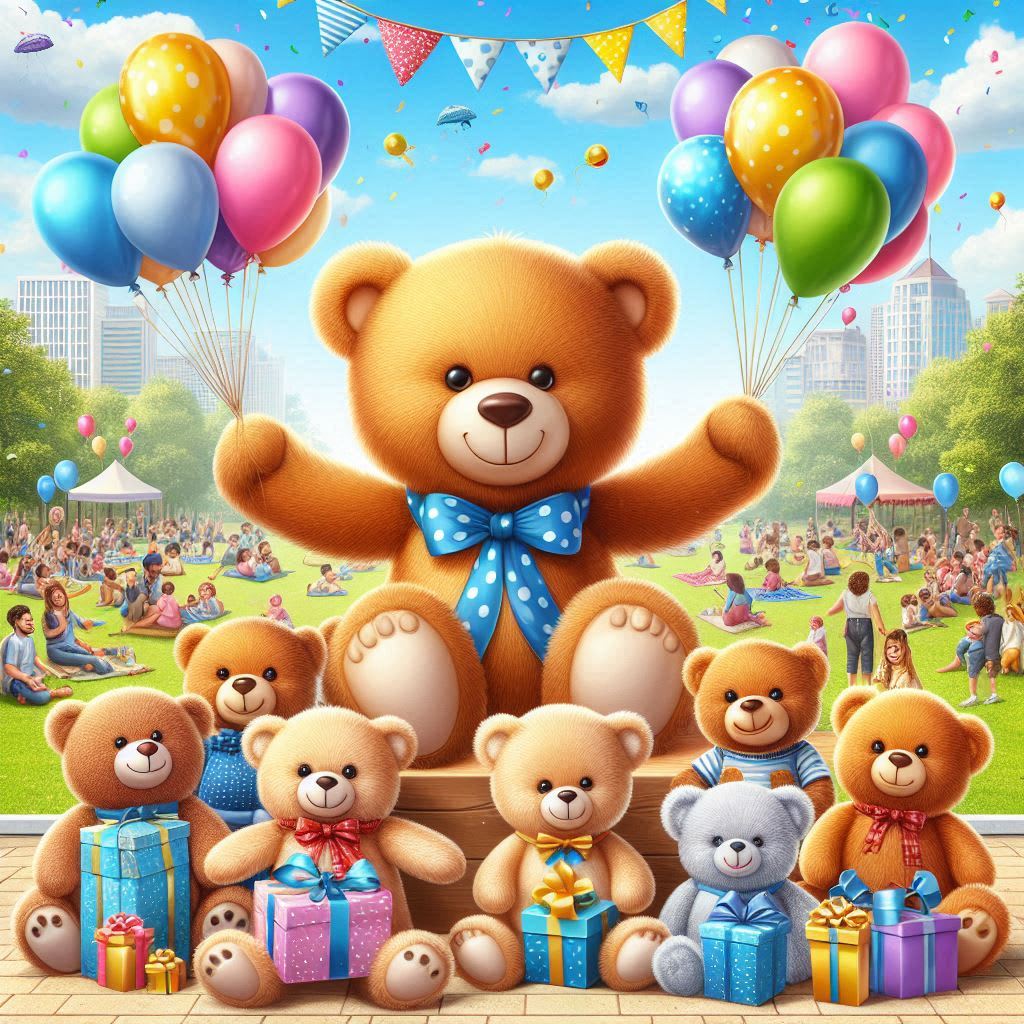
Each year, as Valentine’s Week unfolds, February 10th marks a day dedicated to cuddly companions: Teddy Day. This whimsical tradition invites lovers, friends, and family to exchange teddy bears, embodying warmth and affection. But how did a stuffed toy become synonymous with love? The story weaves through history, culture, and the universal longing for comfort, revealing how a simple bear evolved into a global icon of tenderness.
The Birth of the Teddy Bear
The teddy bear’s origin traces back to an unexpected figure—Theodore “Teddy” Roosevelt, the 26th U.S. President. During a 1902 hunting trip in Mississippi, Roosevelt famously refused to shoot a bear cub, deeming it unsportsmanlike. This act of mercy inspired a political cartoon by Clifford Berryman, published in The Washington Post, which depicted Roosevelt sparing the cub.
Seizing the moment, Brooklyn shop owner Morris Michtom crafted a plush bear, dubbing it “Teddy’s Bear.” Simultaneously, in Germany, the Steiff Company designed a similar stuffed bear, unaware of Michtom’s creation. Both versions surged in popularity, becoming childhood staples. By 1906, “teddy bears” dominated toy shelves, symbolizing innocence and compassion—a far cry from their political roots.
Teddy Day’s Emergence
While teddy bears charmed households for decades, their association with romance blossomed later. The late 20th century saw Valentine’s Day expand into a week-long celebration, with each day assigned a theme. Teddy Day, nestled between Chocolate Day and Promise Day, emerged as a marketing marvel. Greeting card companies and retailers capitalized on the bear’s appeal, promoting it as a token of enduring love.
By the 1990s, globalization and media influence cemented Teddy Day in countries like India, South Korea, and the Philippines. Its timing—days before Valentine’s—allowed it to thrive as a prelude to grander gestures, blending commercial savvy with emotional resonance.
Global Celebrations
Teddy Day’s charm transcends borders, adapting to local customs. In South Korea, February is a month of love-themed days, with teddy bears often paired with handmade gifts. Japan’s kawaii (cute) culture embraces pastel-hued bears, sometimes exchanged on White Day (March 14), when men reciprocate gifts received on Valentine’s.
In Western nations, teddy bears symbolize both romance and friendship. Universities host “bear grams” for secret admirers, while hospitals use them to comfort patients. Social media amplifies the trend: hashtags like #TeddyDay showcase creative presentations, from giant bears to DIY knitted versions, uniting global audiences in a shared language of care.
The Psychology of Softness
Beyond aesthetics, teddy bears tap into deep emotional needs. Psychologists attribute their appeal to their non-threatening, infantile features—large eyes, soft fur—triggering nurturing instincts. They serve as “transitional objects,” providing security in times of stress, a concept rooted in attachment theory.
For couples, gifting a teddy bear is a tactile promise of presence. Unlike fleeting chocolates or flowers, a bear lingers as a physical reminder of affection. Its neutrality also makes it versatile: a playful wink in new relationships or a comforting embrace in long-term bonds.
Modern Innovations
Today’s teddy bears blend nostalgia with innovation. Customization reigns supreme, with companies offering bears that recite voice messages, mimic a loved one’s scent, or incorporate heartbeat recordings. Eco-conscious brands use organic cotton or recycled materials, aligning with sustainable gifting trends.
Virtual reality introduces digital bears in apps and games, while social media filters let users pose with animated versions. During the pandemic, “contactless teddy deliveries” gained traction, emphasizing the bear’s role as a surrogate hug in isolation.
My Last Word
From a political cartoon to a universal emblem of love, the teddy bear’s journey mirrors humanity’s desire for connection. Teddy Day, though commercial in origin, thrives because it answers a timeless need—to express love through something soft, steadfast, and sincere. As traditions evolve, the teddy bear remains a testament to comfort’s enduring power, proving that even in a digital age, a simple plush companion can speak volumes.
About the Creator
The Content Crafter
Hi, I’m Vikas! I write Content and Stories that hit the Feels and Education.
- 📚 Education
- 🍔 Food
- 🏥 Health
- 🔢 Angel Number
- 📝 Poet
- 📖 Stories
- 🏺 History
- ⭐ Review
- 🌌 Space and Earth
- 🎮 Games
- 👻 Horror
📲Please 🔔 Subscribe 🔔 Me ❤️
Keep reading
More stories from The Content Crafter and writers in History and other communities.
Propose Day History
💍 Propose Day History 💍 Every year on February 8, couples and romantics worldwide celebrate Propose Day, the second day of Valentine’s Week. This special occasion is dedicated to expressing love, popping the big question, and taking relationships to the next level. 💖
By The Content Crafterabout a year ago in History
The Untold Story of Tata Group , Who built the Empire ?
If you live in India, at some point in your day you probably come across a product from the Tata Group of Companies. Look at the cars running on the roads — you’ll see Tata Motors. Look up at planes flying in the sky — you’ll think of Air India. And the iconic Taj Hotel, famous all over the world, is also owned by the Tata Group. From power to fashion, from tea to salt — the Tata Group has a presence everywhere.
By Imran Ali Shah5 days ago in History




Comments
There are no comments for this story
Be the first to respond and start the conversation.