
Tamerlane: The Sword of Islam
How a Ruthless Conqueror from Central Asia Forged an Empire Through Bloodshed and Ambition
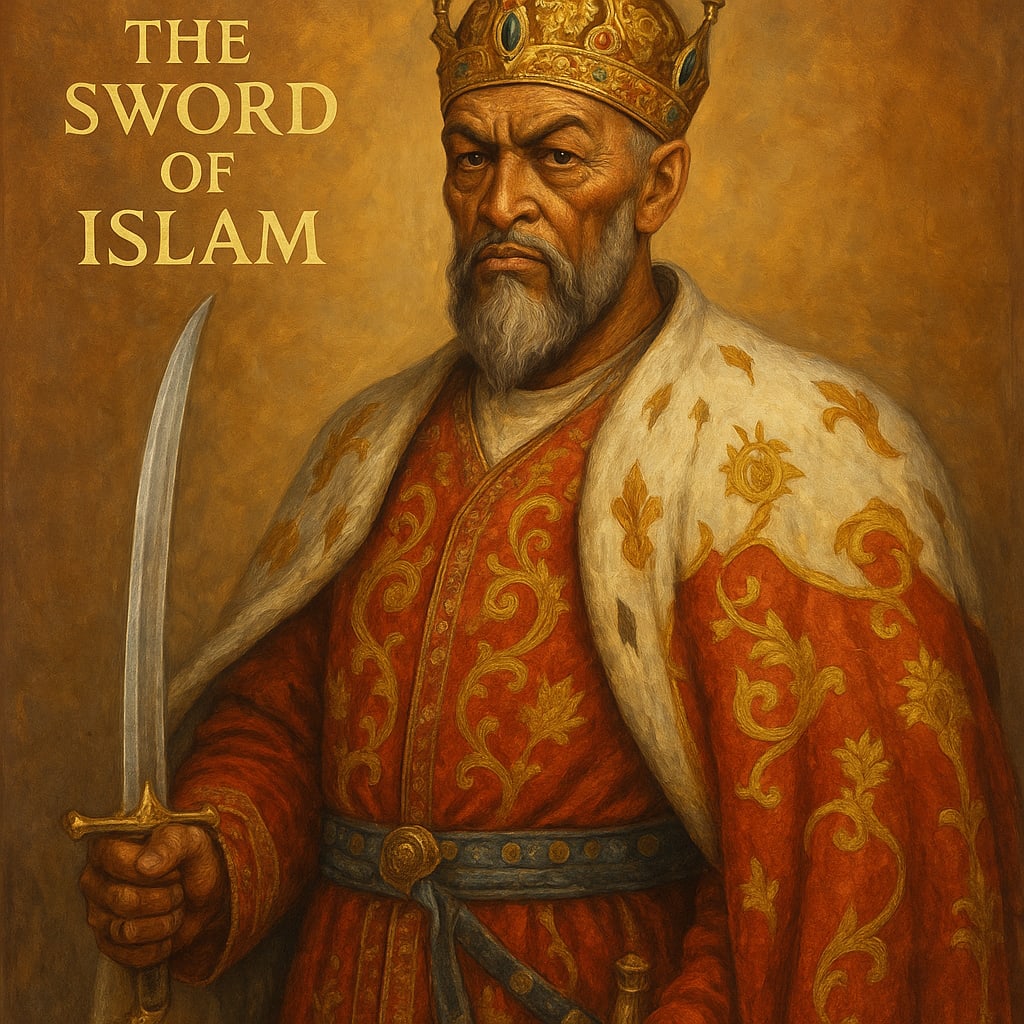
In the turbulent 14th century, when empires were rising and falling with dramatic swiftness, few figures left as indelible a mark as Tamerlane, also known as Timur. A descendant—at least by claim—of Genghis Khan, Timur emerged from the steppes of Central Asia to establish an empire that would stretch from India to the Mediterranean. Known for his brilliant military strategies as well as his brutal methods, Tamerlane was both feared and admired. Though his empire was relatively short-lived, his legacy would influence regions from the Islamic world to Renaissance Europe and shape the political and cultural landscape for centuries.
Early Life and Rise to Power
Timur was born in 1336 in Shahrisabz, near modern-day Samarkand in Uzbekistan, into a Turco-Mongol family. Though he claimed distant kinship with Genghis Khan through marriage, he did not belong to the Borjigin royal lineage, which limited his legitimacy. Nevertheless, Timur proved to be a skilled manipulator of alliances and an ambitious tactician.
His early years were marked by tribal warfare and shifting loyalties among local warlords. By the 1360s, Timur had risen to power in the region of Transoxiana, eventually becoming the de facto ruler of the Chagatai Khanate. He strategically installed puppet khans to preserve a veneer of Mongol legitimacy while consolidating real authority in his own hands.
Military Campaigns and Conquests
Tamerlane’s military campaigns were ferocious, far-reaching, and marked by extraordinary cruelty. He waged wars under the banner of Islam, calling himself the “Sword of Islam,” though his actions often contradicted the values of mercy and justice in Islamic tradition.
Timur's major campaigns included:
Persia (Iran): He launched a devastating invasion of the Persian territories, crushing local dynasties like the Muzaffarids and destroying major cities such as Isfahan. After a rebellion in Isfahan, Timur is said to have ordered the massacre of 70,000 people and constructed towers out of their skulls—a tactic he repeated in several cities to spread fear.
The Golden Horde: Timur defeated Tokhtamysh, the Khan of the Golden Horde and once his ally, in a dramatic conflict for control over Central Asia and southern Russia. This victory significantly weakened Mongol power in Eastern Europe.
India: In 1398, Timur invaded northern India and captured Delhi, then ruled by the Delhi Sultanate. The city was pillaged, and tens of thousands were slaughtered. While he claimed the invasion was a religious war against a Muslim sultan who had shown leniency toward Hindus, the campaign was largely driven by wealth and glory.
The Middle East: Timur also waged war against the Mamluks in Egypt and the Ottomans in Anatolia. In 1402, he famously defeated the powerful Ottoman Sultan Bayezid I at the Battle of Ankara, capturing him and reportedly keeping him in a cage until his death. This temporarily halted the rise of the Ottoman Empire.
Administration and Cultural Patronage
Despite his brutal campaigns, Timur was also a patron of the arts and architecture. His capital, Samarkand, was transformed into a cultural and architectural jewel, with grand madrasas, mosques, and gardens. He brought artisans, scholars, and architects from the cities he conquered to build his imperial vision.
Timur governed through a centralized bureaucracy, mixing Turkic tribal traditions with Persian administrative models. Though he styled himself a defender of Islam, his empire was more about power than piety. He used religion as a tool to justify conquest but often attacked Muslim cities and rulers when they posed a political threat.
Death and Legacy
Timur died in 1405 while on his way to invade China, a campaign that was never realized. His empire fragmented soon after his death, but his lineage continued through the Timurid dynasty, most notably through his grandson Ulugh Beg, a renowned astronomer and ruler.
Timur's impact was both constructive and catastrophic. His invasions destroyed centuries-old cities and civilizations, especially in Persia and India, but his encouragement of scholarship and culture laid the groundwork for the Timurid Renaissance. Furthermore, his descendants would go on to influence the formation of later empires, most significantly the Mughal Empire in India, founded by Babur, a direct descendant of Timur.
Conclusion
Tamerlane was a man of paradoxes: a cultured ruler who loved poetry and science, yet also a ruthless warlord who caused the deaths of millions. He sought to emulate and even surpass Genghis Khan, and while he never achieved the same level of lasting political unity, his influence was profound. Through terror and brilliance, Tamerlane carved his name into history—remembered as both a destroyer and a creator. His life remains a compelling chapter in the story of conquest, empire, and the ever-changing tides of history.
About the Creator
Keep reading
More stories from Anwar Jamil and writers in History and other communities.
Alexander the Great: The Conqueror of Worlds
When Alexander III of Macedon ascended the throne in 336 BCE, few could have predicted that the young man—just 20 years old—would go on to become one of the most legendary military leaders in history. Known to the world as Alexander the Great, his ambition, charisma, and tactical genius allowed him to conquer one of the largest empires the ancient world had ever seen. By the time of his death at the age of 32, Alexander had stretched the boundaries of his empire from Greece to India, forever altering the political, cultural, and economic fabric of the known world.
By Anwar Jamil9 months ago in History
The Year 1891 in Review: Fun Facts, Trivia, and Historic Highlights
This quick read is a collection of fun facts, trivia, and historical events from the year 1891. Discover the year’s top news stories, most influential people, U.S. economix trends, sports facts, entertainment trivia, and much more.
By Gregory DeVictor2 days ago in History


Comments
There are no comments for this story
Be the first to respond and start the conversation.