World History
Charles Babbage's Odyssey to the Analytical Engine
A determined thinker labored against the limitations of his time in the dimly lighted chambers of early 19th-century London, where the air was thick with the aroma of ink and candles cast long shadows upon heaps of mathematical manuscripts. At the beginning of his journey, Charles Babbage—a name hardly known in history—set out on an adventure that would completely transform the field of computation.
By Tracy Kotze2 years ago in History
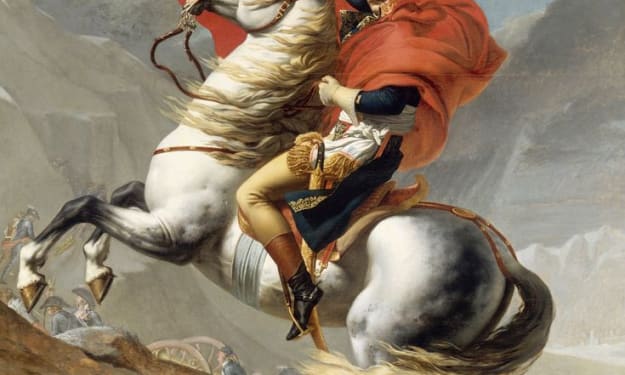
Napoleon Bonaparte
Napoleon Bonaparte: The Rise and Fall of a Conqueror Napoleon Bonaparte, a name that reverberates through history as one of the most influential and controversial figures of the 18th and 19th centuries. Born on August 15, 1769, on the island of Corsica, Napoleon's life unfolded against the backdrop of the turbulent times of the French Revolution. From his early years to his meteoric rise to power, his military campaigns across Europe, and ultimately, his downfall at the Battle of Waterloo, Napoleon's story is one of triumph and tragedy.
By Maria_TheOneAndOnly2 years ago in History
The raise of America
The modern United States stands as the most powerful country in human history, boasting over 800 military bases and accounting for 37% of global military spending. This dominance has positioned the United States as the leader of a vast interconnected global system, contributing to an era of unprecedented prosperity and relatively low levels of conflict.
By NICHOLAS MURIUNGI2 years ago in History
Biography of America
The United States of America emerged from a revolutionary fervor in the 18th century, and within two centuries, it became a formidable nation after triumphing in two world wars. However, delving into the pre-American history of the continent reveals a diverse and intriguing evolution. Before European settlers and explorers charted its coastlines, the continent was inhabited by various Native communities. The first people are theorized to have crossed over from Asia via a land bridge connecting Russia to Alaska during the Ice Age.
By A G M Astekur Islam 2 years ago in History
Collapse Of Ancient Egypt
Ancient Egypt was once a powerful empire, known for its Great Pyramids and Sphinx. However, today all that remains are ruins. The downfall of Ancient Egypt is a complex story. Did conquest, civil war, climate, or plague lead to their demise? To understand their end, we must go back to their beginning. How did Egypt become a powerhouse? The answer lies in climate change. The region was once a lush ecosystem, filled with large animals and birds. Tribes settled there, domesticating animals and developing tools. The Badarian people were the first tribe in the area, followed by the Naqada who built a large city. Location was key, as the Naqada controlled the Nile valley and trade. They established relations with Nubia and Mesopotamia, traded their crafts, and developed a system of written symbols. This civilization was on the brink of becoming an empire.
By Nduki Darlington2 years ago in History