Research
The Exploding Whale: A Blast from Oregon's Past
The Exploding Whale: A Blast from Oregon's Past On a cold November day in 1970, Seaside, Oregon, saw an event that changed its history. The "exploding whale" story became a cultural hit, a weird and memorable moment in Oregon's past. It still makes people laugh and wonder today.
By Anish Duttaabout a year ago in History
Beauty in the Victorian Era included the risk of severe illness or death
The Victorian Era began with the reign of Queen Victoria on June 20, 1837, and is associated with industrial expansion, improvements in society paving the way for modern-day society, and some of the wildest beauty standards in history.
By sara burdickabout a year ago in History
Canada issues travel advisories for some adventure tourism destinations
As the summer winds down and travelers seek to escape Canada’s long winter, many might consider thrilling adventures in exotic destinations. Activities like trekking, surfing, scuba diving, and four-wheel drive touring offer a perfect combination of excitement and a break from the daily grind. However, before finalizing their travel plans, adventure-seekers should be aware of the latest advisories from the Government of Canada. These advisories help Canadians make informed travel decisions by analyzing global trends, monitoring world events, and compiling updates from various sources. Adventure tourism, while thrilling, often involves venturing into regions with potential safety risks, ranging from high crime rates to political instability. Below are some key destinations flagged for safety concerns and the reasons behind those warnings.
By Jasroj Singhabout a year ago in History
The Truth About the Titanic. AI-Generated.
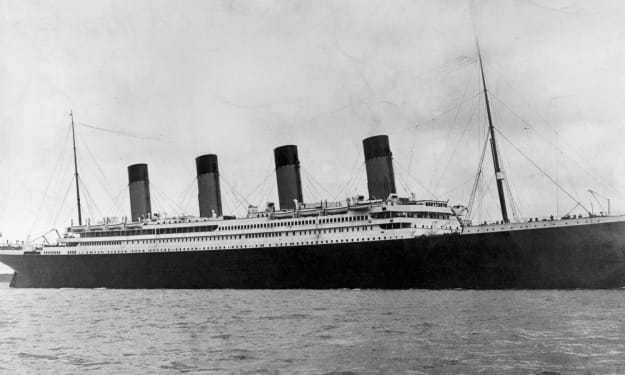
The Titanic: A Tragic Night Unfolded On April 14th, 1912, at 11:40 p.m., the RMS Titanic collided with an iceberg, leading to one of the most infamous maritime disasters in history. By 2:20 a.m. on April 15th, the "unsinkable" ship had disappeared beneath the icy waters of the Atlantic Ocean, taking over 1,500 lives with it. For over a century, the cause of this tragedy was attributed solely to the iceberg. However, recent findings challenge this long-held belief, unveiling a series of factors that might have sealed the Titanic's fate.
By Adebayo Mahmudabout a year ago in History
"Living Life Bigger"
In a world where we frequently get caught up in the routine and the mundane, it's easy to forget that life is meant to be lived to the fullest. Living life bigger does n’t mean living sumptuously or recklessly it means embracing each moment with intention, courage, and an open heart. It’s about pushing beyond your comfort zone, seeking out new gests, and allowing yourself to grow in ways you no way imagined.
By Md. Ashraful Azadabout a year ago in History
Young People's Cardiac Arrest: An Infrequent but Tragic Incident
Usually, when we think about cardiac arrest, we picture an elderly person suddenly collapsing, their heart failing due to years of stress, a poor diet, or untreated medical disorders. But cardiac arrest doesn't discriminate based on age; it can happen to even young, seemingly healthy people. Even though it is uncommon, abrupt cardiac arrest in kids and teens can have catastrophic effects that leave families and communities in shock and often result in death. The Danger Hidden initial indication of a cardiac issue may not be the last for a lot of young people. In contrast to adults, who may experience symptoms such as dyspnea or chest pain before to a cardiac episode, young people frequently.Many underlying causes of cardiac arrest in young athletes are congenital or genetic, and often go undiagnosed until it is too late. Hypertrophic cardiomyopathy (HCM), a genetic disorder that causes the heart muscle to thicken, is one of the most common causes of sudden cardiac death in young athletes. Other conditions, like arrhythmogenic right ventricular cardiomyopathy (ARVC) or congenital long QT syndrome, affect the electrical system of the heart and can cause irregular heartbeats that can trigger a fatal cardiac arrest. These conditions are particularly sneaky because they can go undetected for years, exhibiting no symptoms until a triggering event—often intense physical activity—causes the heart to fail.the field or a young adult unexpectedly dying while they sleep, leaving loved ones with more questions than answers. A Family's Nightmare For the families affected, the unexpectedness of a young person suffering from cardiac arrest is a nightmare. One such story is that of Sarah, a lively 16-year-old who was a star soccer player. On a typical Saturday morning, during a routine soccer match, Sarah suddenly collapsed on the field. Her coaches and teammates were shocked; she had not previously shown signs of distress prior to. Even though the medical staff arrived quickly, Sarah was not able to be revived. Sarah was later found to have an undetected instance of heart failure that may have been identified by a straightforward echocardiography. The loss was unimaginable to her parents. Her mother recalls, "She was so healthy, so full of life." "We were unaware that anything was amiss. She appeared for a moment and then vanished. Sarah's tale is not the only one. These kinds of catastrophes befall thousands of families annually all around the world. The awareness that the cardiac arrest may have been avoided in many cases with early identification adds to the pain. The Value of Examining Among the important discussions in the medical world iswhether or not routine cardiac screenings should be performed on young people, especially sports. Early diagnosis of illnesses like HCM or ARVC, according to proponents, may save lives. Mandatory screening programs for young athletes have dramatically decreased the rate of sudden cardiac death in nations such as Italy. Regular screening does, however, present a unique set of difficulties. Not all heart problems are readily diagnosed, and false positives can cause needless worry and even prevent young athletes from participating in their favorite activities. Furthermore, extensive screening is expensive, and insurance frequently does not cover it in nations like the United States unless there is a family history of heart disease. It is impossible to overestimate the significance of consciousness in spite of these obstacles. Coaches, parents, and youngPeople themselves must be aware of the dangers and signs of cardiac disorders. Simple actions that can mean the difference between life and death include teaching coaches and students CPR and making automated external defibrillators (AEDs) available at athletic events. Managing Bereavement and Proceeding Forward Bereaved parents face a protracted and difficult grieving process when their kid dies from cardiac arrest. Families can find it easier to deal with their loss through community outreach, therapy, and support groups. Many grieving parents use their grief as fuel for advocacy, pushing for improved screening and preventative practices and raising public awareness. Dedicated to educating the public and advancing research on inherited heart disorders, foundations such as the Sudden Arrhythmia Death Syndromes (SADS) Foundation in the United States put forth a great deal of effort. TheseFamilies impacted by these catastrophes can also get support from organizations, which helps them deal with the difficult feelings and uncertainties that arise after such an unexpected loss. The Prospects for Preventive Medicine In the future, improved prevention and treatment of the problems that lead to cardiac arrest in young people is possible because to developments in personalized medicine and genetic testing. Growing knowledge of the genetic components underlying these disorders may make it feasible to recognize those at risk early in life and take action to avert cardiac arrest before it occurs. The best defense for the time being is still awareness, education, and vigilance. Although premature cardiac arrest is uncommon, it has a significant impact that lasts a lifetime for families and communities. By telling these tales and promoting improvedBy being vigilant and screening people, we can help avert these tragedies and make sure that this silent killer doesn't take the lives of any more children.
By Vivian ohwoabout a year ago in History
Part IV : Somers Historical Tidbits
Please see tip, pledge and subscribe buttons below or send tip via venmo at @Rich-Monetti Water Park In the mid 1800s, residents obviously owned horses and they even raced some of them at Nelson’s Racetrack near Woods Bridge. A day at the races wasn’t the only outlet either. The lot west of the Elephant Hotel once housed tennis courts, but leisure time aside, Somers entered the modern manufacturing age when the Empire Sewing Machine company was established in 1864. The reservoir system left the company in stitches, though. The upstream dam took away the plant’s water power, and the property was sold to Thomas Meade and Peter Muth. In turn, the duo sold the land to the St Joseph’s Normal College, and the structures were converted to classrooms and dorms. Unfortunately, New York City was still thirsty and gobbled up even more of the acreage. No longer did the college own the buildings, the college moved to Pocantico Hills, the cemetery relocated to Valhalla and the Statue of Our Lady of Lords landed at Manhattan College. Still, New York was done yet. The Amawalk Reservoir was created, which makes NYC the largest landowner in Somers. 3257 acres, the metropolis - as of 1988 - paid the majority of taxes and owned and maintained the bridges that needed to be built to accommodate the local transportation.
By Rich Monettiabout a year ago in History
Elon Musk Unveils Antarctica's Secret Alien Coverup: Fact or Fiction?
Introduction Antarctica, the coldest and most remote continent on Earth, has long been a place of mystery and speculation. From hidden pyramids to secret military bases, the icy expanse has fueled countless theories and conspiracies. Recently, tech visionary Elon Musk has added fuel to these speculations by hinting at a secret alien coverup beneath the Antarctic ice. But how much of this is grounded in reality, and how much is mere science fiction? This article delves into the claims made by Musk, exploring the evidence, the theories, and the implications of such a revelation.
By ROSEL ETUWEabout a year ago in History
Discover the Wonders of Egypt
Egypt, a land steeped in history, mythology, and unparalleled beauty, has captivated the imagination of travelers and scholars alike for centuries. From the towering pyramids to the meandering Nile River, Egypt offers an immersive journey through time, where ancient civilizations come to life in the sands of the desert. This article takes you on an exploration of Egypt's wonders, revealing the timeless allure of this remarkable country.
By Author kelechiabout a year ago in History
The Roman Aqueducts: Engineering Marvels of the Ancient World
The Roman Empire, known for its grandeur and impact, become a civilization that left an indelible mark on history. Among its many contributions to the sector, one of the maximum extraordinary and enduring is the Roman aqueduct machine. This complex network of water channels, constructed over centuries, revolutionized urban water supply and demonstrated the Romans' superior engineering skills. In this sizable exploration, we are able to delve into the records, production, and effect of Roman aqueducts, imparting a comprehensive expertise in their significance in the historic world and their legacy in cutting-edge engineering.
By david jonesabout a year ago in History
"Sacred Peaks, Sacred Lives: Understanding Himalayan Societies"
** Exploring the Culture and Society of the Himalayas ** Himalay Tradition The Himalayas, a stirring mountain range gauging multiple countries, are not just a natural wonder but also a treasure trove of culture. Within these rugged geographies thrive different communities whose lives, traditions, and values are profoundly told by the mountains they call home. The culture and society of the Himalayan people are as varied and lively as the terrain itself, reflecting a deep connection with the land, nature, and church.
By Md. Ashraful Azadabout a year ago in History