Places
Bangladesh
In the heart of the Indian subcontinent, nestled along the lush, fertile plains and the serpentine rivers of Bengal, lies a land of profound beauty and resilience—Bangladesh. The story of its birth is not just a tale of political struggle; it is a saga of a people's undying spirit, a nation's fight for its identity, and the sacrifices of countless souls who dreamed of freedom.
By Aminu Muhammadabout a year ago in History
End Bad Government In Nigeria
The cry to end bad governance in Nigeria is not merely a political slogan; it is the heart-wrenching plea of millions yearning for dignity, justice, and a chance at a better life. It is the silent scream of a nation burdened by decades of corruption, inefficiency, and broken promises. It is the collective voice of a people who have endured too much for too long, standing at the precipice of despair yet holding on to the fragile hope of change.
By Aminu Muhammadabout a year ago in History
The Genesis of Microsoft:
In the mid-1970s, the world was on the cusp of a technological revolution. A young Bill Gates, a Harvard dropout with a relentless passion for computers, and his childhood friend, Paul Allen, stood at the forefront of this transformation. Their shared dream of a future where computers were accessible to everyone ignited a journey that would change the world forever. In 1975, in a modest Albuquerque motel room, they founded Microsoft, a name that would soon become synonymous with personal computing.
By Aminu Muhammadabout a year ago in History
Egypt
Egypt, the birthplace of one of the oldest, most powerful, and longest-lasting civilizations on Earth, is a land where the ancient and modern coexist. Aerial views of this proud nation reveal its unique past and how the ancients left their mark on this harsh and inhospitable landscape. The magnificent achievements of the ancients have shaped the Egypt of today, showcasing the resilience and ingenuity of generations of Egyptians.
By David Kpenteyabout a year ago in History
Pharaoh Thutmose III: The Napoleon of Ancient Egypt
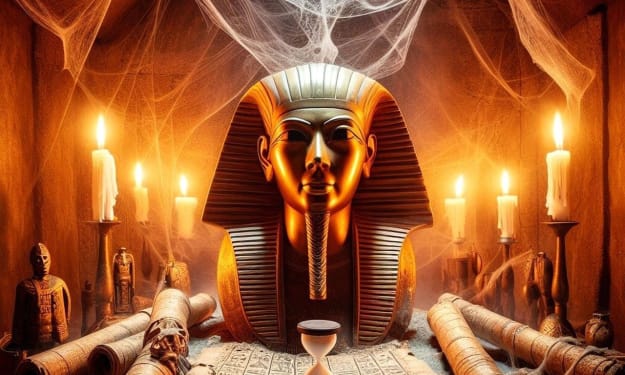
Pharaoh Thutmose III, often referred to as the "Napoleon of Egypt," was one of the most powerful and influential rulers of ancient Egypt. He reigned during the 18th Dynasty of the New Kingdom, from approximately 1479 to 1425 BCE. His legacy is marked by his military prowess, architectural achievements, and significant contributions to Egyptian culture and administration. Early Life and Ascension to the Throne Thutmose III was the son of Thutmose II and a lesser wife named Iset. His early years were overshadowed by the reign of his stepmother, Hatshepsut, who served as regent and eventually declared herself pharaoh. During Hatshepsut’s reign, Thutmose III was relegated to a secondary role, often depicted as a junior co-regent. Despite this, he received military training and held the title of the head of her armies, which would later prove pivotal in his rule. Hatshepsut's reign lasted for about 22 years, and upon her death, Thutmose III assumed full control of the throne. One of his first acts as pharaoh was to attempt to erase Hatshepsut’s legacy. He ordered the defacement of her monuments and the removal of her name from official records, actions that historians speculate were intended to legitimize his reign by eliminating any challenges to his authority. Military Campaigns and Conquests Thutmose III is best known for his military campaigns, which expanded Egypt’s empire to its greatest extent. He conducted at least 17 known campaigns, primarily in the Near East, Nubia, and Syria, establishing Egyptian dominance over these regions. His first and perhaps most famous campaign was the Battle of Megiddo in 1457 BCE. The Battle of Megiddo was a significant military engagement between the forces of Thutmose III and a coalition of Canaanite vassal states led by the king of Kadesh. Thutmose III demonstrated exceptional military strategy by taking an unexpected route through the Aruna Pass, catching the enemy off guard. His victory at Megiddo not only solidified Egyptian control over Canaan but also set a precedent for future military engagements. The captured booty and tributes from these campaigns enriched Egypt and demonstrated Thutmose III's skill as a military leader. Administrative Reforms and Governance Thutmose III was not just a warrior king; he was also an astute administrator. He reorganized the administration of the empire to better control the vast territories he conquered. This included appointing loyal officials to key positions and establishing a network of fortresses and supply depots to support his military campaigns. He also implemented a system of annual tributes from vassal states, ensuring a steady flow of wealth into Egypt. Thutmose III’s reign saw a flourishing of arts and culture. He commissioned numerous building projects, including the construction of temples, obelisks, and monuments. One of his most notable architectural achievements was the expansion of the Karnak Temple complex in Thebes. He added the Festival Hall, also known as the Akh-menu, which was used for religious ceremonies and as a commemorative monument celebrating his military victories. Religious Contributions and Legacy Thutmose III was deeply religious and dedicated many of his conquests and achievements to the god Amun, the chief deity of the Egyptian pantheon. His devotion to Amun is evident in the numerous temples and shrines he built or renovated in the god’s honor. He also initiated the celebration of the Opet Festival, a grand religious procession that honored Amun and reinforced the divine nature of the pharaoh’s rule. The pharaoh’s legacy extended beyond his death. His reign was documented extensively in the annals inscribed on the walls of the Karnak Temple, providing historians with valuable insights into his rule and military exploits. Thutmose III’s policies and achievements set a standard for future pharaohs and helped maintain the stability and prosperity of the New Kingdom. Death and Succession Thutmose III died in 1425 BCE after a long and successful reign of approximately 54 years. He was buried in the Valley of the Kings, the traditional burial place of New Kingdom pharaohs. His tomb (KV34) is notable for its unique layout and the detailed paintings depicting the Amduat, an ancient Egyptian funerary text that describes the pharaoh’s journey through the underworld. Thutmose III was succeeded by his son, Amenhotep II, who continued his father’s policies and maintained the empire’s stability. Amenhotep II’s reign further solidified the foundations laid by Thutmose III, ensuring that his legacy endured for generations. Conclusion Pharaoh Thutmose III was a remarkable figure in ancient Egyptian history. His military genius, administrative reforms, and religious devotion transformed Egypt into a formidable empire. Often called the "Napoleon of Egypt," Thutmose III's legacy is a testament to his skills as both a warrior and a statesman. His reign represents a pinnacle of ancient Egyptian power and influence, and his contributions continue to be celebrated and studied by historians and Egyptologists today. Thutmose III’s impact on history is undeniable. He expanded Egypt’s borders, centralized its administration, and enriched its culture. His military campaigns set new standards for strategy and logistics, while his architectural projects left an indelible mark on the landscape of ancient Egypt. As a pharaoh who successfully combined military might with wise governance, Thutmose III remains one of the most iconic and revered figures in the annals of ancient history.
By Al-hassan Emamabout a year ago in History
Decoding An Ancient Relic
An Extraordinary Find Amidst Antiquity's Remnants Deep within the remnants of Alalah, an ancient Anatolian city that flourished during the Bronze Age, archaeologists have chanced upon a remarkable discovery – a diminutive clay tablet etched with cuneiform inscriptions. This unassuming artifact, measuring a mere 4.2 centimeters by 3.5 centimeters and weighing a scant 28 grams, has ignited a wave of excitement among scholars and historians alike, promising to unveil invaluable insights into the economic and administrative intricacies of a bygone era.
By Kevin MacELweeabout a year ago in History
The Perils of Katanga
MMA Katanga in Tanzania is the most perilous road in the country. Each day, vehicles engage in risky maneuvers as they race along the road, posing a threat to trucks, buses, and cars. Despite the dangers, this road serves as a vital link for the region, enabling businesses to prosper and offering opportunities for the younger generation. Traveling on the hazardous roads of Tanzania and Kenya presents its own set of challenges. At the Eumo bus station in Tanzania, more than 100 buses depart daily, with many bound for D Sal. Passengers must secure tickets in advance and exercise caution while journeying on treacherous roads. Mecinus, a 19-year-old, grapples with the responsibility of managing his family's farm following his father's passing. He mobilizes workers to tend to the onion fields and provide for his family. Mecinus confronts difficulties stemming from water scarcity, escalating expenses, and meager earnings from onion cultivation. Locals in Tanzania face obstacles due to the absence of electricity and the pressing need for renewable energy. Repairing a vehicle involved in an accident in Tanzania presents its own set of challenges. The stringent alcohol limit for drivers in Tanzania, particularly for professional drivers, is another issue to contend with. The focus of the repair process is on ensuring the vehicle is roadworthy rather than on intricate aesthetics. Navigating the hazardous Katanga Road in Tanzania poses traffic hazards and challenges for bus driver Alberto.
By Isaac Ekow Anyidoho2 years ago in History
Unearthing Ancient Enigmas
In the remote sand dunes of northwestern Peru, archaeologists have uncovered a remarkable find that sheds new light on the ancient religious practices and architectural prowess of pre-Incan cultures. A team of researchers, led by Luis Armando Muro Ynoñán, director of the Cultural Landscapes Archaeological Project of Ucupe — Valle de Zaña, has unearthed the remnants of a ceremonial temple dating back an astonishing 4,000 to 5,000 years.
By Kevin MacELwee2 years ago in History
Unveiling History
1. America The name "America" originates from the Italian explorer Amerigo Vespucci. Vespucci's voyages to the New World led to the realization that the lands discovered by Columbus were not part of Asia but a new continent. In 1507, a German cartographer named Martin Waldseemüller used the Latin version of Vespucci’s first name, "Americus," to label the newly identified continent on his map. The use of “America” was initially applied to South America, and over time, it came to represent both continents. Despite Vespucci's significant contribution, he remains less well-known compared to Columbus, whose name is more widely associated with the Americas.
By Horace Wasland2 years ago in History