Medieval
The House on Maple Drive
**The House on Maple Drive** In the humble community of Elmswood, where fall's chill gripped to the roads like a memory, there was a house toward the finish of Maple Drive that appeared to be immaculate by time. Its red block facades and ivy-clad façade had seen many seasons, yet it was individuals who lived there that made it really important.
By Arif zamanabout a year ago in History
A Global Tapestry of Christmas Fashion and Celebrations: From Snowy Landscapes to Sun-Kissed Beaches
Christmas, a time of joy, festivity, and togetherness, is celebrated with unique traditions and customs worldwide. From the snowy landscapes of the Northern Hemisphere to the sun-kissed beaches of the Southern Hemisphere, Christmas fashion and celebrations offer a captivating glimpse into diverse cultures and shared human experiences. This article delves into the rich tapestry of Christmas fashion and celebrations across the globe, showcasing the vibrant colors, heartwarming traditions, and enduring spirit of this beloved holiday.
By Neel evansabout a year ago in History
Kaliakra: A Treasure of Natural Beauty and Bulgarian History
Hey there! Let me tell you about this amazing place called Kaliakra. It's this stunning cape on Bulgaria's Black Sea coast that's packed with history and natural beauty. Imagine cliffs stretching out into the sea for about 2 kilometers – that's Kaliakra for you!
By Neli Ivanovaabout a year ago in History
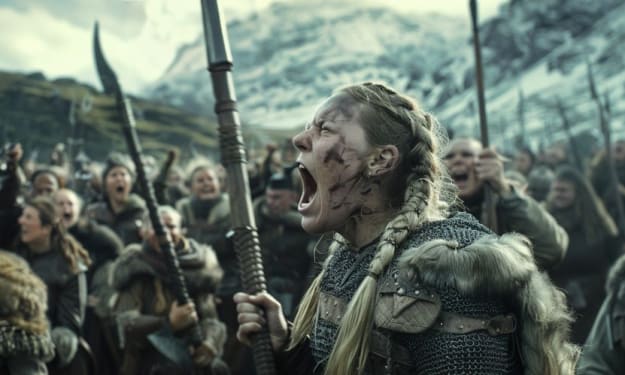
The Vikings were obsessed with personal hygiene and weekly bathing
The Vikings have often been portrayed as fierce invaders, raiding towns and taking what they wanted, and often depicted as dirty unsophisticated barbarians. While they may have been skilled ferocious warriors, they were not dirty nor unsophisticated.
By sara burdickabout a year ago in History
History of the GUN
The firearm possesses a multifaceted history that has significantly influenced global dynamics. When wielded by responsible individuals, it has provided safety and security; conversely, in the hands of the irresponsible, it has led to widespread devastation. The evolution of firearms mirrors advancements in technology, shifts in political landscapes, and changes in societal perspectives. Initially, gunpowder was utilized for pyrotechnic displays and aesthetic enjoyment, lacking the explosive power we associate with it today, serving purposes akin to contemporary fireworks. The military potential of gunpowder became evident in the 11th century, paving the way for its use as a weapon. The first firearms emerged in late 13th century China, subsequently spreading to Mongolia and Japan. The earliest documented instance of firearms in combat occurred during the Rebellion led by Mongol Prince 9 in 1287. This period also marked the standardization of gun production and its dissemination throughout Mongolia, Japan, and eventually the broader Asian continent. By the mid-14th century, early firearms were prevalent across the Islamic World, with hand cannons known as midfa utilized by the Nazrid military in 3031. Firearms made their way to Europe in the second quarter of the 14th century, becoming integral to European military forces by the mid to late 14th century. The introduction of the flintlock mechanism transformed the ignition process of firearms, replacing the match with a more efficient system. French innovator Marion La Bourget played a crucial role in making the flintlock system both practical and effective. The progression of ignition systems from match locks to percussion caps highlights the advantages of flintlocks, which facilitated their global proliferation. The advent of the cap lock in the 19th century marked a revolutionary advancement in firearms technology.
By Isaac Ekow Anyidohoabout a year ago in History
10 Most Interesting Facts about The Indian History
1. Indus Valley Civilization (ca. 1300–3300 BC) The Indus Valley Civilization, also known as the Harappan Civilization, was one of the world's first urban cultures. This nation, which flourished along the Indus River and its tributaries, was known for its urban planning, including organized cities such as Harappa and Mohenjo-daro. These cities had complex drainage systems, standard bricks for construction, and trade marks in distant regions. The community was peaceful, there was no sign of military service, and the health and hygiene of the people was very important.
By Vishnu Sharmaabout a year ago in History
Pushpa 2: The Rule – A Cinematic Powerhouse You Can't Miss
Pushpa 2: The Rule - A Gripping Sequel that Redefines the Action Genre Pushpa 2 The Rule : is more than just a sequel; it's an adrenaline-fueled journey that plunges deeper into the raw, untamed world of Pushpa Raj. Director Sukumar masterfully builds upon the gritty foundation laid in the first film, delivering a cinematic experience that is both exhilarating and emotionally charged.
By Hasina Bagomeabout a year ago in History
Queen Victoria
Queen Victoria's heritage and familial connections are noteworthy. She was born to Princess Victoria Marie Louise of Saxe-Coburg-Saalfeld and Prince Edward, Duke of Kent. Her father belonged to the House of Hanover, a royal lineage that traces its roots to northern Germany. In terms of her early life and royal heritage, Victoria was the fifth in line for the British throne and was baptized as Alexandrina Victoria. The House of Hanover had been the ruling dynasty in Britain since 1714, functioning as a constitutional monarch with limited authority. The Victorian era was characterized by significant social, religious, and political transformations. Working-class men did not receive payment until 1911, necessitating financial backing to secure election to Parliament. Educational advancements occurred as the government assumed responsibility, resulting in 90% of children attending school, although rural children were often withdrawn to assist with harvests. The complexities of royal marriages and succession were evident, particularly with George IV's failed unions and absence of legitimate heirs, prompting a race among the king's unmarried brothers to produce a rightful successor. Queen Victoria's childhood seclusion significantly influenced her future reign. Although she experienced feelings of loneliness, this isolation protected her from the negative influences of certain relatives. Contrary to her later reflections, Victoria's early years were filled with maternal affection, indulgence from her governess, and pleasurable outings. At the age of 18, Victoria ascended to the throne. Despite attempts by Conroy to exert control over her, she firmly resisted. Her inaugural public appearance was met with acclaim. Victoria also challenged the longstanding Salic law to claim her position as Queen of Hanover.
By Isaac Ekow Anyidohoabout a year ago in History