Medieval
Unveiling the Past
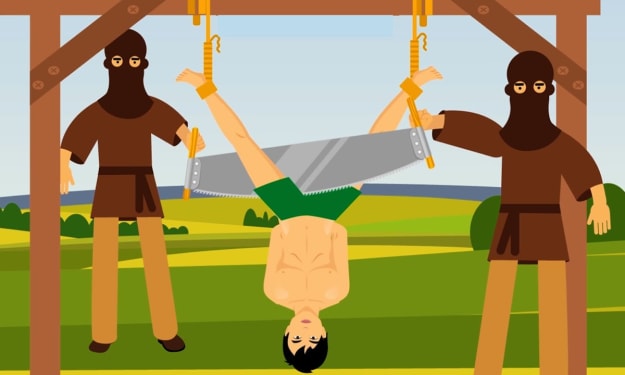
Throughout history, societies have punished individuals for their transgressions in some unimaginably gruesome ways. Often used to demonstrate power, maintain control, or serve as stark warnings, these punishments go beyond what we might consider just or humane. From ancient empires to medieval Europe, some methods of punishment are so brutal that they remain infamous for their cruelty. Here are some of the worst punishments in human history, each demonstrating the darker aspects of human justice systems.
By Horace Waslandabout a year ago in History
The Brazen Bull
When we think of historical punishments, we may imagine something brutal, like beheading or whipping. But among the many ways societies have meted out cruelty, the ancient Greek invention known as the brazen bull stands out as one of the most horrifying devices ever imagined. Designed not just to execute but to inflict maximum psychological and physical agony, the brazen bull’s gruesome history has echoed through the ages, leaving us in awe of the cruelty humans are capable of—and of how far society has evolved since.
By Horace Waslandabout a year ago in History
THE LEGACY OF MOORISH SPAIN
The Queen of Castille sits regally on a somewhat bewildered-looking white steed, crown perched prominently on her head. Her eyes are drawn to the ochre-coloured castle gleaming brightly in late November sunlight on a distant hill. Her husband, the King of Aragon, leans forward on his horse with his hand out ready to accept the hefty keys reluctantly proffered by the last Nasrid ruler of the final bastion of Moorish rule in Al Andalus, Boabdil. Though spared the humiliation of kissing the monarch’s hand, the Moor's eyes seem to be silently pleading, “Remember what you promised.”
By Kimberley Silverthorneabout a year ago in History
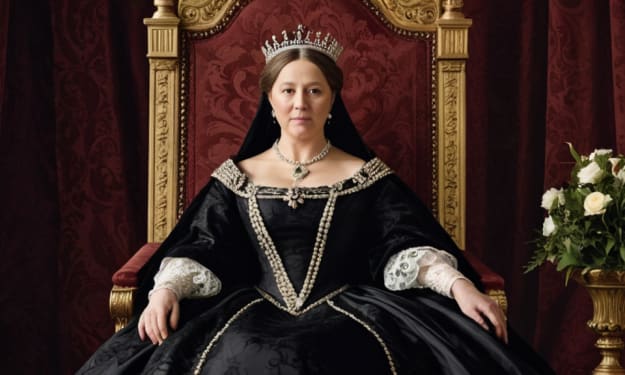
Women on the throne.. Queen Victoria, grandmother of the European continent
Modern history has not known a queen who was able to bring about a major change for her people as Queen Victoria did during her rule of Britain, where she witnessed great development and expansion on the scientific, cultural, military and economic levels, and was able to establish the “empire on which the sun never sets.” With her wisdom, she was also able to spread her nine sons throughout the continent of Europe to marry into the most important royal and ruling families, until her grandchildren spread throughout the old continent, so she was given the title “Grandmother of the European Continent.”Birth and upbringing
By Kisama Riyo about a year ago in History
Women on the throne.. Cleopatra VII, the most famous queen in history
Perhaps no woman in history has ever been as famous as Cleopatra VII, the last king of the Ptolemaic dynasty, which is considered a meeting point between the Greek, Pharaonic and Roman civilizations. The events that Cleopatra experienced greatly contributed to increasing this fame, until the beautiful queen became one of the legends of history and the heroines of novels, stories, films and dramas.Birth and upbringing
By Kisama Riyo about a year ago in History
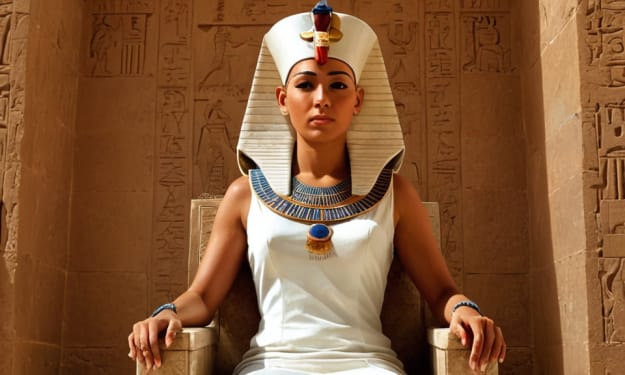
Woman on the throne.. Hatshepsut, the most famous queen in Pharaonic Egypt
Just as the history of Pharaonic Egypt is full of secrets, strange tales, tremendous events and things that are difficult to explain, Queen Hatshepsut is one of these strange and great tales at the same time. How was this girl able to rule this powerful state and tighten her grip on power amidst the conspiracies of the priests, the competition of her brother and the traditions of rule in the oldest civilization in history? And how did her era become an example of progress, peace and stability?Hatshepsut's Birth and Family
By Kisama Riyo about a year ago in History