General
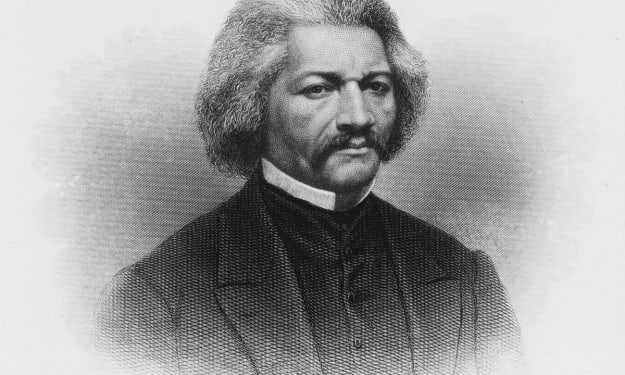
Frederick Douglass: From Slave to Abolitionist Leader
Frederick Douglass was born into slavery in Maryland in 1818, but escaped to freedom and became one of the most prominent anti-slavery activists and civil rights leaders in American history. His journey from slave to respected orator, author and statesman is an inspiring story of courage, perseverance and dedication to the cause of liberty and equality.
By KWAO LEARNER WINFRED2 years ago in History
The continent that disappeared for 375 years was re-informed to the world?
After approximately 375 years, geologists have made an extraordinary discovery - scientists have uncovered a hidden continent under the surface of the ocean. Named Zeelandia, it was brought to the attention of Indian news outlet NDTV, which gathered information from the science-based news organization, Phys.org.
By Md Obaidul Haque 2 years ago in History
"Machu Picchu: An Incredible Ancient City Among the Peaks"
Introduction: Perched high in the majestic Andes Mountains, Machu Picchu has captured the hearts and minds of countless adventurers, historians, and travelers from around the world. This awe-inspiring site consistently ranks as one of the most visited destinations globally, and its allure lies in its breathtaking beauty, rich history, and enigmatic aura. In this article, we will embark on a journey to explore the secrets, mysteries, and wonders of Machu Picchu, uncovering its remarkable past and timeless appeal.
By PMON STORE2 years ago in History
macOS Sonoma is set to launch today, and we are eagerly anticipating its arrival. There are 5 key features that have piqued our interest.
After the release of iOS 17 and iPadOS 17, it is now the turn of macOS Sonoma to roll out. The launch is scheduled for today, Tuesday, September 26. There is an extensive list of new features, including new wallpapers and screen savers, improvements to Safari, the ability to share passwords and passkeys with trusted contacts, and the inclusion of all the beloved features from iOS 17's Messages app in macOS.
By Mamun Reza2 years ago in History
An Elegy to Sadness: Embracing the Inescapable Abyss. Content Warning.
In the tapestry of human emotions, few threads possess the power to unravel our essence with such relentless persistence as sadness. It is a cavernous state of being that consumes our very existence, haunting every corner of our soul. Sadness, with its infinite shades and depths, possesses a profound ability to leave an indelible mark on our hearts. In this woefully melancholic journey, we shall explore the realm of sadness, surrendering to its mournful embrace.
By emam bhuiyan2 years ago in History
Mummification in Ancient Egypt. Content Warning.
Another characteristic element in Egyptian civilization that has stimulated the interest of scholars was, without doubt, the unusual method of preserving corpses and transforming them into mummies, a technique that was believed to be divine in origin and was traced back to Horus, the son of Osiris and Isis. The term 'mummy' derives from the Arab word mumiya or mumyai which, according to Abd el-Latif a 12th century Arab traveller, meant 'bitumen' or 'mixture of pitch and myrrh' acompound much used in working with corpses and in which, in Europe too, there was a flourish- ing trade during the middle ages. In ancient times a distinction was made between natural and artificial mummies the former being those that had been preserved intact without having undergone any particular treatment. Indeed still today it is thought that the perfect embalming techniques used by the ancient Egyptians were responsible only as a secondary factor for the spectacular state of preservation of the corpses; the principal reason would appear to be the extremely dry climate of Egypt and the total absence of bacteria in the air and the sand. In any case, the mummification of the bodies took place according to a quite precise, and probably standardized, ritual. The body of the deceased was entrusted to the hands of specialists, who began the embalming by using a hook to extract the brain through the nostrils. The skull was then filled with a mixture based on liquid bitumen, which hardened as it cooled. The eyes were removed and later replaced with enamelled orbs. Using an extremely sharp stone, an incision was made on the left side of the body and the viscera were extracted.
By Momen Elmenshawy2 years ago in History
The Renaissance
In the heart of Italy, in the bustling city of Florence, a new era was dawning. It was the 14th century, and the winds of change were sweeping across Europe. This period of transformation and rebirth would come to be known as the Renaissance, a cultural and intellectual movement that would lead to significant advancements in art, science, and philosophy, forever altering the course of history.
By Sunny Douglas2 years ago in History
How Many Sons Did Apollo Creed Have? Series Recap!
In the world of boxing, Apollo Creed was an iconic figure known for his charisma, skill, and unshakable confidence. While his character was immortalized in the Rocky movie series, fans often wonder about his personal life, specifically how many sons he had. In this article, we delve into the life of Apollo Creed to uncover the details about his children, shedding light on his legacy beyond the boxing ring.
By Exotic History2 years ago in History