General
The Medic Who fought a War without a Weapon
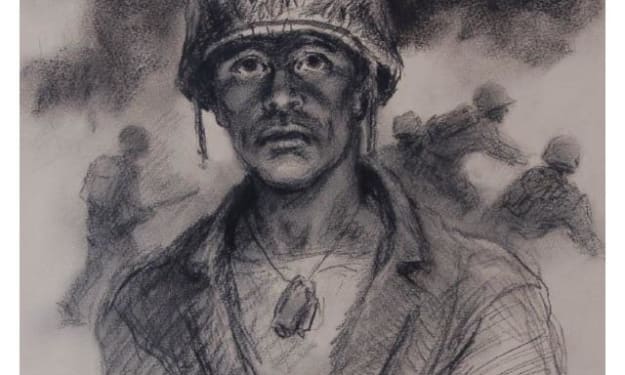
The medic who fought a war without a weapon. Desmond Das was not your average hero. He would become a Medal of Honor recipient, the United States of America's highest and most prestigious military award as a combat medic who saved many of his comrades lives in battle without firing a single shot, because he didn't take a weapon into combat because of his religious beliefs. Desmond DOS was born in 1919 in the state of Virginia, and was raised as a strict Seventh Day Adventist, a Christian denomination that believed that Saturday was the Sabbath, and that the Second Coming of Jesus Christ was imminent. They also believe strongly in non violence and a healthy diet based typically on a vegetarian diet. Dos had been raised with a strict belief in the Bible, and when it came to the 10 commandments, he took them to be the core values of how to lead his life. When World War Two started, he was conflicted as he believed the war was a just one, but he felt that to kill another human being under any circumstance was wrong. He was already employed as a joiner at Newport News Naval Shipyard, but nevertheless, he joined the United States Army on April 1 1942. He could have requested a deferment, but he wanted to do his patriotic duty. He was assigned to an infantry unit, the 77th division and presume that his classification as a conscientious objector would not require him to carry a weapon. For DOS, one commandment of the Bible stuck with him the most Thou shalt not kill. He wondered why he was assigned as a rifleman, and not in a medical role. His commanding officer tried to pressure dos into carrying a weapon as they thought he would be more of a liability than an asset in combat, but das refused. Interestingly, even for medics, which das would later become, it was common practice at the time to carry either an M 1911, A one pistol, or M one carbene. for self defense purposes. The rules go that a medic under the Geneva Convention is not forbidden from carrying a weapon. But if a medic fires his weapon, he stops being classed as a medic, and therefore can be legitimately fired upon by the enemy. The regimental chaplain, Captain Stanley would soon understand Dawson's protests and helped him transfer from rifleman to medical training. To make matters worse, his fellow soldiers mocked his religious beliefs when he was reading the Bible daily and strictly observing the Seventh Day Adventist tradition of attending church every Saturday. Das continuously requested to be allowed to have Saturday's off rather than Sundays, in order to follow his Adventist beliefs at Saturday was to be observed as the Sabbath. In the end, Captain Stanley took this up with divisional headquarters and it was decided that event US soldiers would have Saturday's off just as the other men had Sunday off. This in fact made dos even more unpopular than ever with his fellow soldiers, as he was seemed to have it easy. As he had Saturday's off none were on base on Sundays to see him pull extra duties to make up for this. One of the squads other soldiers summed up the company's feeling about him and as Saturday's off complaining, you get more passes than the general as Das was a strict vegetarian at a time when it was unusual. It meant that the rest of the unit viewed dos with such distrust and hostility that one man in his unit even warned him ominously, when we go into combat DOS, you're not coming back alive. I'm going to shoot you myself. does eventually became an Army combat medic saying while others are taking life, I will be saving it. The turning point for Dawson, his relationship with his company came with their first 25 mile march with full field pack and rifle, something they were expected to achieve in eight hours. The other soldiers thought dos would be having it easy as he would be carrying no rifle or ammo that day, but his to Canvas medical bags were almost as heavy and much more awkward to carry than any rifle. As the march progressed, the men started to suffer from exhaustion, numerous blistered feet and dehydration, some even passed out. At all the time there was DOS, always with a helping hand. Even to the extent that at the end of the March, he insisted on checking everyone's feet and administering medical aid where it was needed. By the end of that day, he had won the respect of his entire unit for his tireless devotion to his duty. For the first time, he was treated as one of their own. Dos as the qualified combat medic of the unit was now responsible for providing first aid and Frontline trauma care on the battlefield. He would be assigned to accompany his unit into the war zone and be there with them on the front line at all times. This was soon to happen for the 77th division had had their first combat experience on May 11 1943. And Dawson has comrades were urgently are being trained up to replace the combat losses and help expand the division strength. The 77 division would end up being in combat officially for no less than 208 days, suffering a total of 9212 casualties before the war would end. The Battle of Guam DOS, his first taste of combat was at the Battle of Guam, which was a bloody battle fought from July 21 to August 10 1944 to recapture the US territory of the island of Guam from a determined Japanese garrison of nearly 20,000 troops. Though according to the Geneva Convention, knowingly firing at a medic wearing a clear insignia is a war crime. The Japanese snipers and machine gunners tended to ignore this and saw combat medics as easy and valuable targets to gun down. So medics in the Pacific Theater were often told to avoid wearing medical insignia in case it would make them more not less of a target. DOS was under fire nearly every day during the battle and was busy doing his part in saving lives. Guam had shown dos how cruel war could be, as His unit was pushing forward through the jungle on their first day, a young fresh face recruited spotted a fountain pen laying on the jungle floor and went to pick it up. Before anyone could warn him otherwise, a white phosphorus grenade exploded. The pen had been booby trapped. The young man who had picked up the pen his chest now a bloody mess, had blood pouring out of an open wound, severe burns and sharp metal fragments covered his body and he was going into shock. by some miracle, das managed to stabilize his condition, administering care and helping to evacuate him and three other soldiers who had been wounded by flying red hot shrapnel. This was Dawson's first taste of combat casualties. The US casualties during the battle was truly appalling. Of the 59,000 US troops who took part in the invasion around every one in six were either killed or wounded. The Battle of Lady next Dawson, His unit was involved in the Battle of lady in the Philippines that ran from October 17 to December 26 1944, a vicious and prolonged battle which started with a huge us coastal bombardment and in Fibia s landing, followed by heavy fighting, the more inland the Americans went. During the Japanese counter attack a fellow medic, Clarence Glen had heard the call for a medic from a machine gunner. He left the cover and went into the open into no man's land to get the wounded man and was himself hit. Glen was dos his friend from back home and he couldn't leave him there. So he and a litter bear herb Schecter went out to find the two wounded and dealt with them separately. Das was attending the machine gunner who had a gash along his face while bullets wisdom or head. Both of the wounded were alive. They made an improvised litter out of a poncho and tree branches to get the wounded men back to the aid station. But his friend Glenn would die before he made it. From this point on, Doss would not look the face of the man he was treating, in case it was another friend. Sadly, his friend herb would be shot and killed when he indoors were carrying a litter, as their silhouette exposed them against the sky to the enemy. On top of losing his friends, DOS was constantly hungry, because the meat in the K rations conflicted with his vegetarianism, so he could only eat the tasteless crackers and coconuts he found. A lady the coconuts on the ground gave him diarrhea, so he climbed the trees for fresh ones. At one point DOS was looking for coconuts that attracted poorly aimed Japanese machined on fire. When they were killed by American soldiers. It was later discovered that they had been drunk on Sunday. One thing that shocked dos during the most devastating times of the campaign was that the same man who had made threats towards him during training at Fort Jackson now came to Him for guidance and to pray for him. The Battle of Okinawa and lastly for DOS and the 77th Infantry Division was a battle that was to be the bloodiest battle of the war in the Pacific, as well as its largest amphibious landing. The US objective was to secure the island as a base as it was just 350 miles south of the Japanese mainland, and would be strategically crucial for any future invasion of Japan. The battle started on April 1 1945, exactly three years to the day that dos first enlisted in the Army and the battle was to last 81 days. DOS was assigned to the first battalion as their combat medic, on April 29 1945 to 77 division was given the task of assaulting on a 400 foot high cliff called the mitre escarpment. This was nicknamed by the Americans as Hacksaw Ridge. Before they climb the cargo net dos set a prayer for his comrades. When Dawson's unit joined the assault, and as they near the top of the escarpment they came under intense Japanese artillery. It's mole arms and machine gunfire, inflicting severe casualties on the assaulting American troops.
By BRIAN CERVIN LIM2 years ago in History
Albert Einstein
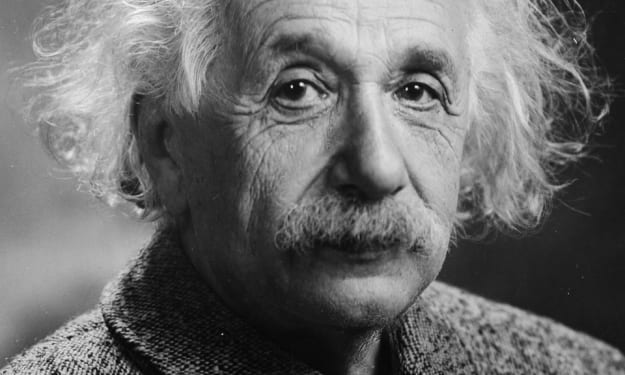
On March 14, 1879, Albert Einstein—a name linked with brilliance and ground-breaking scientific advancements—was born in Ulm, in the German Empire's Kingdom of Württemberg. He is still regarded as one of the most famous people in scientific history, greatly influencing our comprehension of the cosmos with his groundbreaking physics theories.
By jodan david2 years ago in History
Ikenna Ike- American football evolution and history.
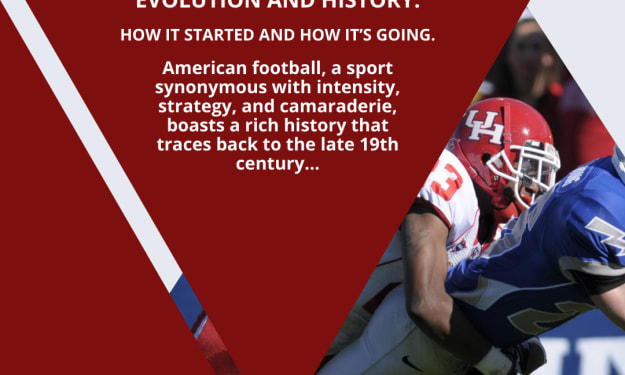
American football, a sport synonymous with intensity, strategy, and camaraderie, boasts a rich history that traces back to the late 19th century. Born out of a blend of rugby and soccer influences, the game has evolved into a national obsession, captivating millions of fans each year. Let's embark on a journey through the key milestones, transformations, and cultural impacts that have shaped the history of American football.
By Ikenna Ike2 years ago in History
Sealing Dreams / A journey of Hope accross the mediterranean waves
In the serene coastal village of Djuma, nestled between verdant hills and the embrace of azure waters, a group of individuals, marked by tales of hardship and dreams of a brighter future, gathered on the moonlit shores. Among them was Amina, a young woman whose eyes bore witness to the weight of her past and the hope for a tomorrow free from the struggles that clung to their homeland.
By Billy Seye2 years ago in History
A journey to fulfill the African dream
In the heart of Africa, where the sun kisses the earth with its golden warmth, there existed a village named Kwabena. Nestled between rolling hills and vast savannahs, the people of Kwabena dreamt of a brighter future – a dream that echoed the spirit of the African Dream.
By Billy Seye2 years ago in History
Top Qualities of Anime Swords
What are anime swords you may ask? These swords, as the name suggests, are swords that are used in manga and anime. The appearance of these weapons is usually quite different from actual steel blades. They can be much longer with extravagant designs that make combat more exciting for the viewer. Also, because they don't need to be made from steel, they can have special abilities beyond just slicing through things.
By Mai Sophia2 years ago in History
TIME's Person of the Year 2023: Unveiling the Inspirational Journey of Taylor Swift. Content Warning.
Introduction: In a momentous announcement that resonated across the globe, TIME magazine named Taylor Swift as the 2023 Person of the Year. The phrase "TIME Names the 2023 Person of the Year: Taylor Swift" echoed through headlines, symbolizing not just a recognition of Swift's musical prowess but also her profound impact on culture, activism, and resilience. Let's delve into the multifaceted journey that led to this prestigious accolade and explore the significance of Taylor Swift's influence in 2023.
By Laxman Chandrabanshi2 years ago in History
Unraveling the Enigma
As we gaze into the vastness of human history, a question lingers on the edges of our collective curiosity: Were there civilizations that preceded our own? The history we are familiar with stretches back thousands of years, but the possibility of lost, forgotten, or even advanced societies existing before recorded history has intrigued scholars and enthusiasts alike. In this exploration, we embark on a journey through the annals of time, unraveling the enigma of potential civilizations that may have thrived on Earth long before us.
By Karthiga Elangovan 2 years ago in History
Ikenna Ike- How female American football came to be.
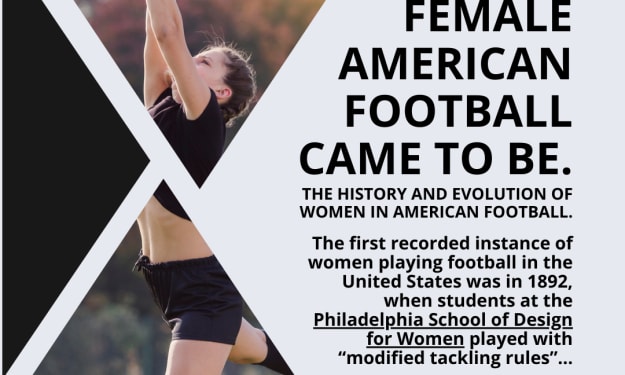
The first recorded instance of women playing football in the United States was in 1892, when students at the Philadelphia School of Design for Women played with “modified tackling rules.” Starting in the 1890s, there were also numerous articles alluding to students at women’s colleges playing football, such as Wellesley College in Massachusetts and Vassar College in New York. However, these games were mostly informal and not competitive, and they were often reported in the media as a novel “spectacle”.
By Ikenna Ike2 years ago in History