Events
The World After Alexander: The Hellenistic Age and the Struggle for Power
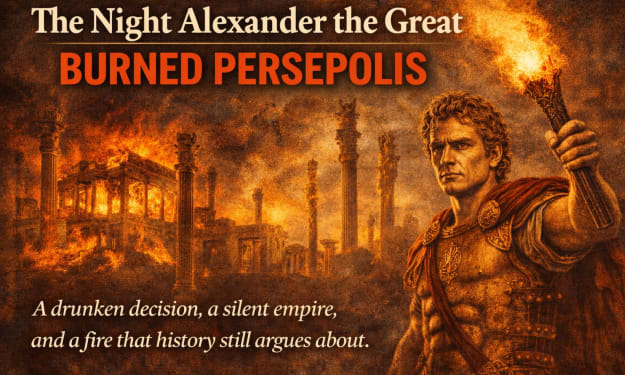
When Alexander the Great died in 323 BCE at the young age of 32, he left behind the largest empire the ancient world had ever seen. Stretching from Greece and Egypt to Persia and the edges of India, his empire united diverse lands under a single ruler. Yet Alexander’s sudden death created a massive power vacuum. He had no clear heir, no formal system of succession, and no time to consolidate his rule. What followed was a turbulent period of wars, political intrigue, and cultural transformation known as the Hellenistic Age.
By Say the truth 6 days ago in History
The Life History of Alexander the Great: The Rise of a Legendary Conqueror
Early Life and Family Background Alexander was born in Pella, the capital of the Kingdom of Macedonia. His father, King Philip II, was a powerful ruler who transformed Macedonia into a dominant military force. His mother, Olympias, was a princess from Epirus and a deeply religious woman who strongly believed her son was destined for greatness.
By Say the truth 6 days ago in History
The Great Masjid of Cordoba
The Great Masjid of Córdoba, also known as the Mezquita of Córdoba, is one of the most beautiful and important buildings in the world. It is located in the city of Córdoba, in southern Spain. This building is not only a place of worship, but also a symbol of history, culture, and coexistence. When people visit it, they do not just see stone and arches—they feel the story of many centuries.
By Nawaz Hassan7 days ago in History
The Vredefort Impact Crater: Earth’s Oldest and Most Valuable Cosmic Scar
Origins of a Cataclysmic Event Approximately 2.02 billion years ago, a massive asteroid—estimated to be 10 to 15 kilometers in diameter—collided with Earth at an unimaginable speed of around 20 kilometers per second. The energy released by this impact exceeded 10 billion Hiroshima-sized atomic bombs, making it one of the most violent events ever recorded in Earth’s geological history.
By Say the truth 8 days ago in History
Why Clergy Attire for Men Is the Perfect Minister Outfit for 2026
Clergy attire for men is clothing, it represents respect, tradition, and a sense of purpose. In today’s ministry, comfort and practicality are just as important as style. Many pastors and church leaders face the challenge of looking professional while remaining comfortable during long hours of ministry. A well-chosen minister's outfit can solve this problem, allowing clergy to focus on their work without distraction. In this article, we’ll explore why clergy attire for men is ideal for ministry and comfort in 2026 and beyond.
By Sameera eclergys9 days ago in History
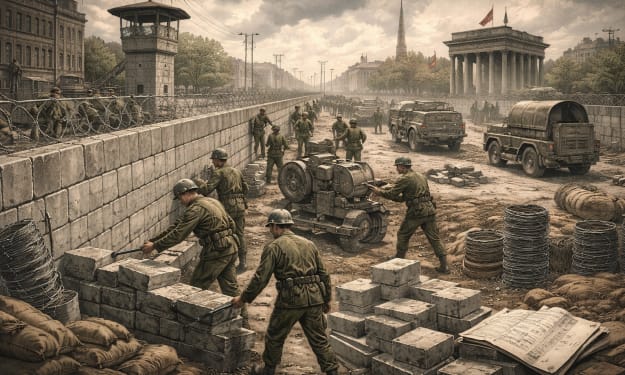
The Price of Division: The True Cost of Building the Berlin Wall
Construction Cost of the Berlin Wall: An Economic and Historical Analysis Introduction The Berlin Wall remains one of the most powerful symbols of the Cold War, representing the ideological, political, and economic divide between East and West Germany from 1961 to 1989. While the Wall is often discussed in terms of its political significance and human cost, less attention is paid to the financial burden involved in its construction, maintenance, and security. Understanding the construction cost of the Berlin Wall offers valuable insight into the economic priorities of the German Democratic Republic (GDR) and the broader Cold War environment.
By Say the truth 9 days ago in History
The Net Worth of Nazi-Looted Wealth in History An Examination of One of the Largest Organized Thefts Ever Recorded. AI-Generated.
--- ## **What Was Nazi-Looted Wealth?** Nazi-looted wealth refers to assets stolen or forcibly seized by the Nazi regime between 1933 and 1945. This looting was not random; it was highly organized and supported by state policies.
By Say the truth 9 days ago in History