Discoveries
What I wanted if I was born in the 1820
Early Nigerian culture The Nok culture Evidence of human occupation in Nigeria dates back thousands of years. The oldest fossil remains found by archaeologists in the southwestern area of Iwo Eleru, near Akure, have been dated to about 9000 BCE. There are isolated collections of ancient tools and artifacts of different periods of the Stone Age, but the oldest recognizable evidence of an organized society belongs to the Nok culture (c. 500 BCE–c. 200 CE)
By Divitha Randy3 years ago in History
The Top 10 Sporting Events That Bring the World Together
Games have long held a unique spot in our shared perspective, rising above boundaries, societies, and dialects to join individuals from varying backgrounds. They act as stages where competitors feature their expertise, enthusiasm, and assurance, motivating millions all over the planet. In this far reaching article, we will leave on an excursion through the main 10 games that have become inseparable from worldwide solidarity, cultivating a feeling of brotherhood and shared energy. From the Olympic Games to the FIFA World Cup, these occasions have caught the hearts of fans overall and set their situations as the apex of athletic greatness.
By Arun Karunakaran3 years ago in History
Independence Day is upon us.
The Declaration of Independence, a seminal document in American history, outlines several key ideas and principles that have had a profound impact on the development of democratic societies worldwide. Adopted by the Continental Congress on July 4, 1776, the Declaration expresses the motivations behind the American colonies' decision to separate from Great Britain and serves as a declaration of the fundamental rights and values upon which the United States was founded. This essay will delve into the key ideas and principles outlined in the Declaration of Independence, exploring their significance and enduring influence.
By Adebisi Ayodele3 years ago in History
The First Man in the Moon
The First Man in the Moon Neil Armstrong was the eldest of three children born to Viola Louise Engel and state auditor Stephen Koenig Armstrong. Neil's interest in aviation and flight began when he took his first airplane ride at the age of six. He was a Boy Scouts of America member who attained the highest rank available, Eagle Scout. On his 16th birthday, he became a certified pilot and a navy air cadet in 1947. His studies in aeronautical engineering at Purdue University in West Lafayette, Indiana, were cut short in 1950 owing to his participation in the Korean War, during which he was shot down once and received three Air Medals.
By greddy drifter3 years ago in History
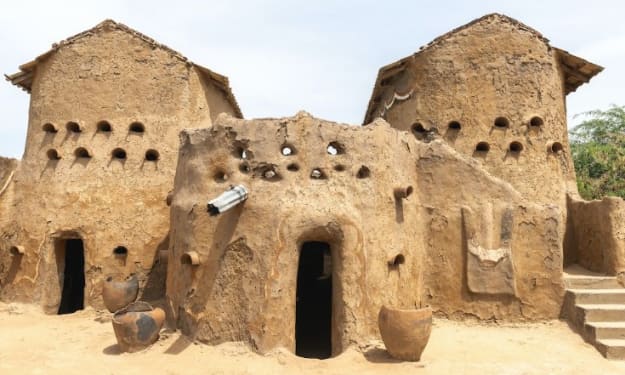
Africa's Pre-Colonial Achievements: Unveiling the Continent's Rich Heritage
European settlers carried their own opinions on the African way of life with them when they first arrived in the continent. They considered the loincloths, grass huts, and thatched roofs to be primitive in comparison to their own ideals of civilization because they were from colder climes that required the usage of clothing. Three essential components—commerce, civilization, and Christianity—were brought with the goal of "improving" Africa. The spread of Christianity had a particularly negative effect since it forced Africans to give up their own identities and accept new ones, even though Africa had already created its own forms of trade and civilization under the influence of capitalist nations. Africans were baptized in the names of foreign gods and saints, and colonization was sold as a rise of humanity from its pre-existing condition.
By Joel Edward Gblee3 years ago in History