
The First Man in the Moon
First man reach the moon

The First Man in the Moon
Neil Armstrong was the eldest of three children born to Viola Louise Engel and state auditor Stephen Koenig Armstrong. Neil's interest in aviation and flight began when he took his first airplane ride at the age of six. He was a Boy Scouts of America member who attained the highest rank available, Eagle Scout. On his 16th birthday, he became a certified pilot and a navy air cadet in 1947. His studies in aeronautical engineering at Purdue University in West Lafayette, Indiana, were cut short in 1950 owing to his participation in the Korean War, during which he was shot down once and received three Air Medals.
He graduated in 1955 and immediately went to work as a civilian research pilot for the National Advisory Committee for Aeronautics (NACA), subsequently the National Aeronautics and Space Administration (NASA). He flew almost 1,100 hours, putting numerous supersonic fighters and the X-15 rocket jet through their paces.
Armstrong joined the space program's second group of astronauts in 1962. On March 16, 1966, Armstrong, as command pilot of Gemini 8, and David R. Scott accomplished the first manual space docking procedure with an unmanned Agena rocket. Following the docking, a rocket engine failure drove the spacecraft into an uncontrollable spin, forcing them to disengage from the Agena. After regaining control of the Gemini spacecraft, Armstrong conducted an emergency splashdown in the Pacific Ocean.
Neil Armstrong, the courageous astronaut who made history as the first person to set foot on the moon, inspired generations to reach for the stars. Born in 1930 in Ohio, Armstrong's love for aviation began early, as he earned his pilot's license at 16 and later became a skilled test pilot and aerospace engineer. Selected as an astronaut in 1962, Armstrong's momentous journey to the moon began with NASA's Apollo 11 mission, which launched on July 16, 1969 with Buzz Aldrin and Michael Collins.
On July 20, 1969, Armstrong stepped onto the lunar surface, declaring that's one small step for man, one giant leap for mankind. Neil Armstrong passed away in 2012 but his legacy as a pioneer of space exploration and a symbol of human achievement endures, inspiring future generations to push the boundaries of the possible. Did you know? Neil Armstrong brought a piece of the Wright Brothers' 1903 airplane with him to the moon as a tribute to the pioneers of aviation.
After 21 hours and 36 minutes on the Moon, they lifted off to meet Collins and begin the journey back to Earth on July 21. After splashing down in the Pacific at 12:51 p.m. EDT on July 24, the three astronauts were quarantined for 18 days to avoid possible infection by lunar germs. They were celebrated for their role in ushering in a new age of human exploration of the universe in the days that followed, and on a tour of 21 nations.
In 1971, Armstrong resigned from NASA. After Apollo 11, he avoided public appearances and focused on academic and professional pursuits. He was a professor of aerospace engineering at the University of Cincinnati (Ohio) from 1971 until 1979. Armstrong served as chairman or director of many firms after 1979, including Computing Technologies for Aviation from 1982 to 1992 and AIL Systems (later EDO Corporation), a manufacturer of military electronic equipment, from 1977 until his retirement in 2002.
He also served on the National Commission on Space (NCOS), a body entrusted with defining goals for the space program, as well as the Presidential Commission on the Space Shuttle Challenger Accident, which was formed in 1986 to investigate the Challenger disaster's safety flaws. In 1969, he received the Presidential Medal of Freedom, in 1978, the Congressional Space Medal of Honor, and in 2009, the Congressional Gold Medal.
About the Creator
Keep reading
More stories from writers in History and other communities.
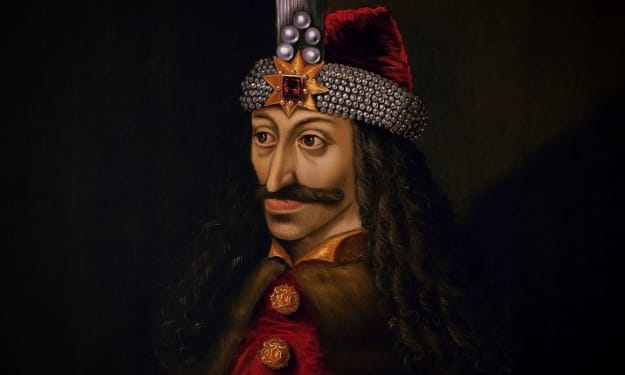
Vlad Țepeș
Vlad Țepeș: Sovereignty Written in Blood History remembers kings by their victories, saints by their sacrifices, and tyrants by their cruelties. Vlad Țepeș is remembered by all three and understood by none. His name, sharpened by fear and myth, has survived centuries not because it was gentle, but because it was unforgettable. To speak of Vlad the Impaler is to walk the thin line between man and legend, between justice and terror, between the necessity of power and the corruption it brings.
By Pure child4 days ago in History
3 Things That Were Invented for Good Reasons and Used for Terrible Ones
Human history is full of optimism. Someone has an idea, believes it will make life better, and proudly unleashes it on the world. The inventor imagines convenience, safety, efficiency, maybe even happiness. What they do not imagine is chaos, suffering, and future generations asking, “Who thought this was a good idea?”
By Enoch Sagini5 days ago in History



Comments
There are no comments for this story
Be the first to respond and start the conversation.