Discoveries
HOW CRUISE SHIPS GOT SO BIG
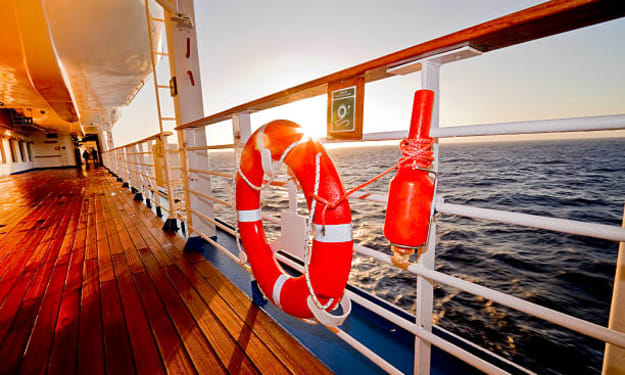
In the realm of watercraft, there exist small and large boats, and then there are the truly massive vessels, such as the MSC Meraviglia. This cruise ship was constructed in Saint-Nazaire, France in 2017 and was christened by Sophia Loren. It is the largest cruise ship to have ever docked in New York City, boasting an impressive array of amenities, including a water park, rope course, spa, mall, arcade, bowling alley, casino, gym, two theaters, five pools, nine restaurants, 23 bars, and 19 floors, with enough space to accommodate 5,655 passengers and 1,536 crew members. Cruise ships are the largest passenger vessels ever built, capable of transporting an entire small town's worth of people in a single vehicle. However, their appearance differs greatly from the transatlantic ships of a century ago.
By Austine Ochieng 2 years ago in History
Exploring the Ancient Alien Theory
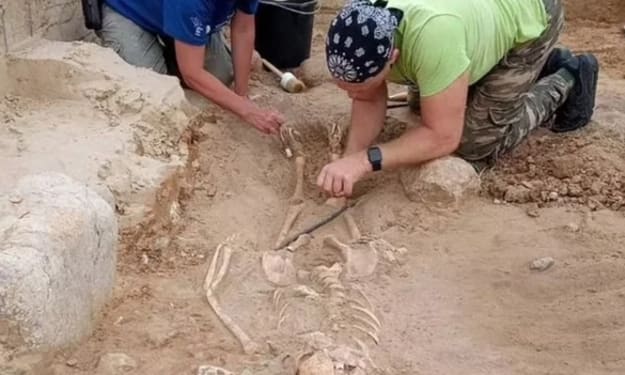
When delving into the annals of history and the significant events that have shaped our world, we often find ourselves relying on the interpretations of great writers, scholars, and archaeologists to uncover the truths behind pivotal moments. However, as the digital age transforms our access to information, the certainty of historical accounts becomes increasingly vulnerable to reinterpretation.
By BossFactor2 years ago in History
Why Titanic didn't had enough lifeboats?
In James Cameron's 1997 blockbuster film, Titanic, there's a memorable moment where Rose, played by Kate Winslet, realizes a critical fact about the lifeboats: "It seems that there are not enough for everyone aboard." The response from Victor Garber's character, Titanic's architect Thomas Andrews, is both confident and poignant: "I have built a good ship, strong and true. She's all the lifeboat you need." Given the foreknowledge of the tragic outcome, this line takes on a bitter irony, embodying the essence of how the Titanic was designed and the fateful errors that unfolded.
By Shubham Bajaj2 years ago in History
Why queen Elizabeth 2nd was the queen of 15 countries!?
On November 30th, 2021, history was made as Barbados proudly emerged as the world's newest republic. With a resounding declaration, the transformation was solidified: "From this day and forever, declare Barbados a parliamentary republic." This pivotal moment marked the culmination of a journey that saw Barbados unfurl its own flag, symbolizing the end of a colonial era spanning over 350 years and dissolving its ties to the British royal family. What added an intriguing layer to the event was the presence of none other than Prince Charles, who acknowledged, "It was important that I should join you to reaffirm those things which do not change."
By Shubham Bajaj2 years ago in History
The Remarkable Discovery of the Lost Tombs of the Pharaohs
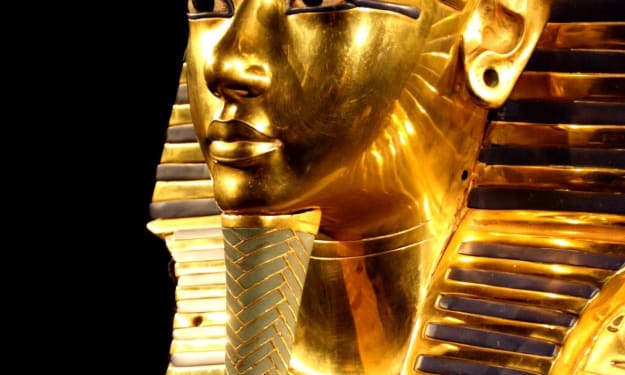
In the heart of the scorching Egyptian desert, an international team of archaeologists embarked on an audacious expedition to unravel one of history's greatest mysteries: the elusive tombs of the Pharaohs that had eluded discovery for centuries. Armed with cutting-edge technology and unwavering determination, they set out on a journey that would rewrite history books and capture the world's imagination.
By mostafa ali2 years ago in History
How the 'lost cities' of amazon were finally found
Meet Percy Fawcett, the intrepid British explorer whose journey into the heart of the Amazon rainforest in 1925 marked the last known communication from him. This was his eighth expedition into the Amazon, driven by a singular objective: the pursuit of a fabled lost city, dubbed "Z". This quest was fueled by age-old rumors that whispered of sprawling cities nestled deep within the dense rainforest, a notion that captured Fawcett's imagination. Yet, despite his unwavering determination, Fawcett's search for "Z" and other mythical cities remained unfruitful, leaving many to believe that the Amazon's untamed wilds were incompatible with the existence of urban centers.
By Shubham Bajaj2 years ago in History
The Evolution of Anesthesia in Medical History
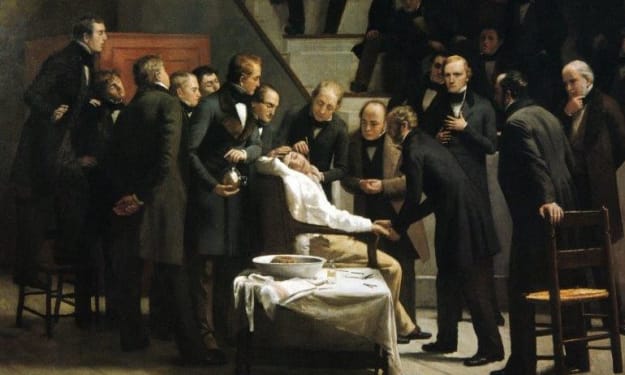
Imagine a time when medical procedures were performed without the comfort of numbing or unconsciousness. It was a time of great suffering, as patients had to endure excruciating pain while doctors hurried to complete their work. In the 1830s, a notable example was Scottish surgeon Robert Liston, celebrated for his incredible speed in the operating room. Picture this: a patient lying on the table, medical students holding them down, and curious onlookers awaiting the surgeon's skilled hands. With swift and precise movements, Liston cut through flesh, sawed through bones, and within mere minutes, an amputation was done. This scene captures the harsh reality of pre-anaesthesia surgeries. Patients had to remain fully conscious throughout the procedure, experiencing every sensation, every cut, and every stitch.
By Anita Nelima2 years ago in History
Coca-Cola: A Journey of Bubbles and Beyond
Introduction: Bubbles of Curiosity The history of Coca-Cola is one of the few stories that, in a world where innovation surges up like a vibrant torrent, truly captures the spirit of human endeavor. The story of this fizzy elixir spans time, culture, and business, from its humble beginnings as a medical tonic to its current significance as a universal symbol. Join us as we embark on a storytelling journey through the history of Coca-Cola and step inside a world where magical fizz and caramel hues mix.
By Ahsan Bashir2 years ago in History
The Hidden Alliance
Long ago, in the ancient land of Egypt, a majestic civilization flourished. Among their many remarkable achievements, the Egyptian pyramids stood as a testament to their extraordinary architectural prowess. These colossal structures, shrouded in mystery and wonder, were believed to be the final resting places of the pharaohs. But what if there was more to their creation than meets the eye?
By Alhassan Iddrisu2 years ago in History