Discoveries
The Atlantic slave trade
The Atlantic slave trade, spanning from the late 15th to the mid-19th century and touching three continents, forcibly transported over 10 million Africans to the Americas. This historical atrocity left an indelible mark on those enslaved, their descendants, and the economic and cultural fabric of large parts of the world. It all began with Portuguese colonies in West Africa and the subsequent Spanish colonization of the Americas. The demand for labour to cultivate labour-intensive crops like sugar, tobacco, and cotton outstripped the supply of European settlers and indentured servants. Native Americans were initially enslaved but succumbed to new diseases, and others resisted, prompting the Europeans to turn to Africa.
By Triumph Ufaruna2 years ago in History
From Caesar to Colosseum:
1. The Rise of Julius Caesar Julius Caesar, a name synonymous with power and ambition, played a pivotal role in shaping the Roman Empire. He rose from a humble background to become one of Rome's most influential leaders. His military conquests, political acumen, and legendary crossing of the Rubicon River changed the course of history. But his rise to power wasn't without its share of controversies and conspiracies.
By Jan Hopper2 years ago in History
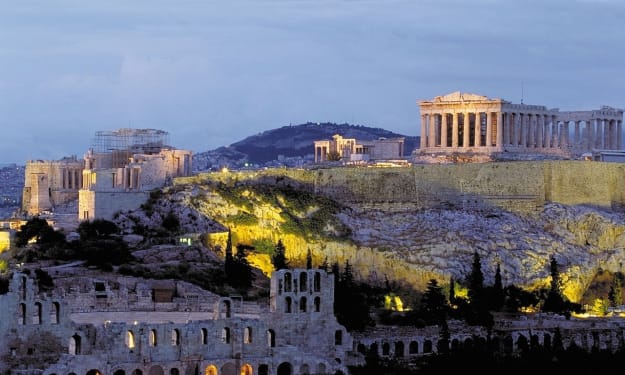
How Was The Parthenon Built So Perfectly?
Perched majestically atop the Acropolis in Athens, Greece, the Parthenon stands as one of the world's most splendid and aesthetically pleasing architectural wonders. This grand temple, covering an expanse of 23,000 square feet, boasts an impressive facade composed of 100,000 tons of radiant white marble. The exterior of the Parthenon is adorned with a series of 46 colossal columns, meticulously arranged to create the illusion of an exact rectangle. What's particularly fascinating is that the construction of this masterpiece, comprised of over 13,000 stone blocks, was accomplished without the use of mortar, raising the intriguing question: How did the ancient Greeks achieve such a level of precision?
By Cornelious Nyabuto2 years ago in History
What Caused The Phoenix Lights Phenomenon?
The narrative of the Phoenix Lights phenomenon in 1997 remains an enigmatic and unexplained event that has left a profound mark on the world of UFO sightings and unidentified aerial phenomena. At approximately 6:55 p.m., reports of a massive V-shaped, unidentified flying object began pouring in to the police in a small desert city. Over the course of the next three hours, thousands of individuals bore witness to this intriguing craft as it made its way southeast into the state of Arizona, creating an enduring mystery that has come to be known as the Phoenix Lights incident.
By Cornelious Nyabuto2 years ago in History
Are We Alone In The Universe?
In the annals of unidentified flying objects (UFOs) and unexplained aerial phenomena, the events of July 1952 in Washington, DC, have etched a significant chapter. The Washington National Airport's control tower had settled into what seemed like an uneventful evening on July 19, 1952. However, that tranquility was abruptly shattered when air traffic controller Harry Barnes detected multiple unidentified flying objects in the skies just 15 miles south of the city.
By Cornelious Nyabuto2 years ago in History
The St. Brice's Day Massacre of 1002
The year 1002 in England witnessed a gruesome event known as the St. Brice's Day Massacre. This massacre serves as a poignant reminder of the intricate and multifaceted nature of history, revealing the complex interplay of human motivations and the ambiguous boundaries between cultures during the Viking Age. It stands as a testament to the reality that historical events cannot be distilled into simplistic narratives. Instead, they are shaped by a convoluted network of circumstances, cultural affiliations, and religious convictions. In this article, we will delve into the historical context, tensions and conflicts, individual motivations, cultural affiliations, and religious convictions surrounding this event to unravel the complexities of the Viking Age.
By Johnny Six2 years ago in History
Unrevealing The Unknown Facts Of Pharaoh Tutankhamun 👑
In the heart of ancient Egypt, amidst the golden sands and enigmatic pyramids, a young Pharaoh reigned whose name has echoed through millennia - Tutankhamun, often affectionately known as "King Tut." While many have heard of this iconic Egyptian ruler, there are some lesser-known facts about his life and his incredible tomb that continue to intrigue and mystify us to this day.
By Global Education2 years ago in History
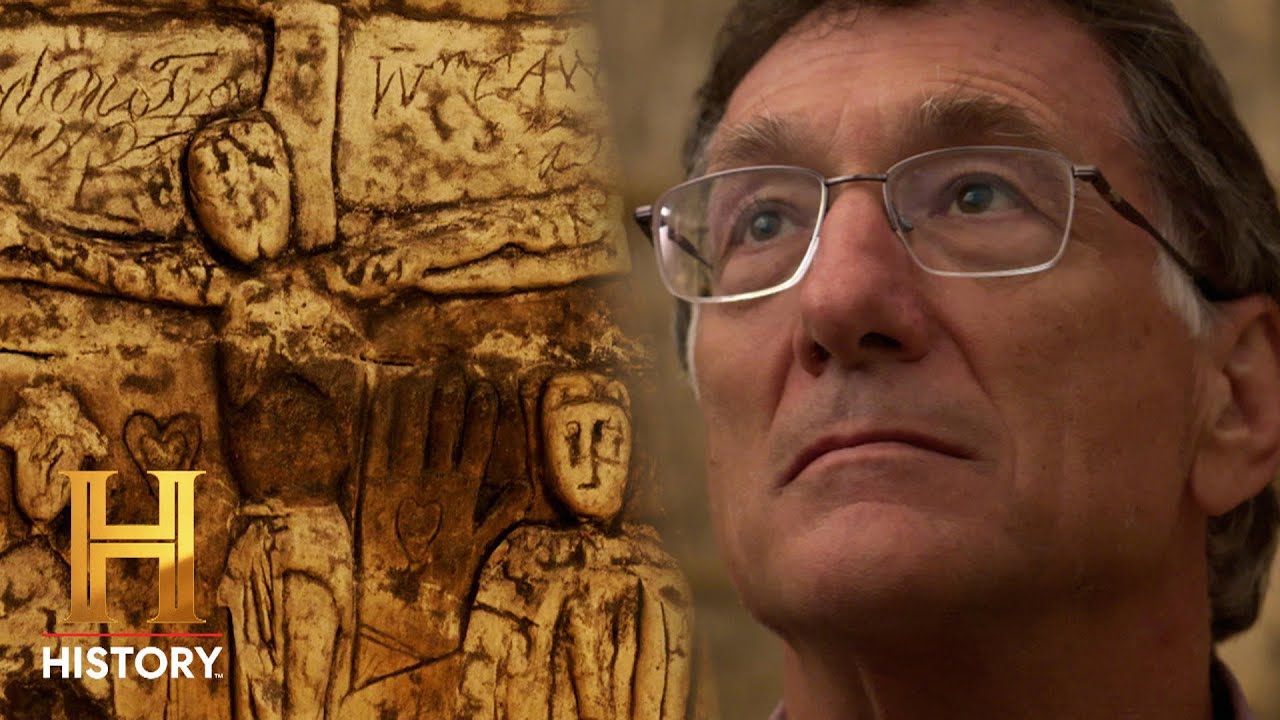
"Unearthing Templar Mysteries: Exploring Royston Cave's Link to Oak Island"
The scene opens with background music playing as the camera captures the figure of Gretchen, who greets the team with warmth and genuine enthusiasm. The fact that they are meeting her in person adds an air of anticipation to the encounter. From this point, the narrative takes us on a journey approximately 2,900 miles away to the picturesque town of Royston, England.
By Benjie Maybuena2 years ago in History
"Unearthing Oak Island's Secrets: The Garden Shaft Rehabilitation Project"
Geologist Terry Matheson, surveyor Steve Guptill, and Oak Island historian Paul Troutman were engrossed in the intricate task of monitoring the core drilling operation in borehole 8.5 N-13.5. Just a day ago, they had stumbled upon something enigmatic – a mysterious 10-foot void at a depth of 55 feet. This discovery had ignited a spark of excitement, setting their hearts racing. Determined to unveil the island's well-kept secrets, the team made a collective decision to keep drilling, this time venturing deeper, below the 100-foot level. Their hope was to once again cross paths with the elusive wooden tunnel, rumored to be heading toward the nearby Garden Shaft.
By Benjie Maybuena2 years ago in History