
How Was The Parthenon Built So Perfectly?
Historical Mysteries

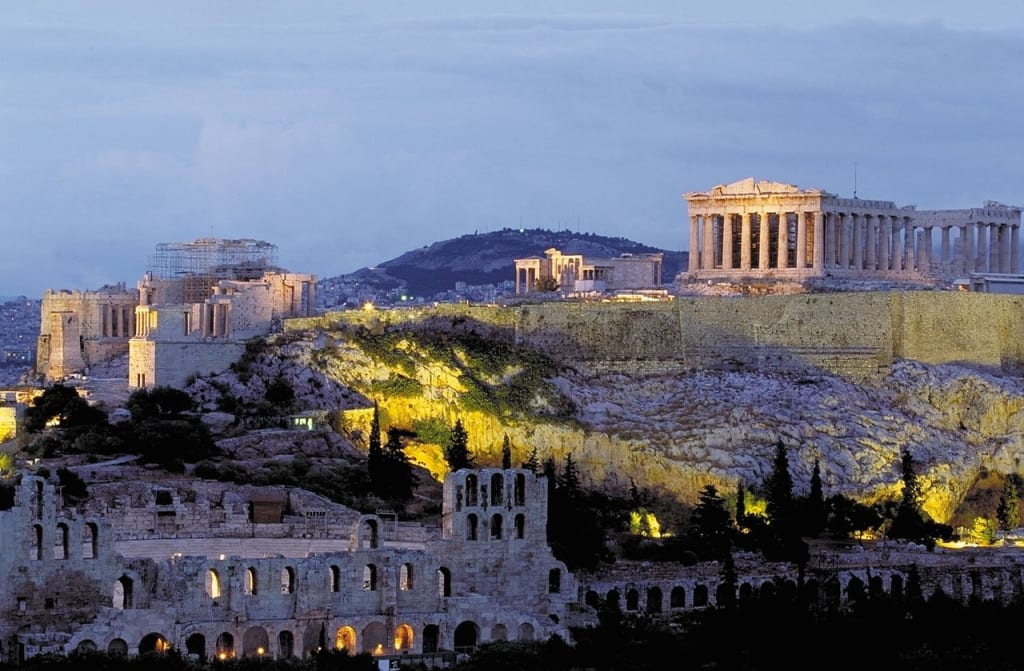
Perched majestically atop the Acropolis in Athens, Greece, the Parthenon stands as one of the world's most splendid and aesthetically pleasing architectural wonders. This grand temple, covering an expanse of 23,000 square feet, boasts an impressive facade composed of 100,000 tons of radiant white marble. The exterior of the Parthenon is adorned with a series of 46 colossal columns, meticulously arranged to create the illusion of an exact rectangle. What's particularly fascinating is that the construction of this masterpiece, comprised of over 13,000 stone blocks, was accomplished without the use of mortar, raising the intriguing question: How did the ancient Greeks achieve such a level of precision?
The Parthenon is a testament to the exquisite artistry of its design, a structure that epitomizes beauty and precision. Every stone in this architectural marvel appears to have been meticulously chosen and placed, exuding a sense of perfection that is awe-inspiring. The proportions, which are particularly crucial for a structure of this scale, are executed with an extraordinary degree of accuracy. Gazing upon it is an experience that elevates the spirit.
Constructed under the guidance of the renowned statesman and general Pericles, commencing in 447 B.C., the Parthenon was intended to commemorate the Athenians' triumph over Persian invaders, who had besieged the city for half a century. The Athens of that era was a bustling cosmopolitan hub, teeming with vibrant cultural production, including art, literature, sculpture, and architecture. It was akin to the Manhattan of the 5th century B.C. A citizen of Athens, going about their daily routine, would encounter the Acropolis, a radiant hill, and at its center, the gleaming marble structure of the Parthenon, the most extensive and magnificent Greek temple known in mainland Greece at that time, leaving them awestruck with wonder.
Although the interior of the Parthenon has suffered significant deterioration over time, its rectangular symmetry remains impeccable to this day. Yet, the paradox of the Parthenon lies in its imperfections, which is an aspect that renders it even more intriguing. Surprisingly, for a temple that seems to have been meticulously crafted for perfection, what makes the Parthenon so captivating is the calculated inclusion of certain imperfections.
The ancient Greeks were not only masters of geometry but also astute manipulators of optical illusions. They comprehended that human perception could be influenced by the brain's tendencies to play tricks. Consequently, they deliberately constructed the Parthenon with slight deviations from perfect alignment to create an optical illusion of flawless precision.
Although the Parthenon presents as a rectangle, it is devoid of any right angles in its design. Nothing within this architectural marvel conforms to the conventional notion of straight lines. While the columns appear perfectly vertical when viewed from below, they are, in fact, subtly tilted toward each other. The effect is such that, were one to stand at the base of the Parthenon and the columns were to extend infinitely into the sky, they would appear to meet, giving the illusion of converging lines.
These intriguing architectural choices were not coincidental. The Parthenon challenges the concept of parallel lines and cylindrical columns, as they subtly deviate from perfection. For instance, the columns are not uniform cylinders; instead, they display a bulge, evident in a slight inward curve at the center of the column. This deliberate distortion, perceptible to the human eye, imparts an optical illusion of a pinched waist in the column's form. It is clear that these architectural details were the product of careful calculation and artistic intent, rather than mere accidents.
However, it is pertinent to question whether the Greeks had more than an optical illusion in mind when constructing the Parthenon. While their acute understanding of optical effects is indisputable, could there have been a deeper purpose behind their design choices? Was the Parthenon more than a visually striking edifice? Perhaps, the Greeks aimed to imbue it with a sacred dimension, employing the principles of sacred geometry to forge a connection between the mundane and the divine.
The creation of monuments like the Parthenon is often driven by a desire to emulate the divine. The divine, as a source of perfection, serves as a model for human endeavors. Sacred geometry, meticulously integrated into the Parthenon's design, was believed to endow the temple with divine power. This transcendental connection sought to bridge the gap between the earthly realm and the realm of the divine, facilitating a profound link between the two worlds.
In essence, the Parthenon is a monument that harmoniously blends meticulous craftsmanship with sacred symbolism. Its optical illusions and imperfections serve not only to captivate the human eye, but also to elevate the spirit and bridge the gap between the earthly and the divine. Through its enduring presence, the Parthenon continues to remind us of the enduring power of human ingenuity and the timeless quest to connect with the divine through art and architecture.
About the Creator
Cornelious Nyabuto
Through the power of words, I aim to inspire, entertain, and leave a lasting imprint on your imagination.
Keep reading
More stories from Cornelious Nyabuto and writers in History and other communities.
What Caused The Phoenix Lights Phenomenon?
The narrative of the Phoenix Lights phenomenon in 1997 remains an enigmatic and unexplained event that has left a profound mark on the world of UFO sightings and unidentified aerial phenomena. At approximately 6:55 p.m., reports of a massive V-shaped, unidentified flying object began pouring in to the police in a small desert city. Over the course of the next three hours, thousands of individuals bore witness to this intriguing craft as it made its way southeast into the state of Arizona, creating an enduring mystery that has come to be known as the Phoenix Lights incident.
By Cornelious Nyabuto2 years ago in History
Israeli Fire Strikes Journalists and Children on One of Gaza’s Deadliest Days Since Ceasefire
In what has been described as one of the most tragic days in the Gaza Strip since the fragile ceasefire went into effect in October, Israeli military actions on January 21, 2026, resulted in the deaths of at least 11 Palestinians, including three journalists and two 13‑year‑old boys. The deadly incidents occurred across multiple parts of the densely populated enclave and have reignited international concern about civilian safety, press freedom, and the stability of the current ceasefire agreement between Israel and Hamas.
By Salaar Jamali3 days ago in History




Comments (1)
This is very cool! Ancient history is really fascinating especially when looking at religion. Many people dismiss the beliefs of the past, but I always felt like they really saw something! Great writing!