Biographies
Africa's Pre-Colonial Achievements: Unveiling the Continent's Rich Heritage
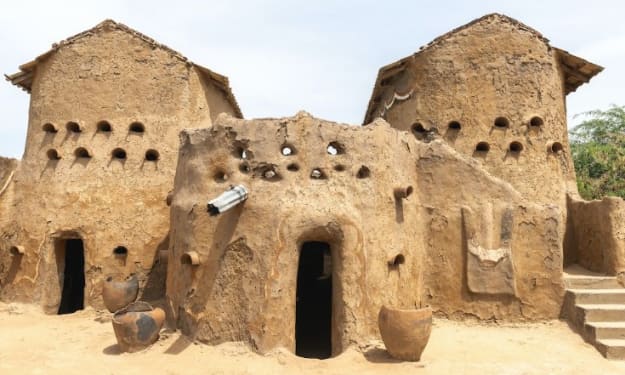
European settlers carried their own opinions on the African way of life with them when they first arrived in the continent. They considered the loincloths, grass huts, and thatched roofs to be primitive in comparison to their own ideals of civilization because they were from colder climes that required the usage of clothing. Three essential components—commerce, civilization, and Christianity—were brought with the goal of "improving" Africa. The spread of Christianity had a particularly negative effect since it forced Africans to give up their own identities and accept new ones, even though Africa had already created its own forms of trade and civilization under the influence of capitalist nations. Africans were baptized in the names of foreign gods and saints, and colonization was sold as a rise of humanity from its pre-existing condition.
By Joel Edward Gblee3 years ago in History
Diego de la Vega
Here's the extended story of an unknown adventure of a conquistador in the 17th century. Sometime in the distant past in the seventeenth 100 years, a period of revelation and experience. During this period, a fearless and gutsy conqueror named Diego de la Vega lived. He was a man of noteworthy height, with dim hair and a sharp psyche. Diego yearned for notoriety and fortune and was able to face incredible challenges for it.
By Baris Karaca3 years ago in History
A Profound Journey
In the vast tapestry of human existence, cultures and beliefs have interwoven, shaping the course of history and the lives of individuals. Among the myriad influences, the arrival of Western religion in Africa stands as a monumental chapter, leaving an indelible mark on the continent's collective consciousness. This encounter between two worlds was both transformative and complex, carrying profound implications that continue to resonate to this day.
By Ubong Friday Udo 3 years ago in History
How Vladimir Putin Survived 43 assassination attempts
Being the president of Russia is now not the safest position, but it never has been. Vladimir Putin has survived 43 attempts on his life and is qualified to testify. Putin is now one of the most heavily guarded individuals on the planet. Although attempts on Putin's life were never in short supply.
By Francis Osei3 years ago in History
A Journey Through Time:
Introduction: Every now and then, we find ourselves daydreaming about what it would be like to live in a different era, to experience the wonders and challenges of a time long gone. The prospect of being born into another period of history sparks our imagination and curiosity, allowing us to explore the vast tapestry of human civilization. If given the chance to choose a profession in an alternate era, the possibilities are endless. From the captivating allure of ancient civilizations to the transformative revolutions of the modern age, each epoch offers a unique lens through which we can envision our alternate selves. In this narrative, I will embark on a captivating journey through time, exploring different eras and selecting the profession that resonates with my passions, skills, and personality.
By Osaki Peters3 years ago in History
Nostradamus
Introduction Throughout history, certain individuals have captivated the human imagination with their supposed ability to foresee the future. One such figure is Nostradamus, a renowned French physician and astrologer who gained fame for his prophetic writings. In this article, we delve into the enigmatic world of Nostradamus, exploring his life, his prophetic works, and the enduring fascination surrounding his predictions.
By Redmark Foreal3 years ago in History
The Ertugrul Empire
Once upon a time, in the vast lands of Anatolia, a remarkable man named Ertugrul Ghazi emerged as a symbol of bravery and honor. It was a time of turbulence and chaos, as rival clans fought for dominance and the mighty Byzantine Empire sought to expand its territories. But amidst this unrest, Ertugrul Ghazi would rise to become a legendary figure, leading his people towards freedom and establishing the foundations of a great empire.
By Ahsan Shahid3 years ago in History
HOW IMPORTANT IS THE JUNETEENTH?
1. The history of Juneteenth and its significance...Juneteenth is a holiday that commemorates the end of slavery in the United States. It is celebrated on June 19, the date when the enslaved people of Texas, the last Confederate state, learned that they were free in 1865. Juneteenth is important because it reminds us of what we came through and what we can achieve. The reason General Order Number 3 existed and the Union Army fought to enforce the Emancipation Proclamation is that slavery existed.
By Chukwurah Felix EDE3 years ago in History